


Sign up to see the future, today
Can’t-miss innovations from the bleeding edge of science and tech
NASA is still hoping to land the first Artemis astronauts on the surface of the Moon by the end of 2028, an extremely ambitious plan that will require an extraordinary number of moving parts to perfectly fall into place, and at the right time.
As part of its revised mission lineup, the space agency is planning to test out the landers of both of its private industry’s partners — SpaceX’s Starship and Blue Origin’s Blue Moon lander — in Earth’s orbit sometime in “late 2027” as part of its Artemis 3 mission.
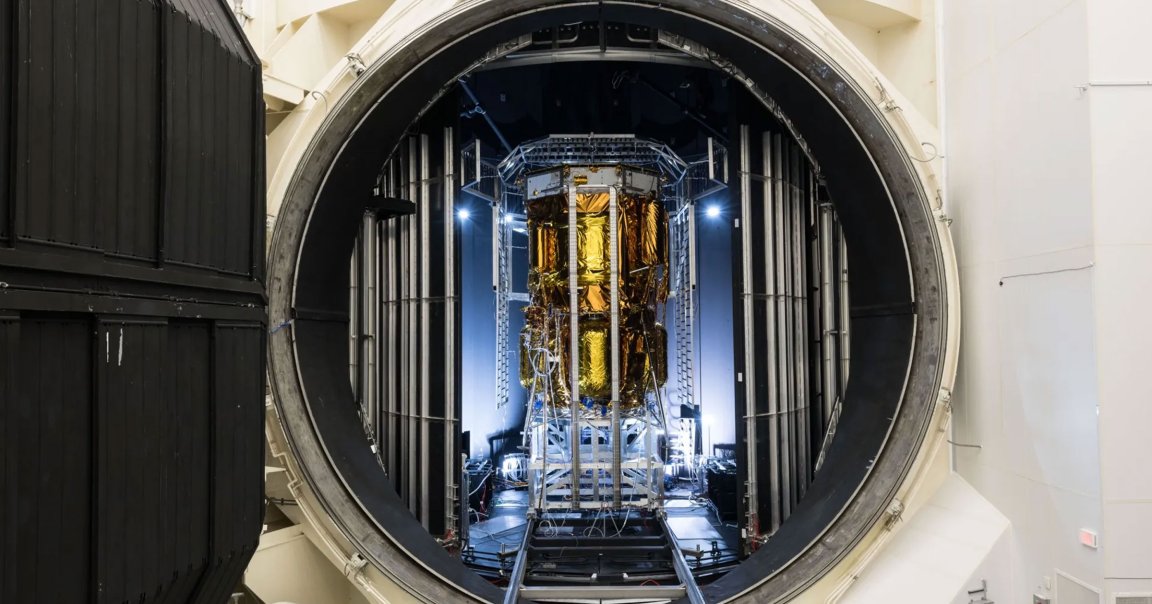
Whether either one will be ready for prime time remains a looming question mark. But at least there’s forward motion: in a new blog post, NASA noted that Blue Origin’s early Blue Moon prototype, dubbed Mark 1 — which will be used for an uncrewed test flight ahead of Artemis 3 — had recently completed evaluations inside the agency’s massive Thermal Vacuum Chamber A at the Johnson Space Center in Houston. The tests allow engineers to see how it will withstand the vacuum of space and extreme temperature swings during flight.
Mark 1, the largest lunar lander ever built, won’t actually be part of NASA’s Artemis 3 mission next year — or ever deliver astronauts to the lunar surface. Instead, the Jeff Bezos-led company is hoping to use it to deliver cargo to the Moon’s South Pole before the end of this year as part of a precursor test launch.
The Mark 1 lander will inform the design of Mark 2, an even more formidable landing system that will eventually house a crew for NASA’s long-awaited Artemis missions and help “establish a permanent presence on the Moon,” per Blue Origin’s website.
Still, nobody knows when the first astronauts will step foot inside the first Mark 2 lander once it’s built. For one, Blue Origin’s New Glenn, the rocket designed to carry Blue Moon into orbit, experienced a major setback last month, failing to release a small communications satellite into a high enough orbit, forcing it to be destroyed.
It could’ve ended even worse. According to TechCrunch, Mark 1 was originally meant to be part of the botched launch.
In short, plenty of doubt remains surrounding the rocket’s flightworthiness and ability to deliver the behemoth, 26-foot lander structure and its massive vacuum-rated engine into orbit, let alone support a crew of astronauts.
The leap from Mark 1 to Mark 2 could also pose its own set of challenges as Blue Origin figures out the requirements to ensure that astronauts remain safe while in orbit.
NASA’s official website for its upcoming Artemis 3 mission notes that it will test “one or both” of its commercial landers, leaving the possibility that it may not be part of the test at all.
Meanwhile, SpaceX also has yet to launch and land its Starship spacecraft successfully. Most recently, the Elon Musk-led company fired up the latest iteration, dubbed “Version 3,” on the launchpad ahead of the platform’s 12th test launch, which still doesn’t have an official date. Road closure advisories near SpaceX’s testing facilities suggest it could happen as soon as next week.
More on Artemis: NASA’s Moon Landing Schedule Slipping Horrendously Under Trump