




惯性聚合 高效追踪和阅读你感兴趣的博客、新闻、科技资讯
阅读原文 在惯性聚合中打开

推荐订阅源

S
SegmentFault 最新的问题
Jina AI
Jina AI
罗磊的独立博客
V
Visual Studio Blog
freeCodeCamp Programming Tutorials: Python, JavaScript, Git & More
J
Java Code Geeks
U
Unit 42
Microsoft Azure Blog
B
Blog RSS Feed
爱范儿
爱范儿
酷 壳 – CoolShell
酷 壳 – CoolShell
Last Week in AI
Last Week in AI
T
The Blog of Author Tim Ferriss
腾讯CDC
Hugging Face - Blog
Hugging Face - Blog
T
Tailwind CSS Blog
让小产品的独立变现更简单 - ezindie.com
I
InfoQ
月光博客
月光博客
博客园_首页
Vercel News
Vercel News
P
Proofpoint News Feed
GbyAI
GbyAI
Y
Y Combinator Blog

Futurism

Light Pollution is Causing Fish to Live Miserable, Bitter Lives, Researchers Find Massive Data Center Cooks Nearby Residents Alive Amidst Deadly Heatwave We've Blown So Far Past a Doomer 2014 Climate Project That It's Scary All But Five US States Are Currently Experiencing Droughts Government Scientists Fired by Trump Launch New Website for Sharing Climate Data Mass Deaths Attributed to Brutal Heat Wave Trump's Reflecting Pool Is No Match for the AlgaeBTQ Agenda Scientists Say New Method Turns Coffee Grounds Into High-Potency Renewable Fuel Illinois Is Getting Battered by Freak Tornadoes Musk Furious After SpaceX Stock Gets Worst Possible Report Card Volunteer Under Investigation for Cleaning Polluted River Without a License, Faces Two Years in Prison Weather So Brutal That Dean Passes Out at College Graduation Out-of-Control Icebergs Are Wreaking Havoc on the Oceans The Funniest Possible Thing Happened After Trump Painted the Lincoln Reflecting Pool Blue Scientists Detected Strange Rumbling Beneath Utah Almost 50 Years Ago. They Just Figured Out What It Was Scientists Horrified as Huge Heatwave Hits Antarctica Autonomous Robots Confirmed to Have Killed Human Soldiers The El Niño Situation Is Looking Absolutely Brutal Fish Already Cooking Alive Across the US Ahead of Blistering Summer Heat Temperatures Soaring So High That Trump’s UFC Fighters May Just Collapse in the Heat Solar Just Produced More Electricity Than Coal for the First Time in the History of the United States California Primed for Apocalyptic Earthquake, Geological Research Finds Scientists Detect Massive Structure Under Antarctica New Study Finds Something Horrible Contaminating Half of California’s Water Remember How Sucking Carbon Out of the Air Was Going to Save the Planet? We Have Terrible News Trump Desperately Pumps Money Into Dying Coal Industry AI Will Consume as Much Water as a Billion People By 2030, UN Report Estimates Kevin O’Leary Pleads With Locals to Allow His Massive Data Center If He Shrinks It Down to the Size of One Manhattan People Are Not Happy About Google’s Plan to Release Millions of Bioengineered Mosquitoes Into the Wild We Are Intrigued by This Man Taking His Pet Octopus for a Walk Around His Neighborhood
Earth's Underground Fungus Network Is So Gigantic That If...
Frank Landymore · 2026-06-14 · via Futurism

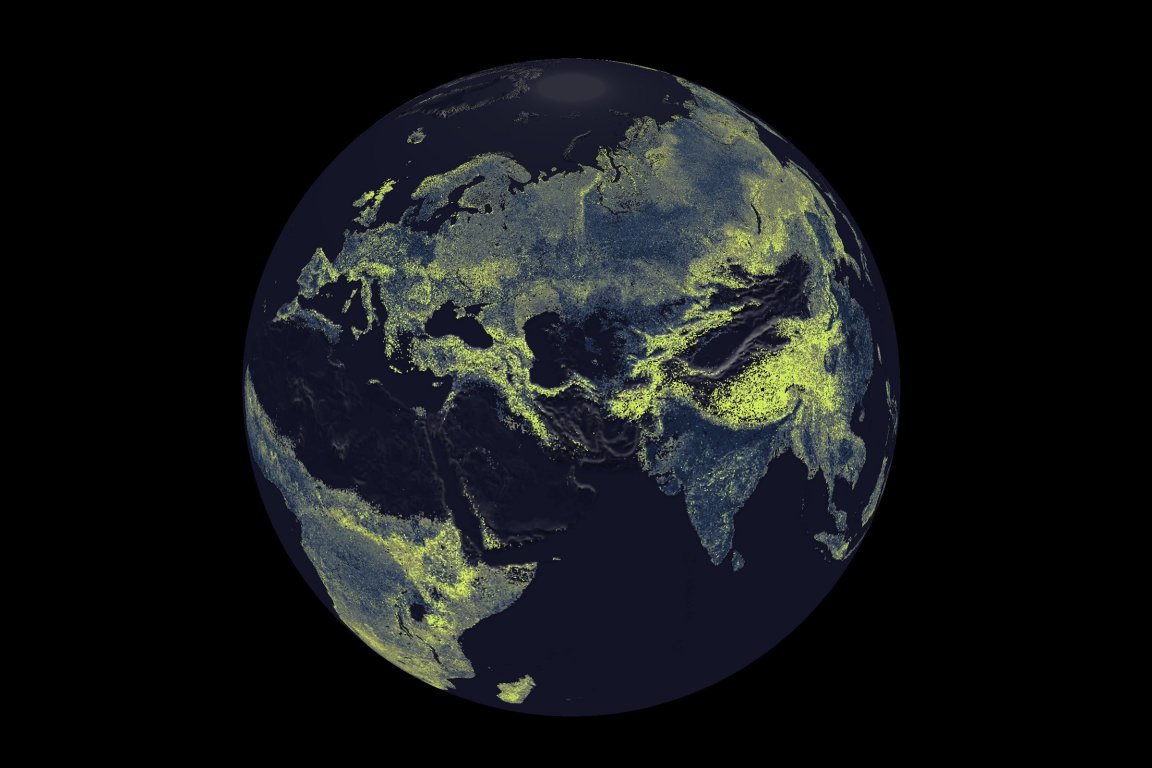
A rendering of the globe with an overlay featuring the extensive underground fungal network on Earth.

Society for the Protection of Underground Networks (SPUN)

Sign up to see the future, today

Can’t-miss innovations from the bleeding edge of science and tech

Scientists have mapped the Earth’s entire underground fungal network, showing that it’s so extensive that if it were stretched into a straight line, it would reach other star systems — and span a sizable chunk of the Milky Way galaxy, for that matter.

The groundbreaking work, published in a study in the journal Science, focused on microorganisms known as arbuscular mycorrhizal fungi. Forming the hidden backbone of our planet’s soil, they circulate water and nutrients and regulate the climate by locking away vast stores of carbon

Altogether, the global fungal network weighs around 300 megatons, the study found, which is four to six times more than the biomass of all human beings. Around 40 percent of that fungal mass resides in high-altitude or flooded grasslands, like the Everglades in Florida. 

The authors hope that their work will highlight the indispensable but overlooked role that these fungal networks play in the Earth’s ecosystems, with around 70 percent of all ground-based plant life depending on the fungi.

“People just aren’t paying attention to these ecosystems,” coauthor Toby Kiers, an evolutionary biologist at Vrije University Amsterdam and director of the Society for the Protection of Underground Networks (SPUN), told The New York Times. “What we want to do with these data is really shine a light on some of these hidden patterns underground.”

“I hope this builds into the conversation for their protection because wild grasslands are going away quite quickly,” lead author Justin Stewart, a fellow SPUN biologist, told Live Science. “These are areas that people are really ripping up because it’s much easier to rip up a grass than it is to rip up a tree.”

To unearth this subterranean network, the researchers used data from over 16,000 soil samples across 300 previous papers that calculated the local density of fungal filaments, or hyphae, across the globe. They then fed this data into a machine learning model to predict the density of these hyphal networks per square kilometer of topsoil.

The results were staggering. In all, the model found that the planet is lined with more than 110 quadrillion kilometers of hyphae, or 68 quadrillion miles, which is almost a billion times the distance between the Earth and the Sun. On a cosmic ruler, that equals nearly 12,000 light years, or about a tenth the diameter of our galaxy, which is enough to take you to the Westlund 1 super star cluster.

It’s the clearest picture yet of just how much fungal networks underpin our terrestrial ecosystems. What’s fuzzier from the model, though, is what it says about their health. The density of the fungal networks were about half as lower in soil used for growing crops, but “we don’t know where networks are very healthy and where they’re threatened,” Kiers told the NYT.

More on biology: There’s Something Living Inside Fog, Scientists Find