



惯性聚合 高效追踪和阅读你感兴趣的博客、新闻、科技资讯
阅读原文 在惯性聚合中打开

推荐订阅源

博客园 - 【当耐特】
云风的 BLOG
云风的 BLOG
罗磊的独立博客
C
Check Point Blog
奇客Solidot–传递最新科技情报
奇客Solidot–传递最新科技情报
Blog — PlanetScale
Blog — PlanetScale
freeCodeCamp Programming Tutorials: Python, JavaScript, Git & More
月光博客
月光博客
大猫的无限游戏
大猫的无限游戏
Google DeepMind News
Engineering at Meta
Engineering at Meta
N
Netflix TechBlog - Medium
宝玉的分享
宝玉的分享
Recent Announcements
酷 壳 – CoolShell
酷 壳 – CoolShell
博客园_首页
J
Java Code Geeks
Apple Machine Learning Research
人人都是产品经理
人人都是产品经理
爱范儿
爱范儿
I
InfoQ
Hugging Face - Blog
Hugging Face - Blog
T
Tailwind CSS Blog
B
Blog RSS Feed

Futurism

Light Pollution is Causing Fish to Live Miserable, Bitter Lives, Researchers Find Massive Data Center Cooks Nearby Residents Alive Amidst Deadly Heatwave We've Blown So Far Past a Doomer 2014 Climate Project That It's Scary All But Five US States Are Currently Experiencing Droughts Government Scientists Fired by Trump Launch New Website for Sharing Climate Data Mass Deaths Attributed to Brutal Heat Wave Trump's Reflecting Pool Is No Match for the AlgaeBTQ Agenda Scientists Say New Method Turns Coffee Grounds Into High-Potency Renewable Fuel Illinois Is Getting Battered by Freak Tornadoes Musk Furious After SpaceX Stock Gets Worst Possible Report Card Volunteer Under Investigation for Cleaning Polluted River Without a License, Faces Two Years in Prison Weather So Brutal That Dean Passes Out at College Graduation Out-of-Control Icebergs Are Wreaking Havoc on the Oceans The Funniest Possible Thing Happened After Trump Painted the Lincoln Reflecting Pool Blue Scientists Detected Strange Rumbling Beneath Utah Almost 50 Years Ago. They Just Figured Out What It Was Earth's Underground Fungus Network Is So Gigantic That If You Stretched It Out, It Would Reach to Other Star Systems Scientists Horrified as Huge Heatwave Hits Antarctica Autonomous Robots Confirmed to Have Killed Human Soldiers The El Niño Situation Is Looking Absolutely Brutal Fish Already Cooking Alive Across the US Ahead of Blistering Summer Heat Temperatures Soaring So High That Trump’s UFC Fighters May Just Collapse in the Heat Solar Just Produced More Electricity Than Coal for the First Time in the History of the United States California Primed for Apocalyptic Earthquake, Geological Research Finds Scientists Detect Massive Structure Under Antarctica New Study Finds Something Horrible Contaminating Half of California’s Water Remember How Sucking Carbon Out of the Air Was Going to Save the Planet? We Have Terrible News Trump Desperately Pumps Money Into Dying Coal Industry AI Will Consume as Much Water as a Billion People By 2030, UN Report Estimates Kevin O’Leary Pleads With Locals to Allow His Massive Data Center If He Shrinks It Down to the Size of One Manhattan People Are Not Happy About Google’s Plan to Release Millions of Bioengineered Mosquitoes Into the Wild
Scientists Say They’ve Figured Out What That Golden Orb F...
Frank Landym · 2026-04-24 · via Futurism

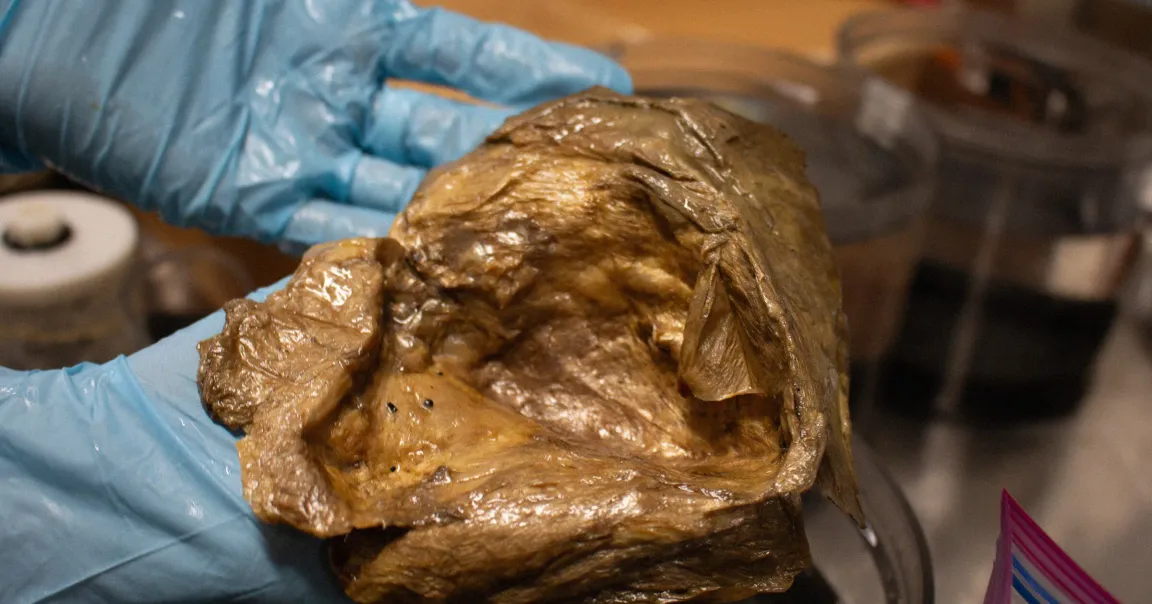
A gloved hand holding a mysterious object recovered from underwater that they described as a "golden orb." The background is blurred, showing some laboratory equipment.

NOAA Fisheries

Sign up to see the future, today

Can’t-miss innovations from the bleeding edge of science and tech

After spending two and half years pondering a “golden orb” found at the bottom of the ocean, scientists have finally figured out what in the thundering typhoons it actually is.

The aureate object looked like some sort of alien relic when it was first discovered clinging to a rock over two miles underwater in the Gulf of Alaska, before collapsing into a blob resembling molten leafs of gold when it was recovered.

Now, scientists at the National Oceanic and Atmospheric Administration and the Smithsonian Institution reveal that the baffling object is a remnant of what was once a giant anemone — though it took considerable detective work to reach that conclusion.

“This turned into a special case that required focused efforts and expertise of several different individuals,” said Allen Collins, a zoologist and director of NOAA Fisheries’ National Systematics Laboratory, in a statement. “This was a complex mystery that required morphological, genetic, deep-sea and bioinformatics expertise to solve.”

While the orb attracted a great deal of public interest, scientists regularly encounter strange organisms they can’t immediately explain when exploring the deep ocean.

“We see weird stuff every dive,” NOAA physical scientist Sam Candio said in an interview with Futurism after the discovery. The orb “wasn’t even the most interesting thing that jumped out at us at that time.”  

But the golden object proved to be more of an enigma than expected. It was discovered during an expedition on the NOAA Ship Okeanos Explorer, and at the time, the expedition team could only conclude it was biological in nature. Its smooth surface was marked with a noticeable hole, which was interpreted as a clue that something either crawled into or out of it. Early theories suggested it was some sort of dead sponge or egg case.

To get to the bottom of the mystery, NOAA and Smithsonian scientists physically examined the orb-turned-lump and analyzed its genetic makeup. Starting with the physical examination, they found that though its anatomy was unusual for an animal, it contained fibrous cells called spirocysts which are a hallmark of aquatic invertebrates called cnidarians. This finding was repeated in a similar specimen discovered in an earlier expedition.

Whole genome sequencing then sealed the deal. It confirmed that the specimen shared genetic material with a giant deep sea anemone, and sequencing its mitochondrial genomes narrowed the species down. It was almost an exact match for Relicanthus daphneae, a cnidarian that was only described as an anemone in 2006 despite being discovered thirty years earlier. The species may be identified, but it still remains a source of fascination.

“So often in deep ocean exploration, we find these captivating mysteries, like the ‘golden orb,'” said William Mowitt, acting director of NOAA Ocean Exploration, in the statement. “With advanced techniques like DNA sequencing, we are able to solve more and more of them.”

More on the ocean: Man Creates Tiny Submarine for His Parakeet to Experience Life Underwater