



惯性聚合 高效追踪和阅读你感兴趣的博客、新闻、科技资讯
阅读原文 在惯性聚合中打开

推荐订阅源

MyScale Blog
MyScale Blog
Apple Machine Learning Research
H
Help Net Security
雷峰网
雷峰网
V
Visual Studio Blog
G
Google Developers Blog
Microsoft Azure Blog
Hugging Face - Blog
Hugging Face - Blog
爱范儿
爱范儿
IT之家
IT之家
Engineering at Meta
Engineering at Meta
Microsoft Security Blog
aimingoo的专栏
aimingoo的专栏
大猫的无限游戏
大猫的无限游戏
M
MIT News - Artificial intelligence
月光博客
月光博客
A
About on SuperTechFans
B
Blog RSS Feed
奇客Solidot–传递最新科技情报
奇客Solidot–传递最新科技情报
The GitHub Blog
The GitHub Blog
N
Netflix TechBlog - Medium
J
Java Code Geeks
云风的 BLOG
云风的 BLOG
Blog — PlanetScale
Blog — PlanetScale

Futurism

Light Pollution is Causing Fish to Live Miserable, Bitter Lives, Researchers Find Massive Data Center Cooks Nearby Residents Alive Amidst Deadly Heatwave We've Blown So Far Past a Doomer 2014 Climate Project That It's Scary All But Five US States Are Currently Experiencing Droughts Government Scientists Fired by Trump Launch New Website for Sharing Climate Data Mass Deaths Attributed to Brutal Heat Wave Trump's Reflecting Pool Is No Match for the AlgaeBTQ Agenda Scientists Say New Method Turns Coffee Grounds Into High-Potency Renewable Fuel Illinois Is Getting Battered by Freak Tornadoes Musk Furious After SpaceX Stock Gets Worst Possible Report Card Volunteer Under Investigation for Cleaning Polluted River Without a License, Faces Two Years in Prison Weather So Brutal That Dean Passes Out at College Graduation Out-of-Control Icebergs Are Wreaking Havoc on the Oceans The Funniest Possible Thing Happened After Trump Painted the Lincoln Reflecting Pool Blue Scientists Detected Strange Rumbling Beneath Utah Almost 50 Years Ago. They Just Figured Out What It Was Earth's Underground Fungus Network Is So Gigantic That If You Stretched It Out, It Would Reach to Other Star Systems Scientists Horrified as Huge Heatwave Hits Antarctica Autonomous Robots Confirmed to Have Killed Human Soldiers The El Niño Situation Is Looking Absolutely Brutal Fish Already Cooking Alive Across the US Ahead of Blistering Summer Heat Temperatures Soaring So High That Trump’s UFC Fighters May Just Collapse in the Heat Solar Just Produced More Electricity Than Coal for the First Time in the History of the United States California Primed for Apocalyptic Earthquake, Geological Research Finds New Study Finds Something Horrible Contaminating Half of California’s Water Remember How Sucking Carbon Out of the Air Was Going to Save the Planet? We Have Terrible News Trump Desperately Pumps Money Into Dying Coal Industry AI Will Consume as Much Water as a Billion People By 2030, UN Report Estimates Kevin O’Leary Pleads With Locals to Allow His Massive Data Center If He Shrinks It Down to the Size of One Manhattan People Are Not Happy About Google’s Plan to Release Millions of Bioengineered Mosquitoes Into the Wild We Are Intrigued by This Man Taking His Pet Octopus for a Walk Around His Neighborhood
Scientists Detect Massive Structure Under Antarctica
Joe Wilkins · 2026-06-08 · via Futurism

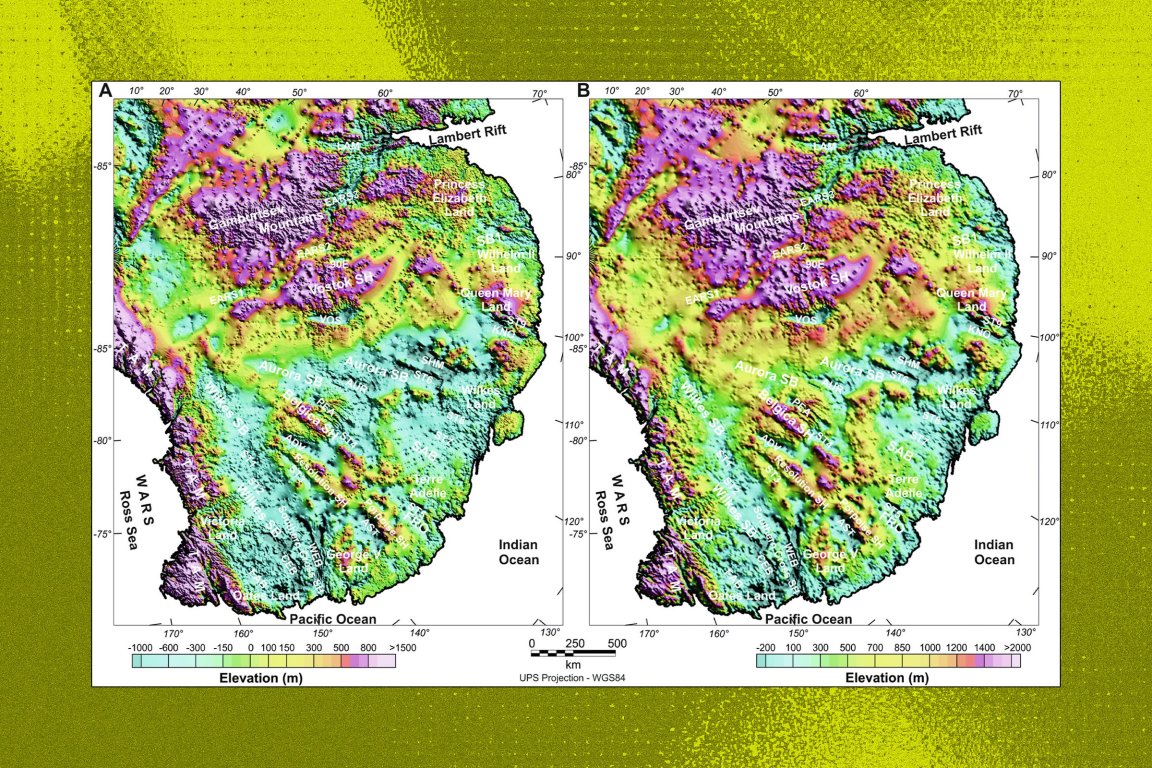
A map of a fan-shaped subglacial basin province in East Antarctica.

Armadillo et al.; Futurism; Shutterstock

Sign up to see the future, today

Can’t-miss innovations from the bleeding edge of science and tech

Researchers have uncovered the existence of a monumental geological structure buried two miles beneath the frigid ice of Antarctica.

According to a new paper, published in the journal Nature, the massive structure is made up of several previously known glacial landforms, like the Wilkes and Aurora subglacial basin region of East Antarctica, as well as Lake Vostok, the largest known subglacial lake on the planet.

These features have been studied separately for years, a press release notes, but have never been recognized as individual pieces to a larger puzzle.

Called the East Antarctic Fan-shaped Basin Province, the newly-identified structure likely represents one of the largest Earth features of its kind. While more work will be needed to corroborate the findings, the theorized formation could be crucial for understanding how Antarctica came to be, and how its three major ice sheets may respond to a warming climate.

To map the structure, scientists compiled datasets from a buffet of sources, like geological observations, gravity measurements, magnetic data, and models of the Earth’s crust, among others.

Added together, those datasets led researchers to conclude the geological feature likely formed through a process known as “distributed rotational extension,” where continental crust slowly stretches outward from a central point over a period of millions of years.

“Because these basins underlie about half of the East Antarctic Ice Sheet, they are likely to heavily influence both ice-flow and landscape evolution, making them essential to Antarctic glacial and hydrological processes,” the study’s authors write.

More on Antarctica: Scientists Scramble to Set Up Outpost on Rapidly Melting Glacier