

惯性聚合 高效追踪和阅读你感兴趣的博客、新闻、科技资讯
阅读原文 在惯性聚合中打开

推荐订阅源

博客园_首页
N
Netflix TechBlog - Medium
V
Visual Studio Blog
博客园 - Franky
小众软件
小众软件
奇客Solidot–传递最新科技情报
奇客Solidot–传递最新科技情报
Apple Machine Learning Research
博客园 - 三生石上(FineUI控件)
钛媒体:引领未来商业与生活新知
钛媒体:引领未来商业与生活新知
让小产品的独立变现更简单 - ezindie.com
宝玉的分享
宝玉的分享
量子位
大猫的无限游戏
大猫的无限游戏
人人都是产品经理
人人都是产品经理
V
V2EX
The Cloudflare Blog
月光博客
月光博客
Last Week in AI
Last Week in AI
雷峰网
雷峰网
WordPress大学
WordPress大学
博客园 - 【当耐特】
博客园 - 聂微东
IT之家
IT之家
OSCHINA 社区最新新闻
OSCHINA 社区最新新闻

Futurism

Trump Admin Enabling the Systematic Slaughtering of Thousands of Wild Horses Hospitals Are Getting So Hot That Surgeries Are Getting Canceled and Staff Are Fainting It's Getting So Hot That Nuclear Plants Are Being Forced to Power Down AI's Impact on the Environment Is Absolutely Horrifying, New Paper Finds Giant Oil Tanker Runs Aground in Marine Nature Preserve, Spills Nonstop for Weeks It's Official: This Is the Hottest America Has Ever Been Amazon's New AI Data Center Is So Enormous That It Appears It Will Become the Largest Single Source of Pollution in the United States Droughts Are Getting So Intense That Ancient Ruins Are Beginning to Surface Scientists Genetically Engineer High-Protein Lettuce Jeff Bezos Harshly Criticized for $200 Million Pledge to Protect the World's Most Endangered Species AI Data Centers Are Causing Unfathomable Amounts of Air Pollution, and It Gets Worse With Each New One They Build Google Data Center Announces Plans to Pave Over Protected Wetlands Man Sues Bank for Being Stupid Enough to Give Him a Mortgage Even When Experts Were Warning Him It Was About to Fall Into the Ocean It's So Hot in Japan That Zoo Animals Are Dropping Dead Global Warming Is Rapidly Accelerating, New Paper Finds SpaceX Vows to Keep Poisoning Nearby Towns With Its Fume-Belching Data Center For Another Year El Niño Set to Upend the World Economy The Type of Orbital Data Centers That Billionaires Want to Launch Into Space Would Wreak Ecological Catastrophe, Scientists Warn As Much of the East Coast Is Choking on Wildfire Smoke, Texas Is Drowning in Life-Threatening Floods Trump Decimated a Satellite Program That Would've Vastly Improved Wildfire Smoke Monitoring Terrifying Video Shows Locomotive Engulfed in Wildfire Flames A Staggering Number of People Are Dying Because of Record Heatwaves Scientists Propose Dimming Sun to Combat El Niño Climate Scientists Aghast at How Bad Things Are Getting, and So Fast The Pollution Being Churned Out by AI Data Centers Is So Severe That It’s Almost Incomprehensible You'll Never Guess Which Country Is Causing the Most Global Warming Freak Tornado Sucks Man Out of 12-Floor Apartment Microsoft's $7.3 Billion AI Data Center Just Caught a Nasty Lawsuit From Furious Neighbors You'll Never Guess Why Government Officials Are Sinking a Four-Story Riverboat Casino Into the Abyss Something Weird Is Going on With the 66 Billion Trees China Planted in a Huge Wall
Out-of-Control Icebergs Are Wreaking Havoc on the Oceans
Frank Landymore · 2026-06-20 · via Futurism

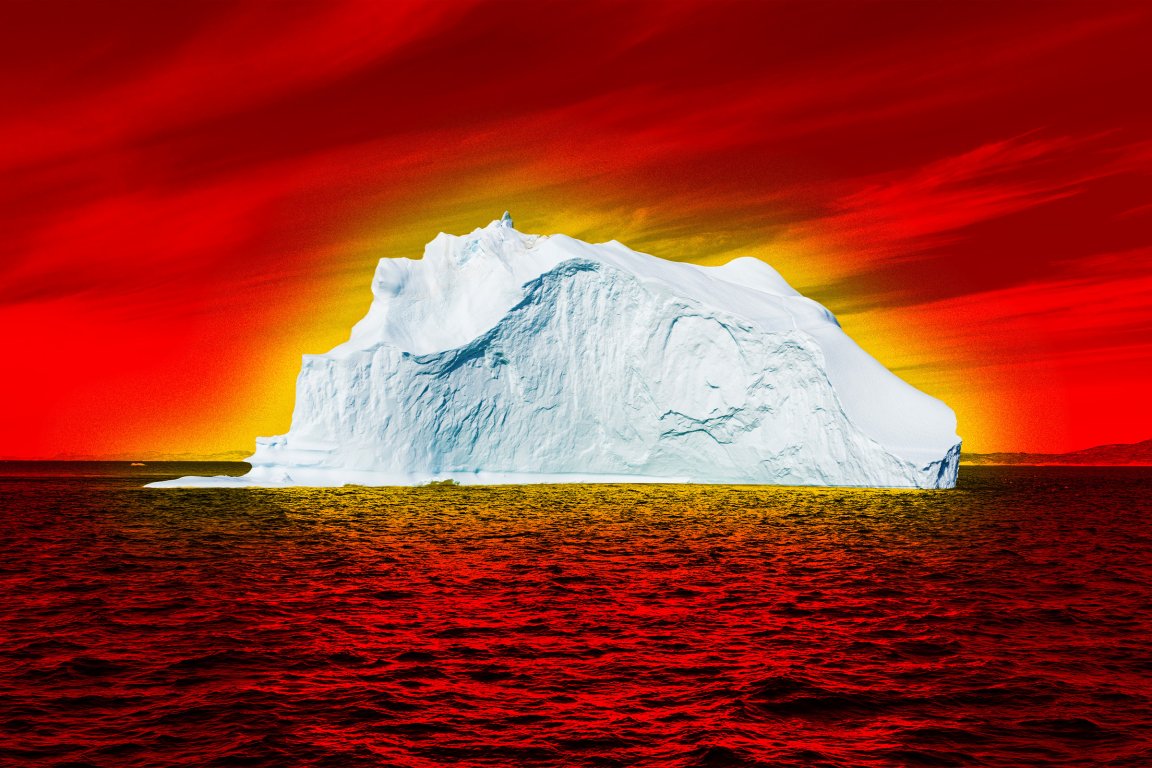
A colorful stylized photo illustration featuring an isolated iceberg.

Illustration by Tag Hartman-Simkins / Futurism. Source: Shutterstock

Sign up to see the future, today

Can’t-miss innovations from the bleeding edge of science and tech

One consequence of climate change you probably haven’t considered? Iceberg traffic.

In a new study published in the journal Nature, researchers from the Technical University of Denmark found that Greenland’s melting glaciers are unleashing a swarm of icebergs into the wider ocean, gumming up shipping routes and unexpectedly transforming marine ecosystems.

“We know from measurements and satellite observations that the large glaciers in Northeast Greenland have lost stability over recent decades,” study coauthor Shfaqat Abbas Khan, a professor at DTU Space, said in a statement about the work. “The new study shows that the consequences do not stop at rising sea levels, but directly affect deep-sea ecosystems far from the glaciers.” 

To document the iceberg swarm, the researchers combined four decades of shipboard records with satellite data, sea-ice models, and seabed studies centered on the Fram Strait, a sea passage between Greenland and Svalbard that’s the main gateway between the Arctic and the rest of the world’s oceans.

What they found was something unfolding at a decidedly un-glacial pace: since 2000, the number of icebergs being released from the strait has quadrupled.

The mechanism behind this is twofold: melting glaciers in Northeast Greenland are destabilizing and “calving,” or releasing ice, while sea ice — the ice that forms on the surface of the water — has simultaneously melted, clearing the path for the newly-calved icebergs to throng into the ocean.

Anyone who’s seen “Titanic” will know that having more icebergs around is dangerous for sea vessels. But they’re having an impact on marine life, too. That’s because they contain loads of sediments inside; when the icebergs melt far afield from their homes, they dump rocks onto the formerly pristine seafloor.

Underwater images taken at around 8,000 feet below the surface showed that the “dropstones” are spawning tiny ecosystems — as if all that iceberg traffic were commuters fleeing to a new bedroom town.

“Where previously there were only isolated stones of various sizes, we are now finding much larger accumulations, frequently in small groups. And with each new stone, a permanent settlement is created on the seabed,” coauthor Kirstin Meyer-Kaiser at the Woods Hole Oceanographic Institution said in a statement about the work

“Sponges, anemones, and other animals that favour hard substrates can settle there,” she added. “As a result, biodiversity in the deep sea is increasing.”

The work reminds us that land processes can be deeply linked with deep sea ecosystems, and how fear reaching — and unexpected — the impact of rising global temperatures can be.

“The Arctic is responding faster to global warming than most other places on Earth,” Khan said in the statement. “Therefore, it is crucial to understand the interaction between ice sheets, the ocean, and ecosystems. This knowledge is necessary if we are to predict and manage the consequences of future climate change.”

More on climate change: Scientists Horrified as Huge Heatwave Hits Antarctica