


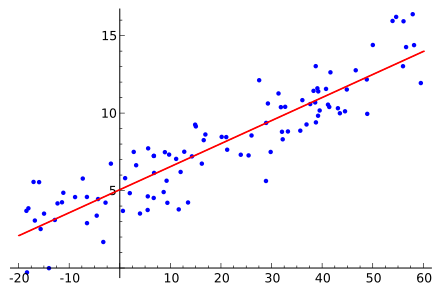
线性回归是一种用于回归问题的算法,它通过学习输入特征与目标值之间的线性关系,来预测一个连续的输出。
应用场景:预测房价、股票价格等。
线性回归的目标是找到一个最佳的线性方程:

from skle.linear_model import LinearRegression
from sklearn.model_selection import train_test_split
import pandas as pd

# 假设我们有一个简单的房价数据集
data = {
    '面积': [50, 60, 80, 100, 120],
    '房价': [150, 180, 240, 300, 350]
}
df = pd.DataFrame(data)

# 特征和标签
X = df[['面积']]
y = df['房价']

# 数据分割
X_train, X_test, y_train, y_test = train_test_split(X, y, test_size=0.2, random_state=42)

# 训练线性回归模型
model = LinearRegression()
model.fit(X_train, y_train)

# 预测
y_pred = model.predict(X_test)

print(f"预测的房价: {y_pred}")
逻辑回归是一种用于分类问题的算法,尽管名字中包含"回归",它是用来处理二分类问题的。
逻辑回归通过学习输入特征与类别之间的关系,来预测一个类别标签。
应用场景:垃圾邮件分类、疾病诊断(是否患病)。
逻辑回归的输出是一个概率值,表示样本属于某一类别的概率。
通常使用 Sigmoid 函数:

from sklearn.linear_model import LogisticRegression
from sklearn.datasets import load_iris
from sklearn.model_selection import train_test_split
from sklearn.metrics import accuracy_score

# 加载鸢尾花数据集
iris = load_iris()
X = iris.data
y = iris.target

# 只取前两类做二分类任务
X = X[y != 2]
y = y[y != 2]

# 数据分割
X_train, X_test, y_train, y_test = train_test_split(X, y, test_size=0.2, random_state=42)

# 训练逻辑回归模型
model = LogisticRegression()
model.fit(X_train, y_train)

# 预测
y_pred = model.predict(X_test)

# 评估模型
print(f"分类准确率: {accuracy_score(y_test, y_pred):.2f}")
支持向量机是一种常用的分类算法,它通过构造超平面来最大化类别之间的间隔(Margin),使得分类的误差最小。
应用场景:文本分类、人脸识别等。
使用 SVM 进行鸢尾花分类任务:
from sklearn.svm import SVC
from sklearn.datasets import load_iris
from sklearn.model_selection import train_test_split
from sklearn.metrics import accuracy_score

# 加载鸢尾花数据集
iris = load_iris()
X = iris.data
y = iris.target

# 数据分割
X_train, X_test, y_train, y_test = train_test_split(X, y, test_size=0.3, random_state=42)

# 训练 SVM 模型
model = SVC(kernel='linear')
model.fit(X_train, y_train)

# 预测
y_pred = model.predict(X_test)

# 评估模型
print(f"SVM 分类准确率: {accuracy_score(y_test, y_pred):.2f}")
决策树是一种基于树结构进行决策的分类和回归方法。它通过一系列的"判断条件"来决定一个样本属于哪个类别。
应用场景:客户分类、信用评分等。
使用决策树进行分类任务:
from sklearn.tree import DecisionTreeClassifier
from sklearn.datasets import load_iris
from sklearn.model_selection import train_test_split
from sklearn.metrics import accuracy_score

# 加载鸢尾花数据集
iris = load_iris()
X = iris.data
y = iris.target

# 数据分割
X_train, X_test, y_train, y_test = train_test_split(X, y, test_size=0.3, random_state=42)

# 训练决策树模型
model = DecisionTreeClassifier(random_state=42)
model.fit(X_train, y_train)

# 预测
y_pred = model.predict(X_test)

# 评估模型
print(f"决策树分类准确率: {accuracy_score(y_test, y_pred):.2f}")
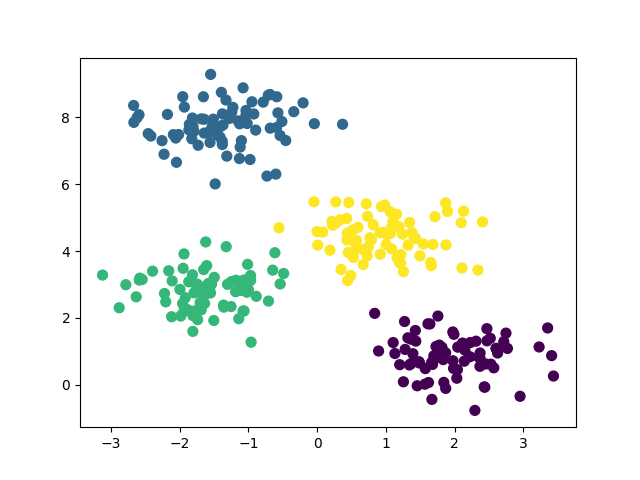
K-means 是一种基于中心点的聚类算法,通过不断调整簇的中心点,使每个簇中的数据点尽可能靠近簇中心。
应用场景:客户分群、市场分析、图像压缩。
使用 K-means 进行客户分群:
from sklearn.cluster import KMeans
from sklearn.datasets import make_blobs
import matplotlib.pyplot as plt

# 生成一个简单的二维数据集
X, _ = make_blobs(n_samples=300, centers=4, cluster_std=0.60, random_state=0)

# 训练 K-means 模型
model = KMeans(n_clusters=4)
model.fit(X)

# 预测聚类结果
y_kmeans = model.predict(X)

# 可视化聚类结果
plt.scatter(X[:, 0], X[:, 1], c=y_kmeans, s=50, cmap='viridis')
plt.show()
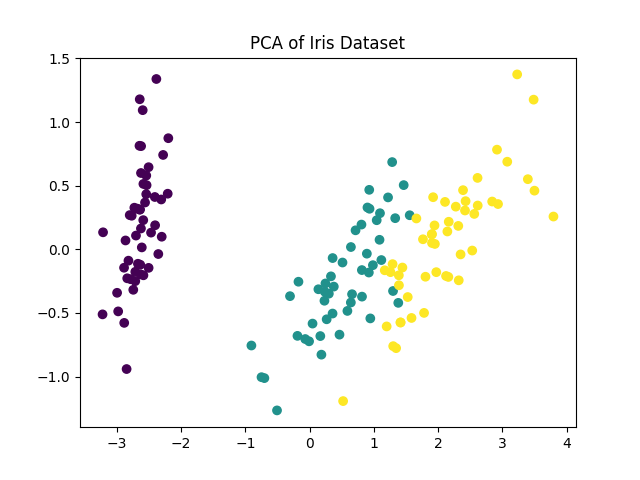
PCA 是一种降维技术,它通过线性变换将数据转换到新的坐标系中,使得大部分的方差集中在前几个主成分上。
应用场景:图像降维、特征选择、数据可视化。
使用 PCA 降维并可视化高维数据:
from sklearn.decomposition import PCA
from sklearn.datasets import load_iris
import matplotlib.pyplot as plt

# 加载鸢尾花数据集
iris = load_iris()
X = iris.data
y = iris.target

# 降维到 2 维
pca = PCA(n_components=2)
X_pca = pca.fit_transform(X)

# 可视化结果
plt.scatter(X_pca[:, 0], X_pca[:, 1], c=y, cmap='viridis')
plt.title('PCA of Iris Dataset')
plt.show()
此内容由惯性聚合(RSS阅读器)自动聚合整理,仅供阅读参考。 原文来自 — 版权归原作者所有。