



惯性聚合 高效追踪和阅读你感兴趣的博客、新闻、科技资讯
阅读原文 在惯性聚合中打开

推荐订阅源

D
Darknet – Hacking Tools, Hacker News & Cyber Security
V
Vulnerabilities – Threatpost
Cloudbric
Cloudbric
G
GRAHAM CLULEY
S
Securelist
Schneier on Security
Help Net Security
Help Net Security
Exploit-DB.com RSS Feed
Project Zero
Project Zero
Spread Privacy
Spread Privacy
P
Privacy International News Feed
C
Cyber Attacks, Cyber Crime and Cyber Security
Cisco Talos Blog
Cisco Talos Blog
T
Tailwind CSS Blog
博客园_首页
有赞技术团队
有赞技术团队
Simon Willison's Weblog
Stack Overflow Blog
Stack Overflow Blog
K
KPMG report finds enterprise disconnect between AI and its ROI | CIO
Latest news
Latest news
T
Tor Project blog
钛媒体:引领未来商业与生活新知
钛媒体:引领未来商业与生活新知
Attack and Defense Labs
www.infosecurity-magazine.com
O
OpenAI News
J
Java Code Geeks
T
Tenable Blog
K
Kaspersky official blog
AWS News Blog
AWS News Blog
S
Security @ Cisco Blogs
The GitHub Blog
The GitHub Blog
T
Threatpost
月光博客
月光博客
H
Heimdal Security Blog
Security Latest
Security Latest
The Hacker News
The Hacker News
Y
Y Combinator Blog
A
Arctic Wolf
Apple Machine Learning Research
C
Cisco Blogs
美团技术团队
Microsoft Security Blog
Hugging Face - Blog
Hugging Face - Blog
T
The Blog of Author Tim Ferriss
C
CERT Recently Published Vulnerability Notes
D
Docker
Google Online Security Blog
D
DataBreaches.Net
V
Visual Studio Blog
H
Help Net Security

Futurism

Scientists Concerned Latest Gene Editing of Human Embryos Could “Open the Floodgates” Scientists Intrigued by Nasal Spray That Reverse Brain Aging in Mice, Say It May Work on Humans as Well Scientists Gene Hacked a Plant So It Grows Five Types of Psychoactive Drugs at Once
Gene Therapy Causes Patient to Grow Alarming Tumor
Krystle Vermes · 2026-05-17 · via Futurism

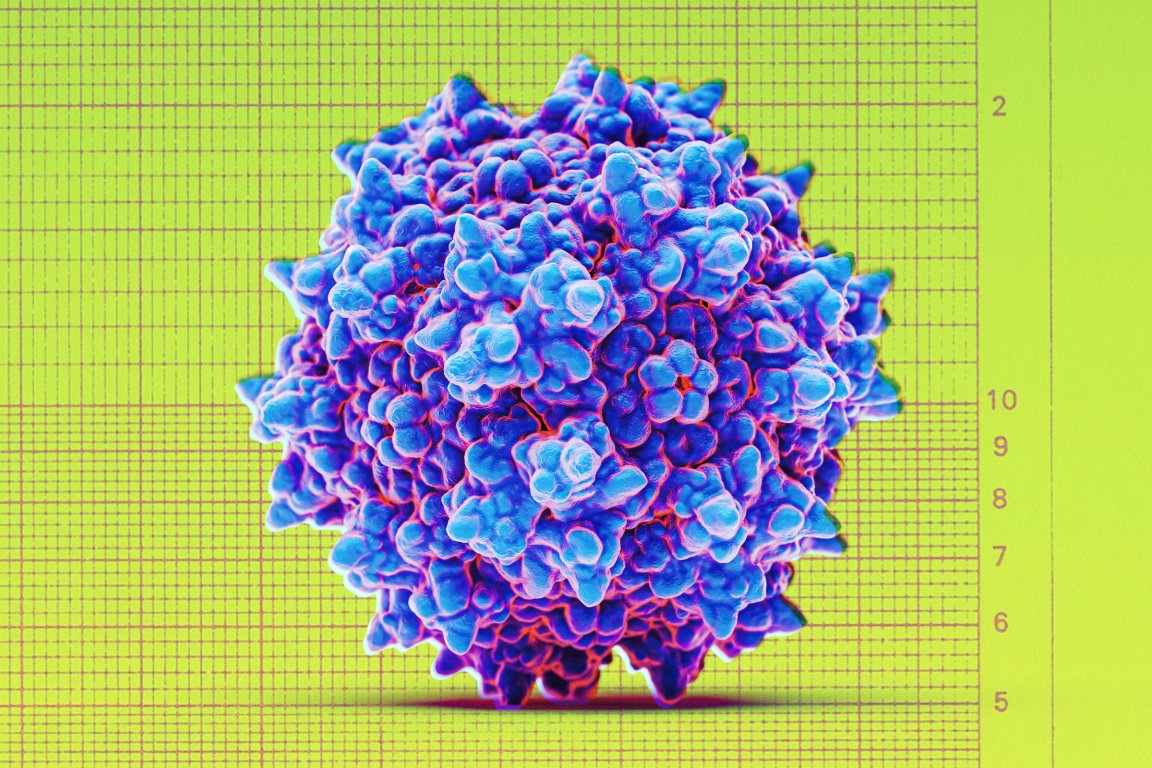
A highly magnified, detailed 3D rendering of a virus particle with a spiky, irregular surface. The virus is colored in shades of blue and purple with red highlights, set against a yellow-green background featuring a grid and numerical scale for size reference.

Getty / Futurism

Sign up to see the future, today

Can’t-miss innovations from the bleeding edge of science and tech

Gene therapy — attempting to help a patient by modifying a gene expression in their body, basically — has shown immense promise for treating a growing range of severe illnesses and disabilities, from Huntington’s Disease to congenital deafness.

But using a gene-hacked virus to tinker with the genetic code of a living human, which has only started in earnest over the past decade or so, is certain to be risky. Now, the first instance of how the practice can backfire is coming to light.

In a new study published in The New England Journal of Medicine, researchers concluded that a young Hurler syndrome patient who received an adeno-associated virus (AAV) — used to deliver a therapeutic gene to the patient’s DNA — later developed a tumor due to the therapy.

The patient’s illness, Hurler syndrome, stemmed from a mutation that thwarted an enzyme in his body, impacting brain development. A bone marrow transplant was unable to resolve the issue, which ultimately led to the gene therapy. After receiving the treatment, the boy’s brain began to develop appropriately for his age, but by age five, doctors spotted a walnut-sized tumor in his brain. The AAV, researchers came to believe, spurred the development of the tumor after it mutated an unintended gene.

Luckily, the story has a happy ending. The tumor was successfully removed, and the development of the patient’s cognitive abilities remains on track.

But it’s hard not to worry about this newly discovered risk. Researchers involved with the case believe that this outcome is a rarity, Science noted, but it’ll surely weigh on other patients — and their loved ones — who undertake similar treatments in the future.

More on gene hacking: Scientists Are Using AI for Improved Gene Hacking