




Sign up to see the future, today
Can’t-miss innovations from the bleeding edge of science and tech
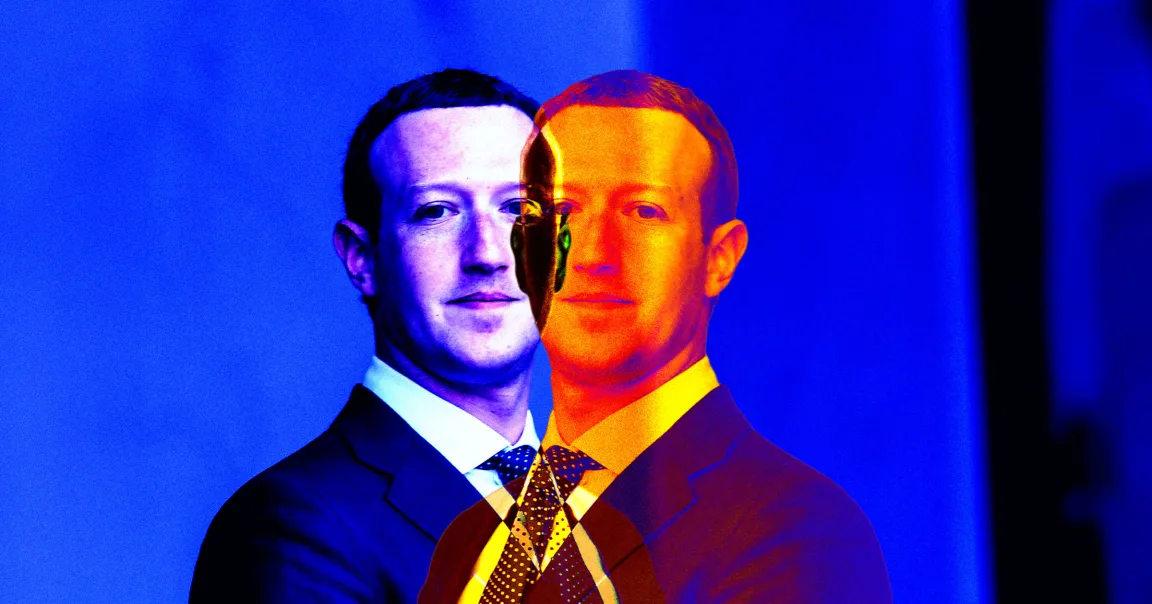
Even for an executive long known by employees as the “Eye of Sauron,” Meta CEO Mark Zuckerberg is taking the concept of micromanagement to its final form, the Financial Times reports, by using AI to develop a “photorealistic, AI-powered 3D” version of himself to converse with and offer feedback to employees.
The dystopian effort is part of a broader push to create avatars, based on public figures, that Meta’s customers can interact with in real time. It’s a concept that has struggled to catch on with the public, if the company’s previous forays into character chatbots are anything to go by.
It could also quickly turn into a massive resource hog, as inside sources told the FT, putting even more strain on already-hard-to-come-by computing power. That’s not to mention widespread concerns over access to sexualized AI avatars landing in the wrong hands.
The faux Zuckerberg AI will be trained on a wealth of imagery of the executive and his voice. The effort is personally being overseen by the billionaire, who is reportedly spending five to ten hours a week vibe coding.
It’s not even the company’s only effort like it. Staffers are also working on a separate and reportedly unrelated project to develop a “CEO agent” that allows employees to retrieve information more quickly, per the FT.
Meta’s desperate push to stay relevant in the ongoing AI race is more palpable than ever. The news comes after the company’s exorbitantly expensive Superintelligence Labs released its first “Muse Sparks” AI model, which is designed to be both easy on compute and fast. In practice, however, it falls well short of the competition in terms of performance.
Previous attempts by Meta to recreate public figures using AI have fallen flat on their face. Case in point, in October 2023, the company announced that it was paying celebrities millions of dollars to turn them into chatbots. Following a litany of bad press and the chatbots making highly questionable claims on behalf of their flesh-and-blood counterparts, Meta decided to shut down the project less than a year after launching it. Yet, its chatbots continued to make eyebrow-raising comments well into 2025.
In other words, whether its latest forays into reviving the idea with photorealistic avatars will fare any better is dubious at best, especially considering its potential to turn into a massive strain on resources.
Meanwhile, staffers are being pushed to use AI tools as much as possible, with Zuckerberg telling investors during a January earnings call that “Meta can get more done” by “investing in AI-native tooling,” while “elevating individual contributors and flattening teams.”
Last month, news emerged that the company was planning sweeping layoffs that could affect at least 20 percent or more of the company.
According to the FT, product managers are running staffers through AI-focused “skills baseline” and “vibe coding” exercises, prompting fears over future job cuts.
Those who remain could soon be forced to sit down with a digital stand-in of Zuckerberg to get answers, potentially setting the stage for some very confusing days ahead as more tech workers are getting the axe.
More on Meta: First AI Model From Zuckerberg’s Wildly Expensive Superintelligence Lab Flops Compared to Virtually All Rivals