
惯性聚合 高效追踪和阅读你感兴趣的博客、新闻、科技资讯
阅读原文 在惯性聚合中打开

推荐订阅源

博客园 - 司徒正美
大猫的无限游戏
大猫的无限游戏
腾讯CDC
J
Java Code Geeks
博客园 - 【当耐特】
Microsoft Azure Blog
V
Visual Studio Blog
人人都是产品经理
人人都是产品经理
博客园 - Franky
博客园 - 聂微东
阮一峰的网络日志
阮一峰的网络日志
美团技术团队
云风的 BLOG
云风的 BLOG
freeCodeCamp Programming Tutorials: Python, JavaScript, Git & More
U
Unit 42
雷峰网
雷峰网
B
Blog RSS Feed
博客园_首页
量子位
F
Fortinet All Blogs
罗磊的独立博客
H
Hackread – Cybersecurity News, Data Breaches, AI and More
酷 壳 – CoolShell
酷 壳 – CoolShell
C
Check Point Blog

Futurism

Huge Survey Finds the Truth About What mRNA Vaccines Do to the Human Body Peptide That Makes You Tan Linked to Skin Cancer, Doctor Warns Giant Pickup Trucks Are Killing Pedestrians in Incredible Numbers We Are Extremely Skeptical of MidJourney's Weird Device That It Claims Submerges Your Entire Body and Scans It With Ultrasound Trending Surgical Procedure That Changes the Color of Your Eyes Alarms Scientists Parasite That Affects Cognition Has Quietly Infected Billions of People DuckDuckGo's AI Feature Is Telling Users That Trump Died of Rabies Earlier This Month It Sounds an Awful Lot Like They Gave Trump Early Access to an Incredibly Powerful Experimental Weight Loss Drug Research Suggests the Older You Get, the More Weed You Should Smoke TikTok Has Been Completely Taken Over by AI Slop We Are Admittedly a Bit Startled by This Medical Case Report About Giving an Elderly Woman With Advanced Alzheimer's a Gigantic Dose of Psychedelic Mushrooms Just to See What Would Happen Google's AI Overviews Feature Is Telling Users That SCP Horror Fiction Entities Are Real MAHA Furious as Kennedy Moves to Ban Their Medicine: Gas Station Heroin Clavicular's "Botched" Nose Job Illustrates the Dangers of Looksmaxxing Woman's Death Blamed on Hospital's AI System Massive Protests Erupt in the Streets of Kenya Due to the Trump Administration's Mysterious Ebola Facility GLP-1 Drugs Appear to Prevent Cancer, New Research Finds Working From Home Has a Grim Effect on Your Brain, Surprise Research Finds Scientists Concerned Latest Gene Editing of Human Embryos Could “Open the Floodgates” Doctors Inject Human Subjects With First Vaccine Designed by AI New York Accuses Company of Smuggling Injectable Substance Made From Cadavers Psychiatrists Investigating People Who Get Trapped Inside Vivid Daydreams It Turns Out Lookmaxxing Has Some Extremely Emasculating Side Effects Ebola Expert Fears Outbreak Is Heading Into “Nightmare Scenario” Plans Accelerated for Human Trials of Tooth Regeneration Startup Testing Drugs on Freshly Extracted Human Brains That Are Kept On Life Support Woman Alarmed When Her Trusted Therapist Starts Recording Her With AI Apocalyptic “Fungal Storms” Are Now Surging Across the US Kids Are Flying Into Lunatic Rages When Their iPads Are Taken Away Influential Tech Founder Says His Peers Are Suffering From Mass AI Psychosis
People Are Getting Plastic Surgery to Look More AI-Generated
Frank Landymore · 2026-05-19 · via Futurism

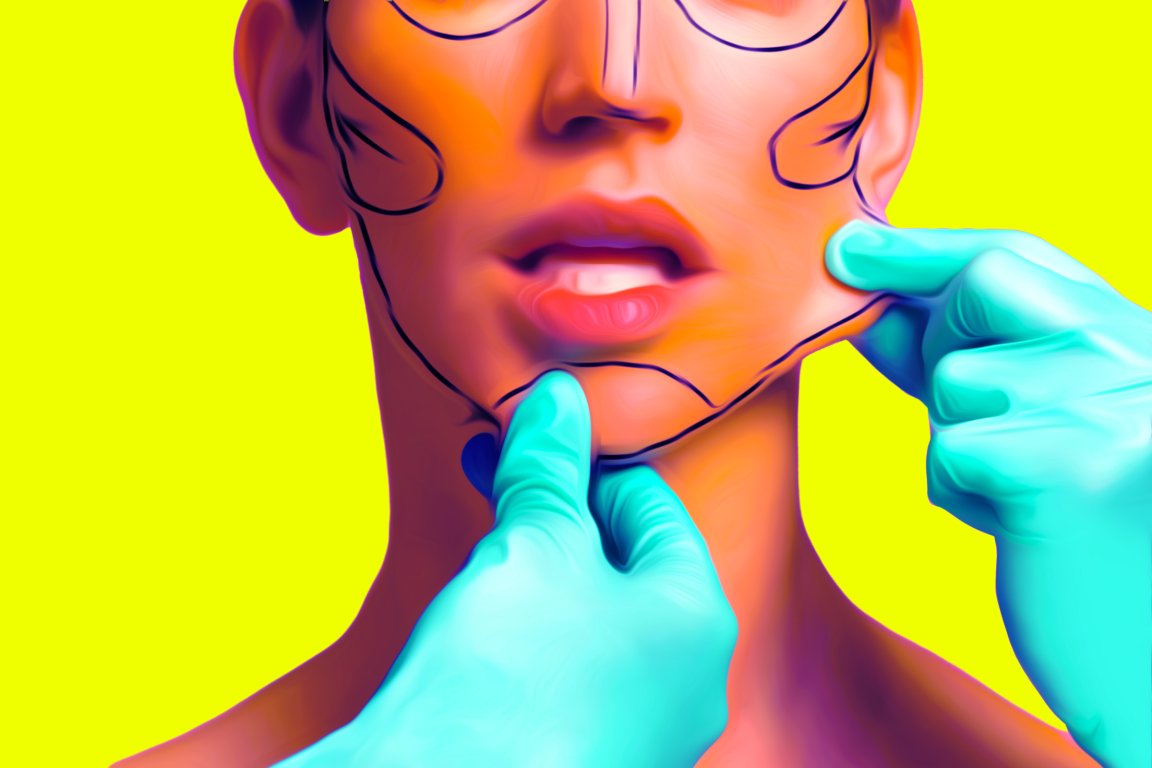
Close-up of a person's lower face and neck with black surgical markings outlining areas on the cheeks and chin, manipulated so that it looks like an AI generation. Two hands wearing blue medical gloves are gently pinching the skin on the chin and cheek. The background is bright yellow.

Illustration by Tag Hartman-Simkins / Futurism. Source: Getty Images

Sign up to see the future, today

Can’t-miss innovations from the bleeding edge of science and tech

Life imitates AI art.

Plastic surgeons say that more patients are coming in and asking to look like an AI-generated version of themselves with cartoonishly unrealistic features, in the latest grim sign of how the tech preys on our insecurities and even shapes beauty standards.

Rachel Westbay, a cosmetic dermatologist in New York, described how one woman brought in a caricature-like image with huge doll-like eyes generated by ChatGPT. 

“It’s like saying I want to look like Ariel from ‘The Little Mermaid,'” Westbay told Business Insider. “I was shocked.” She called the AI aesthetic a “Bratz doll” look, with huge lips, even bigger eyes, and a chiseled jaw.

AI isn’t the first digital technology to twist people’s perception of themselves and reinforce unhealthy beauty standards. Think Snapchat filters and our current influencer-driven social media environment. 

But as the disturbing rise of AI psychosis shows, AI’s power to distort our thinking and feed on our insecurities is unmatched. And unlike typical filters, an AI image tool provides more customization, and an accompanying chatbot could gas up someone into thinking that their AI-laden lineaments are not only an upgrade, but achievable. The very term “AI” brings a certain heft to the table that a beauty filter doesn’t. A filter doesn’t understand anything, but your flattering chatbot does — or so it might seem that way to someone who doesn’t know better.

That puts plastic surgeons in a tough spot; their authority is now being challenged by sycophantic AIs. A survey published last year by Beth Israel Deaconess Medical Center and cited by BI found that patents who used AI to touch up their photos had “significantly higher” expectations for their plastic surgery.

Sachin Shridharani, a plastic surgeon in Manhattan, recalled how a woman in her 70s came in with an AI-generated photo of herself asking for a “surgical time machine” and to look like her forty years-young granddaughter.

“I explained that we can’t recreate what she looked like when she was younger, but she remained insistent,” Shridharani told BI.

Some in the field think they can use AI to reinforce their authority. Patients have always had unrealistic expectations and have clashed with surgeons. In theory, a specialized AI tool could help simulate procedures realistically, according to Justin Sacks, a reconstructive plastic surgeon at Washington University.

“Do you realize the conversation that you would have and the expectations that you would have after that clinic visit? It would be astounding,” Sacks told BI.

Of course, this introduces its own risks. No one wants a doctor who’s too dependent on AI, a still error-prone technology.

More on cosmetics: Plastic Surgeons Are Using Material From Dead People on New Patients