

惯性聚合 高效追踪和阅读你感兴趣的博客、新闻、科技资讯
阅读原文 在惯性聚合中打开

推荐订阅源

Last Week in AI
Last Week in AI
D
DataBreaches.Net
腾讯CDC
Recent Announcements
有赞技术团队
有赞技术团队
A
About on SuperTechFans
Cyber Security Advisories - MS-ISAC
Google DeepMind News
Microsoft Security Blog
云风的 BLOG
云风的 BLOG
罗磊的独立博客
月光博客
月光博客
MyScale Blog
MyScale Blog
U
Unit 42
Martin Fowler
Martin Fowler
Stack Overflow Blog
Stack Overflow Blog
T
Tailwind CSS Blog
Engineering at Meta
Engineering at Meta
N
Netflix TechBlog - Medium
G
Google Developers Blog
博客园 - 【当耐特】
D
Docker
I
InfoQ
雷峰网
雷峰网

Blog — PlanetScale

Keeping a Postgres queue healthy — PlanetScale Patterns for Postgres Traffic Control — PlanetScale Graceful degradation in Postgres — PlanetScale High memory usage in Postgres is good, actually — PlanetScale Stripe Projects partnership: Provision PlanetScale Postgres and MySQL databases from the Stripe CLI — PlanetScale Enhanced tagging in Postgres Query Insights — PlanetScale Behind the scenes: How Database Traffic Control works — PlanetScale Introducing Database Traffic Control — PlanetScale Scaling Postgres connections with PgBouncer — PlanetScale Drizzle joins PlanetScale — PlanetScale Video Conferencing with Postgres — PlanetScale Faster PlanetScale Postgres connections with Cloudflare Hyperdrive — PlanetScale Introducing the PlanetScale MCP server — PlanetScale Database Transactions — PlanetScale Automating our changelog with Cursor commands — PlanetScale Postgres 18 is now available — PlanetScale Using MotherDuck with PlanetScale — PlanetScale $50 PlanetScale Metal is GA for Postgres — PlanetScale AI-Powered Postgres index suggestions — PlanetScale $5 PlanetScale is live — PlanetScale Announcing Vitess 23 — PlanetScale $50 PlanetScale Metal — PlanetScale Report on our investigation of the 2025-10-20 incident in AWS us-east-1 — PlanetScale $5 PlanetScale — PlanetScale Benchmarking Postgres 17 vs 18 — PlanetScale Larger than RAM Vector Indexes for Relational Databases — PlanetScale Partnering with Cloudflare to bring you the fastest globally distributed applications — PlanetScale Processes and Threads — PlanetScale PlanetScale for Postgres is now GA — PlanetScale Postgres High Availability with CDC — PlanetScale
Deploy requests now alert on potential unwanted changes —...
Mike Coutermarsh · 2022-07-06 · via Blog — PlanetScale

Mike Coutermarsh |

We’d like to share a little detail we just shipped to the Deploy Request UI. We now show you if your schema change could result in the loss of any data due to a dropped column or table.
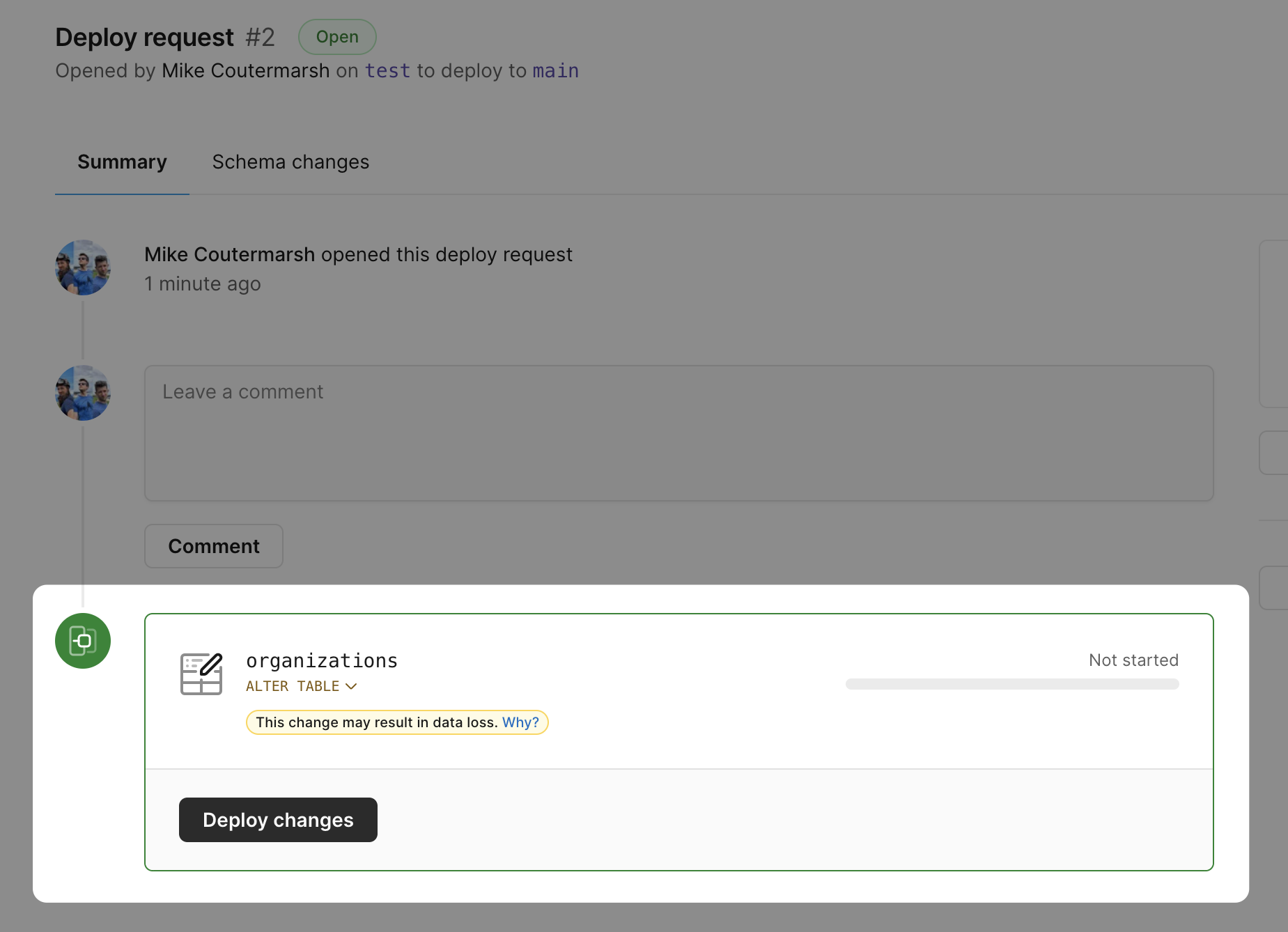
Deploy Request data loss warning

We’re on a mission to make deploy requests the safest and least stressful way to make schema changes.

Earlier this year, we release an in-dashboard feature that lets you revert a production schema change with one click, all while keeping any data that was written in the meantime.

Now, with this small addition to the UI, we hope to further protect developers from mistakes by surfacing warnings straight on the deploy request page.

Inspired by a rename

The inspiration for this feature primarily came from developer's experience renaming columns through PlanetScale. It was a common question that came up: how do I safely rename a column?

A rename is an unsafe operation when it comes to zero downtime deployments.

For a rename to work successfully, you'd have to deploy your schema change and code changes at exactly the same time. This is highly risky, if not impossible to get right.

In cases where you do want to do a rename, here’s the safe way:

  1. Create the new column
  2. Update your application to double write to both the old and new column
  3. Run a script to backfill old data
  4. Update your app to read from the new column
  5. Remove double writes
  6. You can now safely drop the old column

Each step is a deployment of your application. This is certainly a bit of extra work, but it’s the safest way to complete a rename without risk to production or having to take your application down.

Try it

You can give this a try today. Drop a table or column in a deploy request, and you’ll see you get alerted about the risky change.
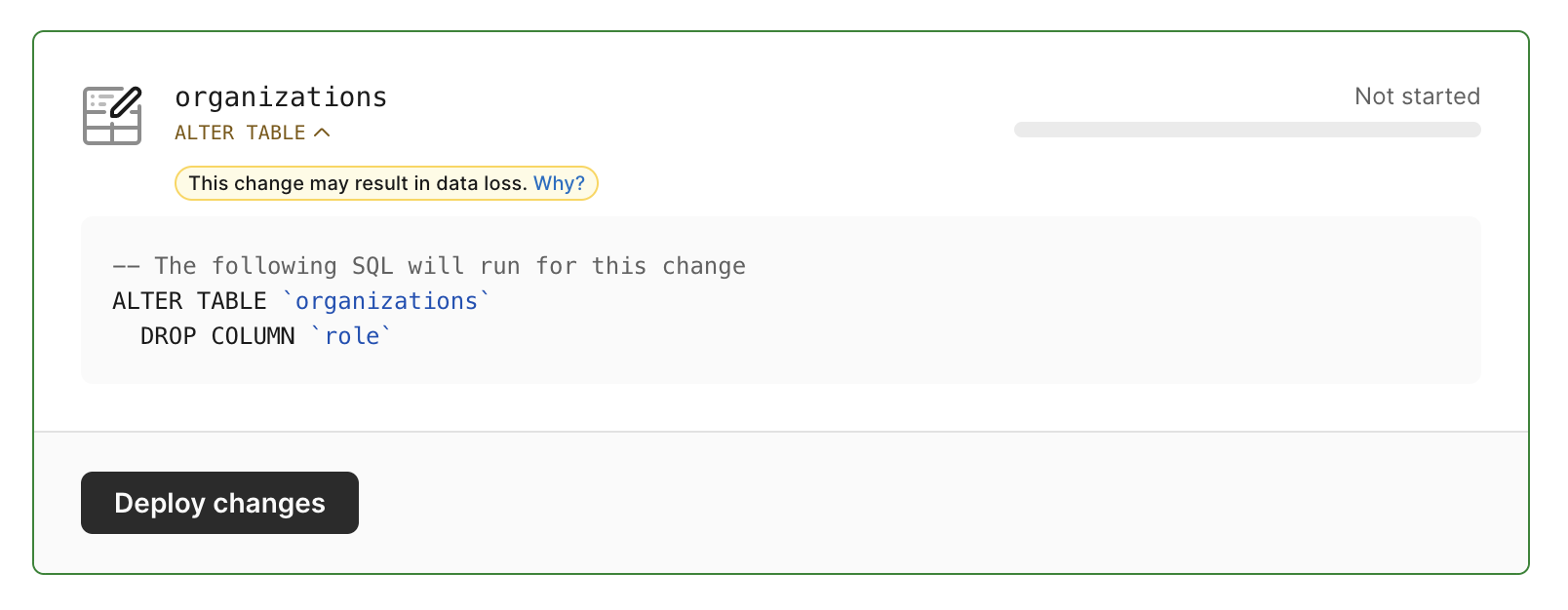
Data loss warning with example drop column SQL

If you have any feedback, we’d love to hear it. You can find us on Twitter or our GitHub discussion board.