


Learning is one of the many areas ripe for disruption from AI. We know developers are using AI to learn to code, and specifically to learn how to code for AI. More research is being done into what affects AI may have on learning, but research hypothesizes that cognitive offloading may hamper the learning process when AI is too heavily relied upon. In February, we surveyed our users with research designed in partnership with OpenAI and found out that more developers than ever are using AI at work to learn, they are using other traditional online resources to validate but still find trust in AI a major barrier. Almost 900 Stack Overflow respondents let us know what learning looks like with AI.
In the past few years, educators have bemoaned the challenges they face with AI tools circumventing traditional learning pathways. In a recent Brookings poll, students, parents, and teachers all rate “undermine cognitive development” as the number one risk of using AI at school. Traditional learning pathways have embraced online learning resources in recent decades but online learning participation accelerated during the COVID-19 pandemic for most students in traditional settings. One study that compared students in a Chinese university setting before, during, and after the pandemic restrictions found 65% of students found face-to-face courses more effective for learning prior to mandatory online attendance in 2020, and this only decreased to 63% in 2023 while in-person learning was restricted and AI tools were just starting to come online.
In comparing the results from the 2024 and 2025 Developer Survey and findings in this pulse survey, we find a clear trend. On one hand, use of AI as a learning tool is increasing: 64% of developers use AI to learn, an increase from 44% in 2025 and 37% in 2024. AI tools are getting better and more prevalent, sure, but respondents to this survey explicitly state that "starting from scratch" (28.2%) and "efficiency" (26.3%) are the top drivers for using AI to learn.
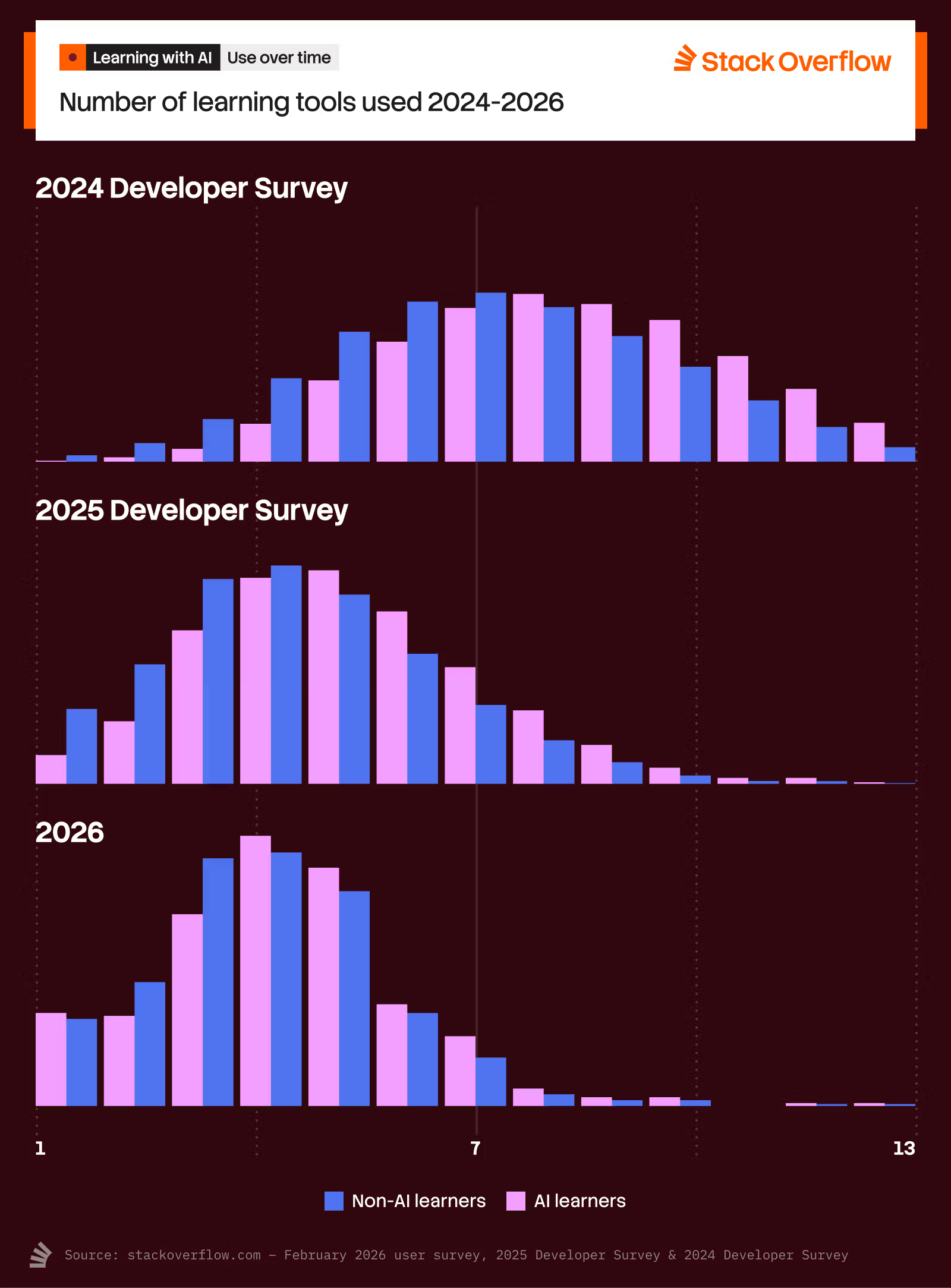
Beyond the increased use of AI tools, developers seem to be using less learning tools overall: when asked “How did you learn to code?” and “What online resources do you use to learn to code?” in 2024, approximately 49% used 8 or more learning resources. In 2025 that dropped to 9% and in this survey down to 7%. (Note: normalization to make choices from 2024 match 2025 and the pulse survey was needed). This consolidation shows that AI is a consistent factor while consolidation occurs and should be considered as part of the explanation. This decrease in online resources used to learn applies to those that did and did not use AI; both groups have been using fewer tools.
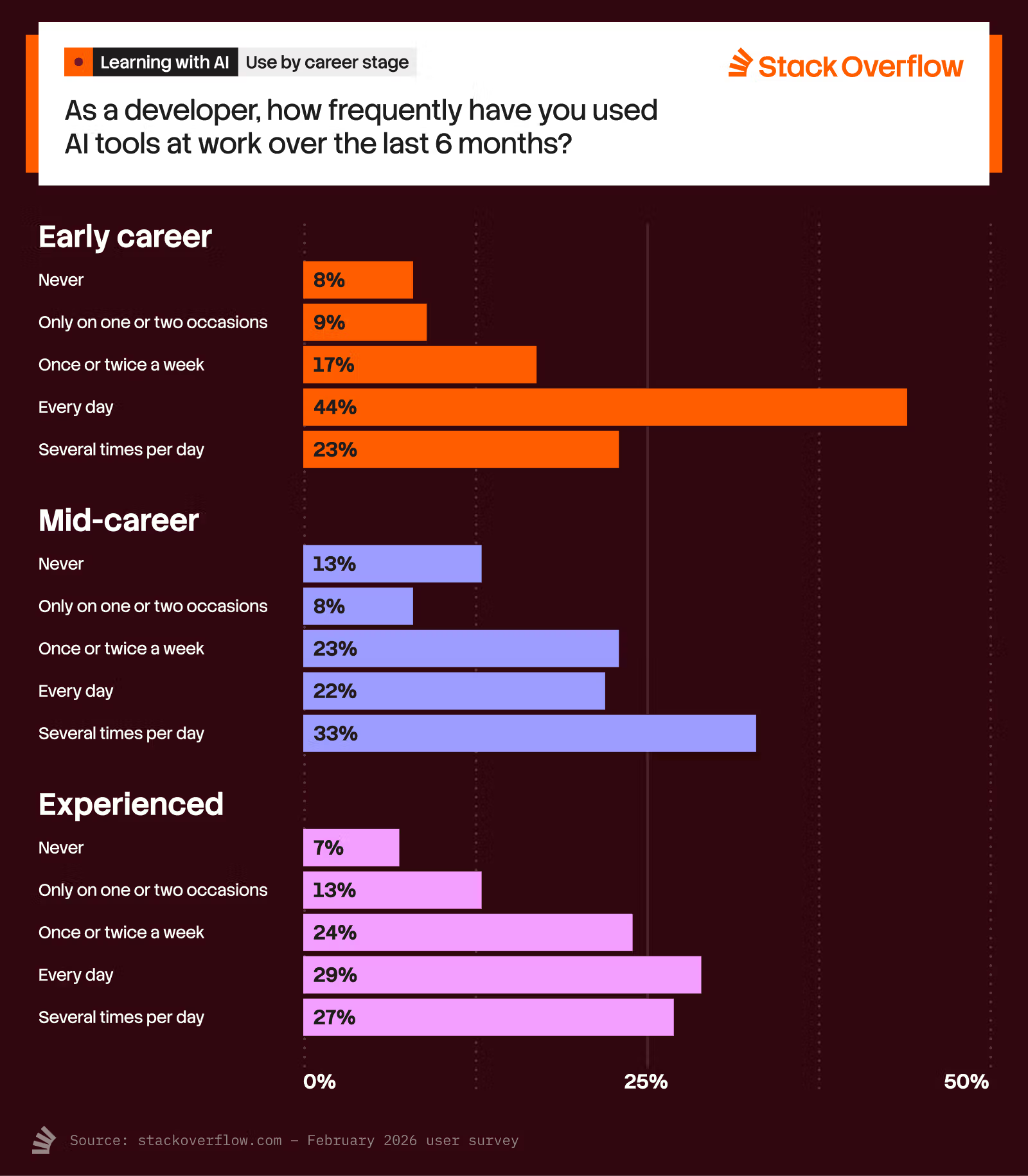
Developers continue to increasingly use AI at work. Compared to the 2025 Developer Survey where 47% indicated using AI tools every day, that percentage has grown to 58%. Professional experience and usage are related, a trend beginning in our last Developer Survey . Experienced developers (56%) use AI at work every day, but less than mid-career developers (59%) who use it less than early-career developers (68%). The majority (69%) of developers indicate that they have been spending time learning in the last six months, whether it’s a new language or to solve a specific problem.
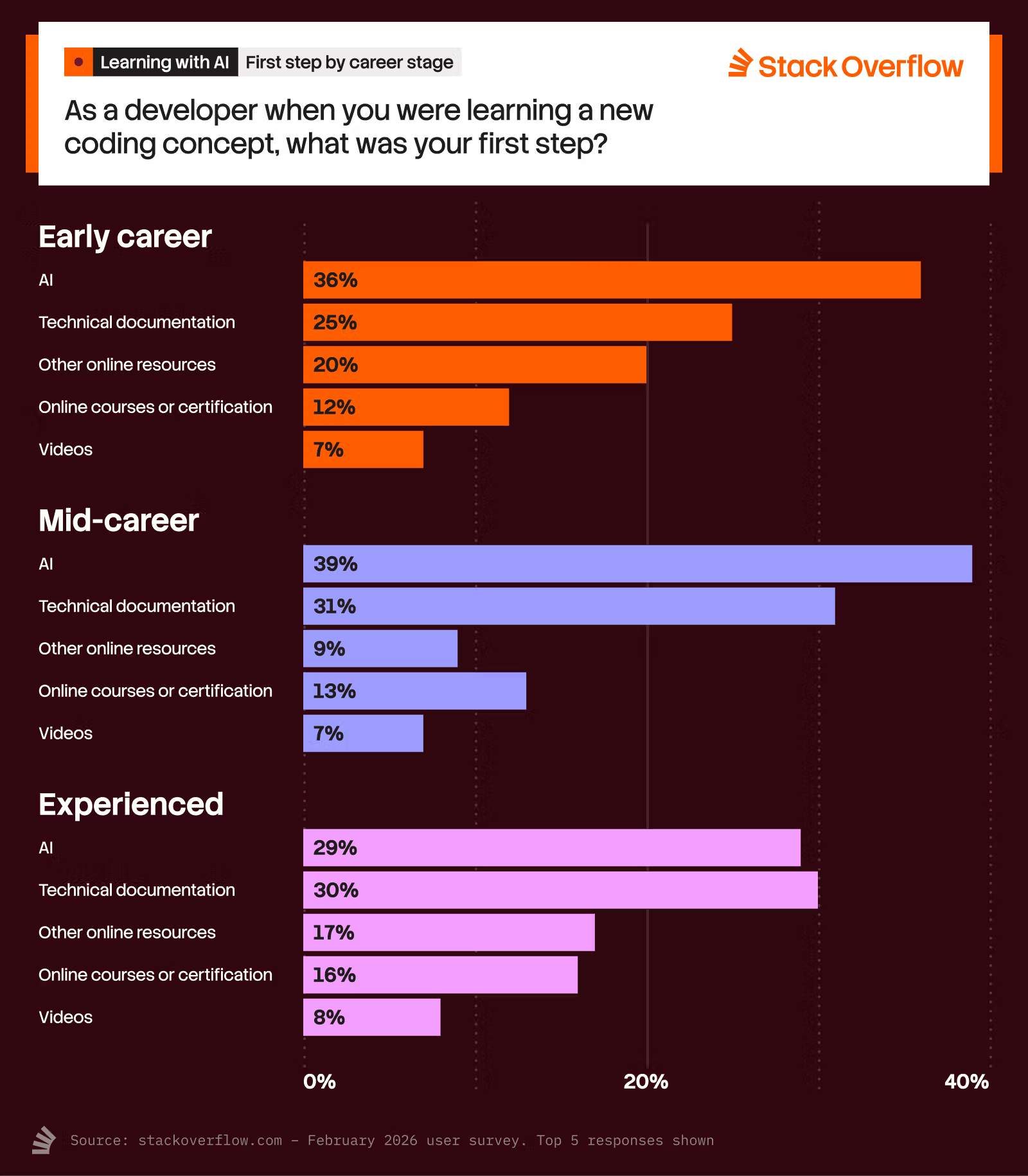
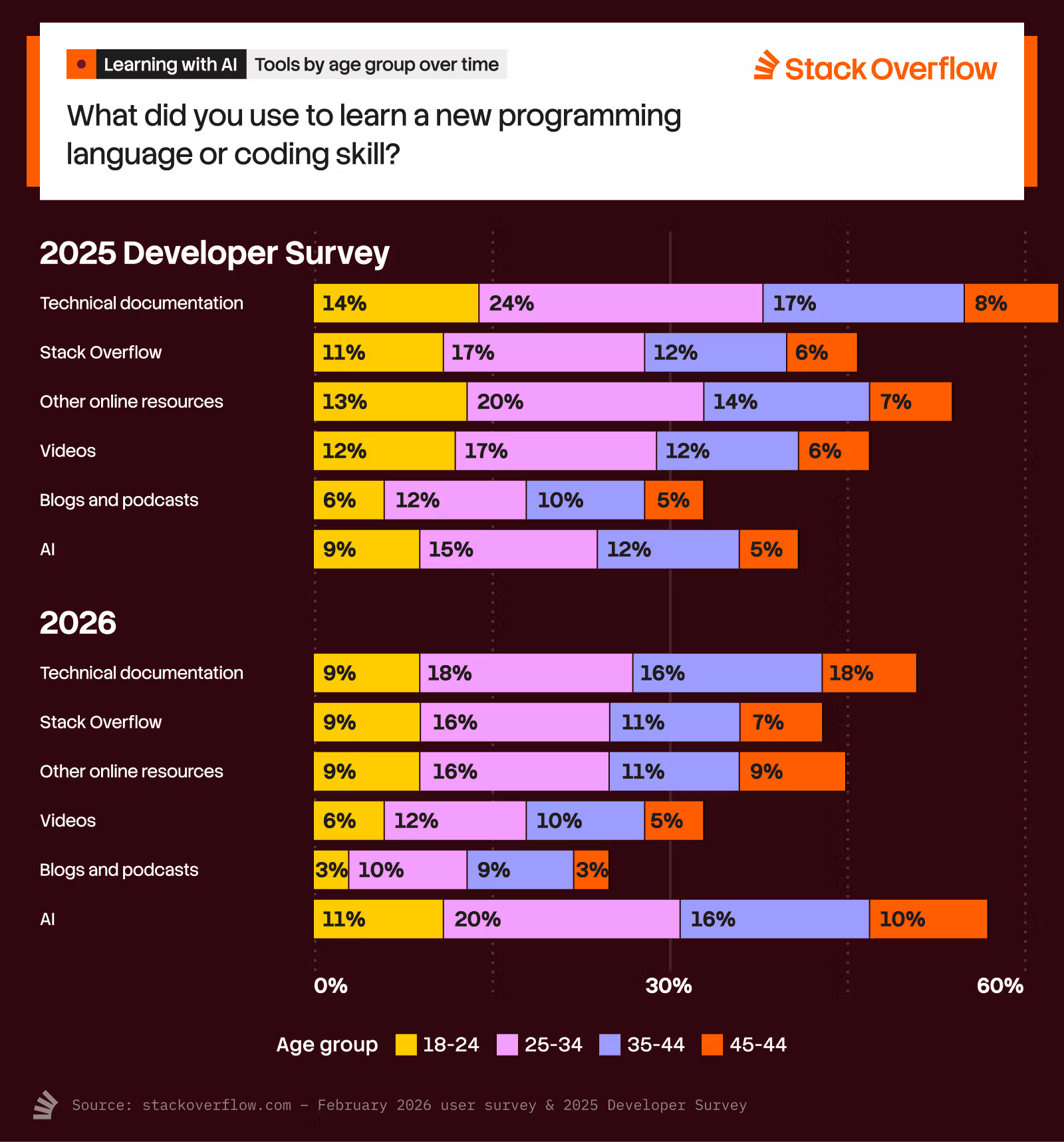
Experienced developers are just as likely to turn to technical documentation or AI tools as a first step in their learning journey while younger, less experienced developers are mostly turning to AI first. 36% of early career developers and 39% of mid-career developers turn to AI first, while experienced developers are at parity although slightly favor technical documentation as a first step (30%) over AI tools (29%). Learning, whether it is for a just-in-time solution or for competency in a complete subject area, takes time and time is a barrier to learning. 35% of developers that indicated they are not using AI to learn indicate time as what holds them back, and it is the top cited reason above low motivation (11%) or not knowing where to start (10%). Lack of time for developers that use AI to learn is a much lower cited barrier (7%) in comparison and shows that time is a real issue to combat for busy professionals and could explain why technical documentation is falling out of favor as a first step in the learning process.
While efficient and useful for motivating us past a blank page, AI still suffers from a trust gap. When asked what barriers keep respondents from using AI to learn, 38% indicate a lack of trust in the results. Trust remains a major sticking point with developers, and it is typical for experienced developers to show the highest rate of distrust compared to other experience levels. What is interesting at this juncture is that we are seeing more commentary on the “AI tax”.
- Open source communities do not want to accept AI-assisted pull requests
- Blog writers have called out the grammatical tells of AI writing (Hello, rocket ship emoji and “snappy triads”)
- Surveys, such as this recent AI proficiency survey, continue to show that some AI users do not save time at work with AI tools
Trust in AI at work has declined between our 2024 and 2025 Developer Survey results, but we know from 2025’s survey that users report higher trust when they use AI more: 49% of daily users trust AI compared to 30% of weekly users that trust AI. In this pulse survey, we see a similar pattern where “lack of trust in the results” is the top barrier to learning with AI for both daily and weekly users, and more so with weekly users (47% cite trust as a barrier compared to 38% of daily users).
Trust in AI tools can be contextually nuanced. While AI may be a first step for early career and mid-career developers, experienced developers are still using technical documentation first. Despite the growing use of AI, only 1% use AI alone. Most respondents indicated tool overlap: both AI and technical documentation (58%), AI along with other online resources (search, forums, online communities) (54%), and AI and Stack Overflow (50%) .
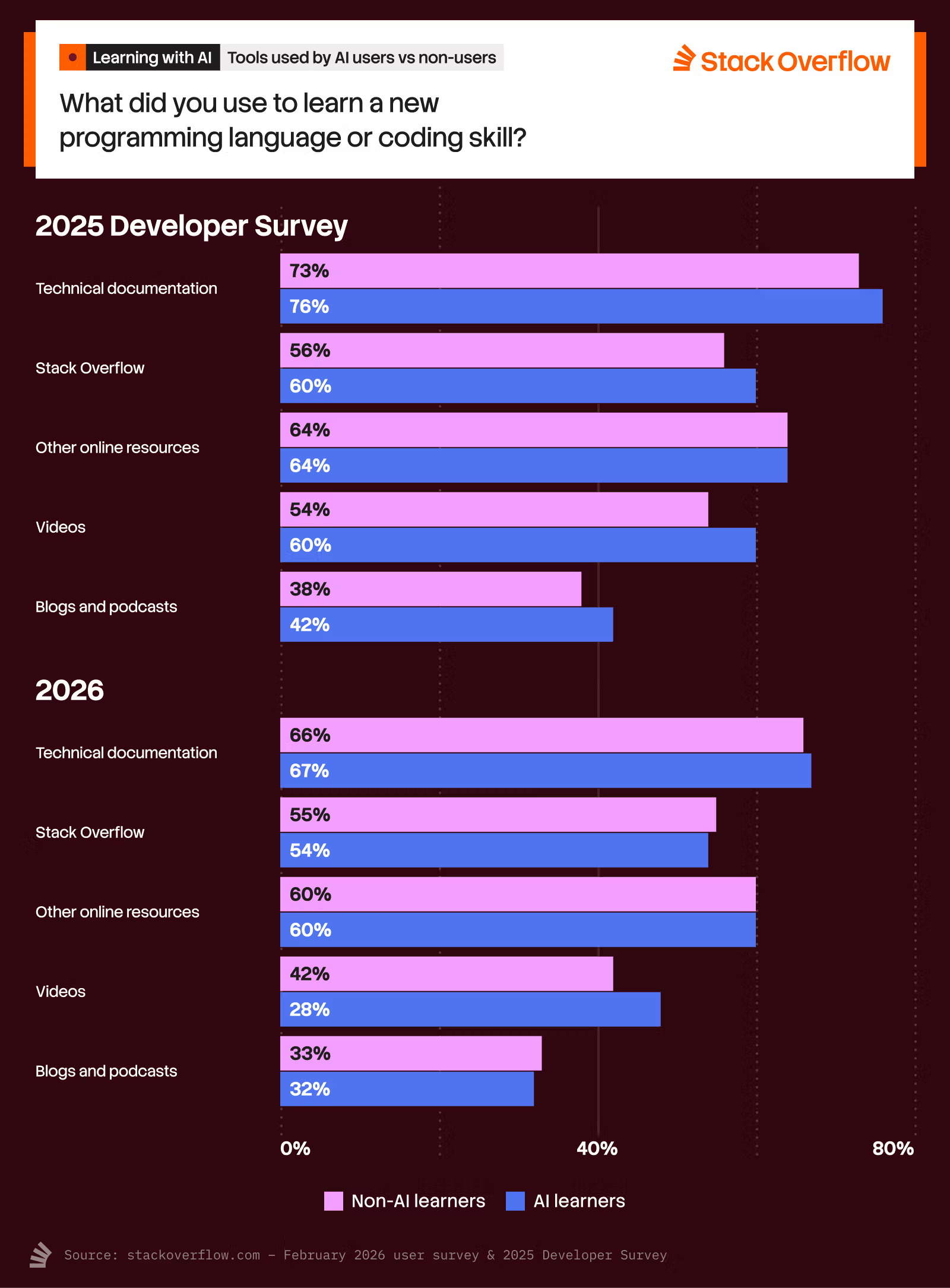
While a consolidation of resources is occurring, it is not wholesale replacement but rather adding a validation step to the learning process. All the popular tools are still used as much or more for AI-enabled users than those not using AI, but younger developers (18 - 34) appear to be driving the trend of less is more. This could still be an effect of AI on the online ecosystem as the content and search algorithms have been steadily adjusting to AI themes and tools, too.
Jessica Talisman, an information architect, describes the key lack in AI knowledge as a process where LLMs “mimic the documentary chain of citations and footnotes without satisfying its duty in maintaining provenance.” Properly structured data systems do not just capture timestamps, they store all types of meta properties, similarly to how archival references do for works of art, in order to establish a record of relationships. Maintaining an auditable record trail from current day to provenance instills authority of a subject in the the data itself. Learning similarly benefits from tracking changes in understanding as they affect outcomes in order to prove or disprove theory and hypothesis. In obscuring the citations and background on answers, this is the inherent AI tax that is added to the learning process that professional developers have come to recognize in the workplace, too.
The previously mentioned research for Chinese university students highlighted one main insight from follow-up interviews about learning environments. From these interviews, researchers confirmed that students preferred “humorous teachers” and 62% of students self-reporting to have a class with one also reporting learning and memorization improvements. For that study, the working hypothesis is that a teacher’s ability to hold the classroom’s attention is what is key. Similarly, the narratives around the benefits of fully in-office or hybrid working over fully remote working environments promise to “improve employee productivity and collaboration”, “maintain leadership visibility” and “reinforce team cohesion” according to 2025 Owl Labs surveys in the U.S., U.K., France and Germany. An environment with captivating personalities can be a major force for developers to learn, whether in school or at work. If AI is going to continue to help developers learn, some degree of human intervention will be necessary.
But using an AI job platform for certification and agentic job search representation might be too much for developers. While most developers (57%) agree that AI has gotten somewhat or significantly better suited to learning, less than half (44%) would find a certification for skills learned in AI platforms somewhat or very valuable. 24% of developers would only be interested in AI agents representing them in a job search platform if certain conditions were met, the top two being human intervention at every step (46%) and data transparency (44%).
| Response | Percent |
|---|---|
| Absolutely | 16.9% |
| Definitely not | 27.6% |
| I would if certain conditions were met | 23.8% |
| I would prefer not to | 18.1% |
| Unsure | 13.6% |
| Response | Percent |
|---|---|
| Costs are low or it is free | 40% |
| Human intervention available at all steps | 46.2% |
| I would not use an AI-powered job platform regardless of features | 28.5% |
| It was able to improve upon current job board site functionalities | 31.5% |
| It was tied to tools to rate my skills or help certify me in new skills | 28.5% |
| Provided recommendations for lateral or similar job positions I hadn’t considered | 40.2% |
| Transparent data usage policy | 42.2% |
As of now, AI is being used more than ever at work and in learning environments but developers consistently reveal that trust is still a factor to include in those learning workflows and are using technical documentation, online searches and Stack Overflow to verify AI’s learning moments. There’s still a strong place for human-curated and human-generated knowledge even as AI becomes new developers’ first source for answers.