


When analysts reach for an explanation of the current global disorder, they tend to focus on a single cause. For many, it is the recent wave of transactional populism dismantling the multilateral architecture and sowing chaos within traditional alliances. For others, it is the return of high-intensity territorial conflict in Europe and the Gulf, marking the moment the post-Cold War settlement was openly repudiated. For the more structurally minded, it is the geopolitical friction of a shifting global hegemony. Each account captures something real. None is sufficient.
The honest answer is messier and more consequential.
The first driver of recent global disorder is the end of unipolarity. The post-Cold War order rested on a hegemonic power with both the capacity and the will to underwrite rules, markets and security guarantees. That condition no longer holds. The number of globally influential countries has tripled since the end of the Cold War, rising from 13 to 34. The result is not a new balance of power but a more crowded and competitive geopolitical landscape in which middle powers have greater room for manoeuvre and less reason to defer.
The second driver is Russia’s invasion of Ukraine in 2022, arguably the single most disruptive event of the past decade. This was not simply another regional war. It was a direct assault on the UN Charter order by a permanent member of the Security Council. It also forced a global realignment and exposed a faultline that Western governments have preferred to ignore. A majority of countries in Asia, Africa and the Americas largely declined to condemn Moscow, signaling that the normative consensus underpinning the liberal order was thinner than it appeared from Brussels or Washington.
Third, and most structurally significant of all, is the economic rise of China, India and a cohort of emerging powers — and the relative, though far from absolute, decline of American economic centrality. In 1990, China accounted for roughly 4% of global GDP. Today it is nearly 19% on a purchasing power parity basis. The United States, meanwhile, has held roughly 25% of global GDP for three decades. What has collapsed is not American dominance but American singularity. And yet global governance has not moved with it — the IMF, World Bank, WTO and Security Council still reflect the distribution of power as it existed in 1945 or 1991.
The fourth driver is the weaponization of interdependence. Financial networks, export controls, investment screening, tariffs, payment systems and technology chokepoints are now routinely used as instruments of coercion rather than commerce. When interdependence becomes a strategic liability rather than a stabilizing bond, countries diversify away from it. The trust that made deep integration possible is dissolving, and it is dissolving deliberately.
The fifth driver is the return of America First as a governing doctrine rather than a campaign slogan. President Donald Trump’s second term did not simply signal irritation with multilateralism. It accelerated the dismantling of parts of the order that Washington itself had built. The tariff shock, the erosion of NATO commitments, the hollowing of international institutions all removed the scaffolding that kept the post-war order functioning even under strain. Trump is dismantling the old order without anyone knowing what comes next.
Sixth is conflict proliferation, accelerated by technology. There are roughly 60 active state-based conflicts — the highest count since the Second World War — with over 150,000 conflict-related deaths recorded in 2024 alone. The changing economics of warfare are part of the explanation. The number of companies manufacturing drones rose from six in 2022 to over 200 in 2024. Technology is making war cheaper, more accessible and harder to terminate. This is evident in the Israel-US war against Iran, a conflict with global dimensions whose effects extend through energy markets, fertilizer and superconductor supply chains, and with inflationary spillovers.
“
The world did not change overnight. It simply stopped pretending it had not already changed.
”
The seventh driver is the long shadow of COVID 19. The pandemic inverted decades of globalization logic almost overnight — exposing supply chain fragility, turbocharging nationalist politics, exacerbating inequalities, reversing human mobility trends, and triggering fiscal interventions that entrenched industrial policy as a mainstream instrument of statecraft. It also stripped away the illusion that efficiency alone could be the organizing principle of an open world economy.
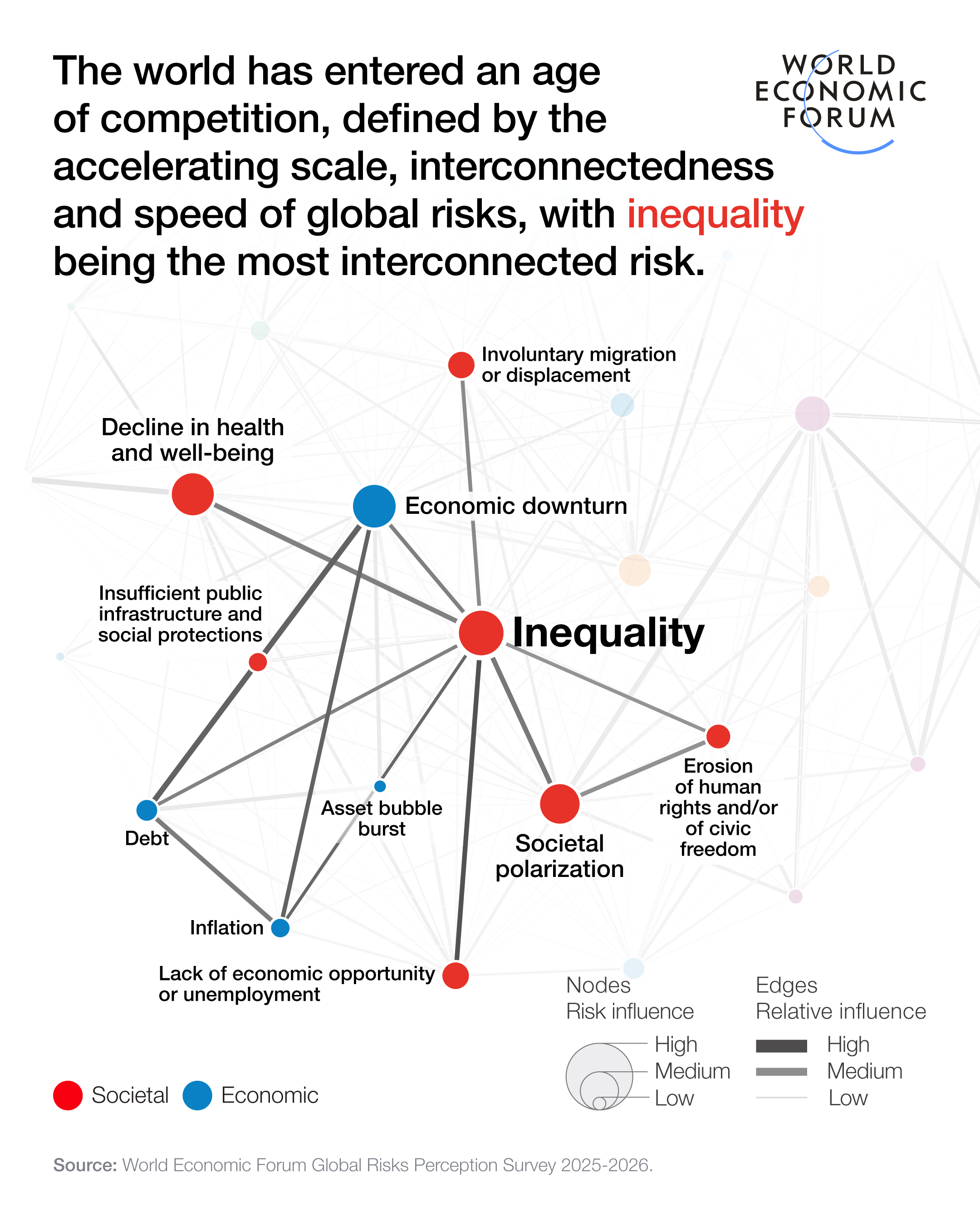
Beneath all of these shifts lies a deeper reckoning. The central bargain at the heart of globalization — that integration would produce convergence, shared prosperity and stable interdependence — did not hold. It produced winners and losers. The losers voted. Domestically, that produced populism and democratic backsliding. Internationally, it produced revisionist powers and a growing demand from the Global South for a different order entirely. The current rupture is less a sudden break than the accumulated bill coming due on several decades of under-governed globalization. The world did not change overnight. It simply stopped pretending it had not already changed.
The first thing to be clear about is what is not coming back. The liberal international order — American-led, institutionally dense, premised on deepening integration and normative convergence — is not going to be restored. The conditions that made it possible no longer exist. Unipolarity is gone. The domestic coalitions that sustained globalization have collapsed. States that were never fully accommodated by the old order now have the weight to demand a bigger role in shaping what comes next.
The philosopher Antonio Gramsci anticipated similar dynamics from a prison cell in fascist Italy a century ago. He described “morbid symptoms” that emerge when old authority loses its grip before new authority has established its own. Populism, revanchist nationalism, institutional paralysis, the weaponization of interdependence are not aberrations. They are what a great-power transition looks like from the inside.
In this new unsettled environment, cooperation will increasingly be organized through overlapping coalitions of values and interests rather than a single universal consensus. The same countries may cooperate on supply chains, compete on critical minerals and disagree sharply on rights or security. That is already visible in arrangements such as the Quad, in critical minerals partnerships, and in the widening patchwork of digital and AI governance initiatives. The point is not that these groupings are elegant. It is that they are increasingly how practical cooperation happens.
Middle powers are not waiting passively for Washington and Beijing to decide the future. They are hedging, diversifying and building new external partnerships of their own. Countries such as Canada, Brazil and those across the EU are all responding to a harsher global environment by widening their trade and security ties beyond traditional partners. The EU Mercosur deal, Canada’s new defence and Indo-Pacific trade agreements, and Brazil’s push to expand Mercosur’s reach all reflect a broader strategy of diversification, resilience and greater strategic autonomy.
“
The world did not break for one reason. It broke for several. Repair will also come in pieces.
”
The next order is likely to be a negotiated patchwork in which larger powers still matter most, but middle powers matter more than before. That does not mean that universal institutions are obsolete. It means they have to be rebuilt on more realistic foundations. The Security Council, the Bretton Woods institutions and the wider multilateral system cannot regain legitimacy if they continue to mirror power distributions from 1945 or even 1991. Reform remains politically difficult, but the alternative is drift, and drift favours coercion.
Ultimately, the world’s most serious problems still exceed coalition politics. Preventing major power war, containing nuclear risk, keeping trade open enough to avoid systemic fracture, governing artificial intelligence, protecting basic rights, and slowing climate and nature breakdown all require wider frameworks than ad hoc clubs can provide. The disappearance of a single hegemon does not make shared stewardship less necessary. It makes it more so.
Gramsci's interregnum does not end by itself. It closes when enough actors take the work of building what comes next seriously enough to displace the morbid symptoms with something more durable. The world did not break for one reason. It broke for several. Repair will also come in pieces, and many of those pieces will be assembled not only by great powers, but by the middle powers already repositioning for a harder age.
此内容由惯性聚合(RSS阅读器)自动聚合整理,仅供阅读参考。 原文来自 — 版权归原作者所有。