





Energy systems are entering a more demanding phase, shaped by both structural shifts and rising geopolitical uncertainty. Recent disruptions to global energy markets have highlighted how quickly supply constraints, price volatility and security risks can emerge.
At the same time, electrification is putting increasing pressure on grids. Power demand from artificial intelligence (AI) and digital infrastructure is rising, while renewable integration is making operations more dynamic and less predictable. Utilities and energy companies are also expected to strengthen resilience, improve affordability and defend increasingly connected systems against cyber threats.
In the United States alone, outages already cost businesses about $150 billion each year. With more than 3 billion smart meters projected to be deployed globally by 2030, the sector is entering a period of greater operational complexity.
These combined pressures are beginning to expose the limits of some traditional digital tools. Classical computing, high-performance computing and AI will remain essential but many of the sector's hardest problems are becoming more difficult to model, optimize and secure.
Renewable-heavy grids create non-linear planning challenges. Clean-energy innovation depends on molecular interactions that are costly to simulate accurately. Long-lived infrastructure must also be protected against cyber risks that may evolve over decades.
In this context, quantum technologies are attracting attention as complementary tools for specific, high-value problems.
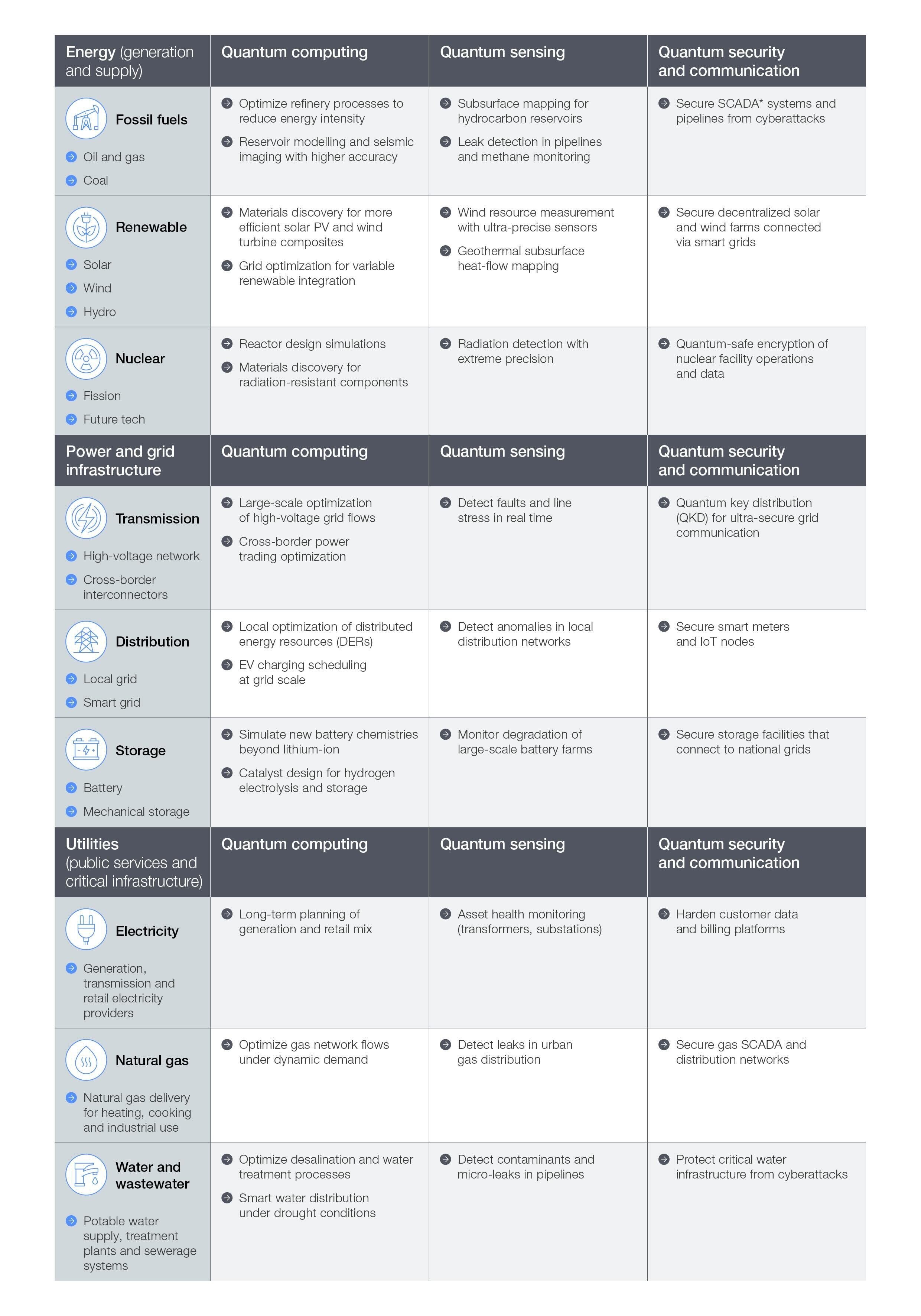
The World Economic Forum's white paper, Quantum for Energy and Utilities: Key Opportunities for Energy Transition, developed in collaboration with Aramco, takes a practical view of this opportunity. It focuses on quantum computing, quantum sensing and quantum communication and identifies four areas of potential value: accelerating materials innovation, improving operational optimization, reinforcing infrastructure security and enabling more precise monitoring. In selected use cases, quantum technologies may help energy systems manage complexity more effectively.
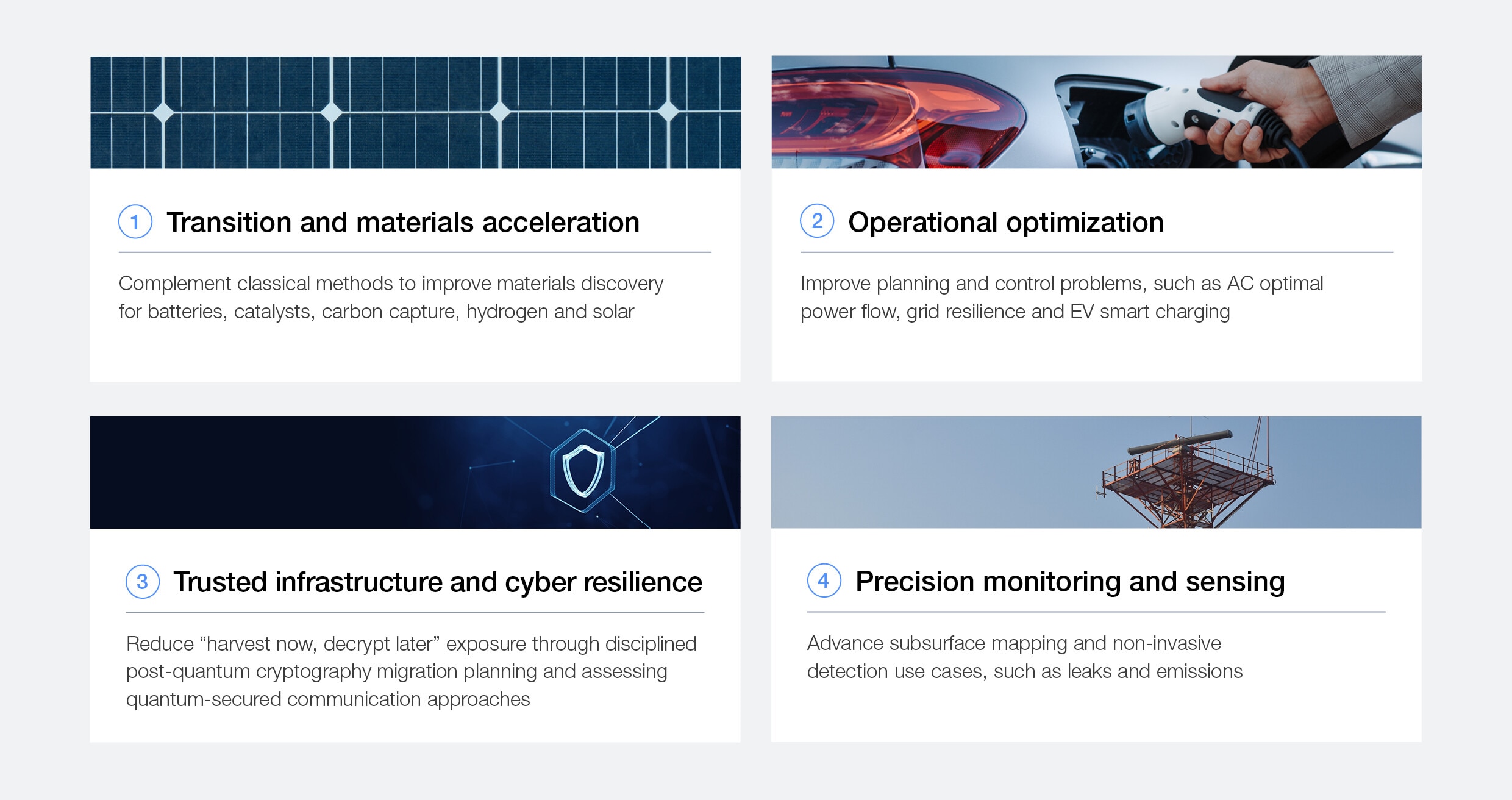
The most immediate area of interest is operational optimization. Power systems are increasingly defined by coordination problems: how to balance variable renewable generation, flexible demand, storage and network constraints in near real time. This is where hybrid quantum-classical approaches are starting to be tested. One example in the white paper comes from EDF and Pasqal, which explored an electric-vehicle smart-charging use case on a neutral-atom quantum platform. Their work combined forecasting and scheduling to align charging demand more effectively with renewable availability and grid constraints and it demonstrated a scheduling optimization component running on more than 100 qubits.
That does not mean quantum has displaced existing grid tools, but it does show that real orchestration problems are now being examined in hybrid workflows, where even modest gains in scheduling quality or speed could translate into operational value.
A second opportunity lies in the materials and chemistry challenges behind the energy transition. Progress in batteries, hydrogen, carbon capture and advanced solar technologies often depends on discovering materials with the right combination of performance, durability and cost. Classical methods can model some of this chemistry, but the trade-off between speed and accuracy remains a major bottleneck. The white paper points to growing interest in using quantum approaches to simulate battery cathodes, catalysts and sorbent materials with greater fidelity. Over time, that could reduce years of trial and error in the search for better clean-energy technologies.
Quantum sensing is emerging on a more immediate timeline. Better measurement matters across energy systems, from identifying leaks and emissions to monitoring buried assets and mapping subsurface changes. For example, in a 2023 field trial at the Flotta Oil Terminal in Scotland, Repsol Sinopec Resources UK tested methane lidar from QLM Technology over the course of a week. Two systems mounted up to 20 metres high were used to detect and quantify methane across the site, including minor and intermittent emissions that are difficult to capture through periodic inspections. Operators will benefit from these more precise, less invasive ways to monitor complex environments.
Infrastructure security is another area where early action may matter most. Energy and utility assets operate on long lifecycles, yet their digital systems are increasingly exposed to a cyber landscape that is changing quickly. The white paper stresses the urgency of post-quantum cryptography and quantum-safe communication. It also highlights a 2024 field trial by Austria's electricity provider Verbund, which tested quantum-safe communication technologies in a live grid environment using hardware from Hitachi Energy and ID Quantique's quantum key distribution systems. The trial secured communications between a power plant and a substation over an overhead fibre link and showed that quantum-safe approaches can be integrated into existing utility infrastructure without disrupting operations.
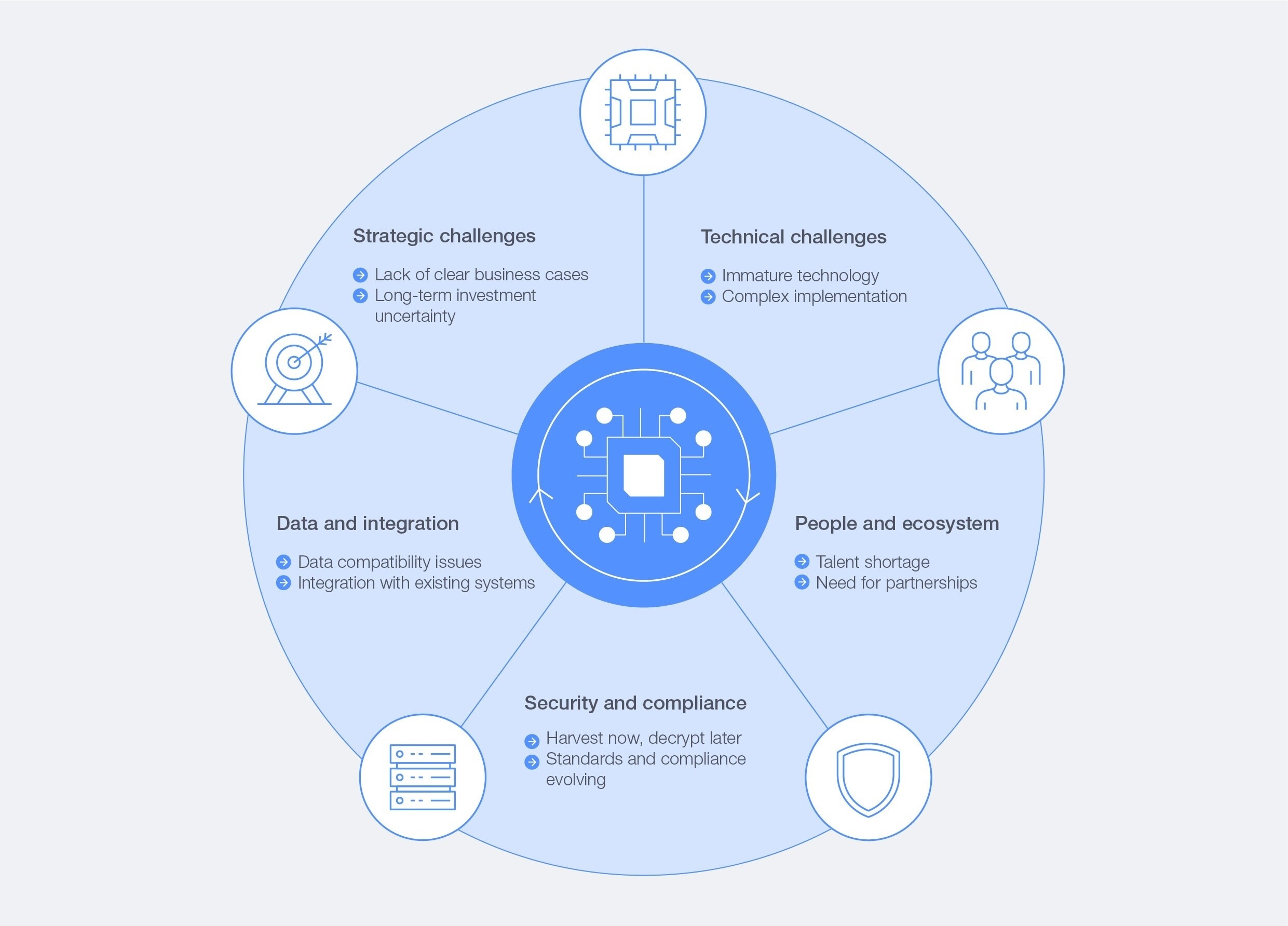
The white paper is careful not to overstate readiness. Hardware maturity, scalability and error rates continue to constrain what quantum systems can do reliably. Integration with existing OT and IT environments is difficult. Business cases are not always clear and specialist talent remains scarce. That means the challenge is not simply to invest earlier; it is to invest with discipline.
Energy leaders need to recognize that the sector's hardest problems are becoming more complex, not less, and that some quantum technologies are beginning to show practical relevance. The organizations best positioned for the next phase will be those that engage early, focus on credible use cases and build the foundations needed to scale what works. Progress will depend on standards, workforce development, cybersecurity readiness and cross-sector collaboration. Quantum technologies are becoming part of the strategic conversation about how to build systems that are more efficient, resilient and adaptive.
Loading...
此内容由惯性聚合(RSS阅读器)自动聚合整理,仅供阅读参考。 原文来自 — 版权归原作者所有。