



惯性聚合 高效追踪和阅读你感兴趣的博客、新闻、科技资讯
阅读原文 在惯性聚合中打开

推荐订阅源

T
Tenable Blog
MyScale Blog
MyScale Blog
罗磊的独立博客
Hugging Face - Blog
Hugging Face - Blog
Threat Intelligence Blog | Flashpoint
爱范儿
爱范儿
博客园 - 司徒正美
D
Darknet – Hacking Tools, Hacker News & Cyber Security
量子位
N
News | PayPal Newsroom
S
Secure Thoughts
酷 壳 – CoolShell
酷 壳 – CoolShell
L
LINUX DO - 热门话题
有赞技术团队
有赞技术团队
V
Visual Studio Blog
T
Tailwind CSS Blog
奇客Solidot–传递最新科技情报
奇客Solidot–传递最新科技情报
Project Zero
Project Zero
B
Blog RSS Feed
J
Java Code Geeks
Google Online Security Blog
Last Week in AI
Last Week in AI
Cyberwarzone
Cyberwarzone
Exploit-DB.com RSS Feed
小众软件
小众软件
博客园 - 【当耐特】
Latest news
Latest news
T
Threat Research - Cisco Blogs
aimingoo的专栏
aimingoo的专栏
博客园_首页
博客园 - 三生石上(FineUI控件)
Engineering at Meta
Engineering at Meta
D
Docker
Forbes - Security
Forbes - Security
Help Net Security
Help Net Security
Apple Machine Learning Research
P
Proofpoint News Feed
cs.CV updates on arXiv.org
Simon Willison's Weblog
CTFtime.org: upcoming CTF events
V2EX - 技术
V2EX - 技术
N
Netflix TechBlog - Medium
The Last Watchdog
The Last Watchdog
让小产品的独立变现更简单 - ezindie.com
T
Threatpost
Cloudbric
Cloudbric
T
The Exploit Database - CXSecurity.com
钛媒体:引领未来商业与生活新知
钛媒体:引领未来商业与生活新知
博客园 - 叶小钗
Webroot Blog
Webroot Blog

World Economic Forum

What happened at the MC14 WTO meeting in Yaoundé How giving gorillas digital wallets can help finance nature Why is leadership a strategic investment for philanthropy? Counting the many costs of the global mental health burden What we learned from the 2026 World Bank Spring Meetings Crop protection is at risk. How innovation can help Here's a playbook for boards on how to govern agentic AI Why connected data makes AI decision-ready for sustainability 3 ways better data practices are reshaping financial supervision What technology convergence looks like in practice 7 reasons the old order broke — and how it might be repaired How governments can make agentic AI re  ? Current and future uses of RNA, including mRNA vaccines Real-time deepfakes are rewriting the rules of child safety Electrification trend ‘unmistakeable’ – and more energy stories From smallpox to the common cold: A brief history of vaccines Saudi Arabia's new AI-powered sustainability platform could unlock $20 billion by 2030 Here are 6 ways that climate change is affecting sports around the world This crisis could be an opportunity for the energy transition Middle East war: 6 ways countries are responding to the historic energy shock Nature can teach us about leadership and building resilience How did the Strait of Hormuz become so important, and will it stay that way? Yes/Cities: Helping global cities become more resilient, sustainable and prosperous Healthy ageing in APAC: The role of the influenza vaccine Risk management, renewables and a rocky road ahead: Spring Meetings takeaways Japan in a world of rising middle powers EU plans to offset Iran war's energy impact, and other climate and nature news 3 cities leading on green investment for economic growth The coffee industry is making the case for climate insurance The ocean is now a subprime asset, so we need a sustainable blue economy 5 leaders on today’s growth dilemmas and how to navigate them What helps purpose-driven, early-stage start-ups scale? Why trust is key to the EU's Empowering Consumers Directive The $3 trillion maintenance gap is burning money and the planet Surging AI needs and geopolitical supply shocks renew attention on nuclear energy 5 things to know before interacting with digital assets Frontiers Planet Prize: 25 solutions for planetary crises How the Iran war is disrupting India's steel production What's needed for growth in the new economy? Why we need a humanitarian truce is Sudan Freedom of expression under attack: How do we protect the media? Why companies – and nations – should create an AI culture Anthropic’s Mythos moment: how frontier AI is redefining cybersecurity Discover this week's must-read finance stories 'Godfather of AI' Yoshua Bengio on why AI can behave unpredictably (and what needs to change) Everyone talks about critical thinking. Here's how schools should actually teach it The top international trade stories to know this month The big chart: How oil prices have reacted to world events since the 1980s Why AI needs digital public infrastructure to deliver for citizens What AI in education needs next: Lessons from youth leaders across five countries How to scale clean hydrogen to meet energy security needs Meet the Young Global Leaders Class of 2026 Ventures with blue carbon solutions for coastal restoration How peer-led reskilling is helping bridge the skills gap in East Africa China's lessons on the energy sector’s nature-positive transition Here's how Japan's green materials sector is thriving The Strait of Hormuz crisis: Rewriting the future of AI Systemic risk is the hidden tax on growth. Here's how insurance can help build economic resilience Earth Day: What is it, when is it and why is it important? The Rayner plot: What it tells us about the future of jobs This is why we’ll feel the economic effects of this war for a while How energy and finance leaders are approaching climate investment in 2026 How quantum technologies are being tested to strengthen energy systems How to think about ‘safe’ withdrawal rates in a changing global economy Is collective cyber defence the future of port security? Learnings from a Dutch initiative Cyberattacks target US infrastructure, and other cybersecurity news Rethinking workplace energy: Why our assumptions can lead to burnout What could an international panel to tackle inequality achieve? Why climate action matters for healthy longevity Workforce health is the bedrock of global supply chains. Here's how to protect it Southeast Asia may be a distinct region but its risks affect each country differently 5 ways to grow a business mindset in international development How companies can finally cut Scope 3 emissions Here's how to get the $7 trillion AI hardware buildout right Leaders are moving from systems of record to systems of work G7 One Health Summit launches global diagnostics initiative, and other health stories What stopping war-risk insurance in the Strait of Hormuz tells us Why leaders must transform cyber resilience measurement AI can help create comparability and scale impact investing What's in store for the future of multilateralism? Why food waste is a $540 billion opportunity hiding in plain sight What Afghanistan can teach us about strategic foresight This is how we use generative AI on Forum Stories How cities are turning urban complexity into coherent climate plans How non-profits and governments use data to drive real system change How demographics, not AI, will redefine the labour market Three lessons on the energy transition in an age of crisis 3 ways Africa can maximize the value of its critical minerals and finance its future What leaders are saying about the new geopolitics of energy The financial system is rebooting. Stakeholders must adapt Cancer care innovation is reshaping resilience in Japan The hidden struggle of employed youth in Africa How markets and missions are becoming allies for impact What’s changing in frontier tech – from geopolitics to AI and energy Why stablecoins are quickly becoming a geopolitical issue How public-private collaboration can help close the global gender gap It’s time to start treating AI infrastructure as critical infrastructure 5 effective choices to turn workplace well-being into a competitive advantage How to strengthen collaboration to tackle infectious disease Why the AI economy can’t rely on a single digital Suez
NFL players: Why financial literacy is a game-changer for student-athletes
Larry Fitzgerald Jr, Kelvin Beachum Jr · 2026-04-06 · via World Economic Forum
  • The shift from amateurism to Name, Image and Likeness rights has unlocked billions in earnings for student-athletes in the United States.
  • Many athletes face complex contracts, taxes and sudden income without the knowledge to manage them effectively, making financial literacy critical.
  • Universities and governing bodies need to embed mandatory financial and life-skills training to ensure long-term athlete wellbeing.

As current and former National Football League (NFL) players, we have experienced firsthand the opportunities – and challenges – that come with earning money as an athlete.

Such experiences have underscored the value of financial education and financial literacy programmes, especially for young athletes competing at universities in the United States. This issue is particularly important today as the introduction of Name, Image, and Likeness (NIL) rights has fundamentally transformed the landscape of college athletics.

For most of the 20th century and early 2000s, the US National Collegiate Athletic Association (NCAA) operated under a strict “amateurism” model. Athletes could receive scholarships but any outside compensation – even something as small as signing autographs for money – could make them ineligible.

Critics argued that this system was increasingly unfair, especially as college sports became a multibillion-dollar industry in which student-athletes generated significant revenue for universities, media companies and sponsors while being restricted from earning compensation beyond scholarships.

That changed in 2021, when the NCAA adopted an interim NIL policy allowing athletes to profit from their personal brands. Instead of maintaining a blanket prohibition, it allowed athletes to sign endorsement deals, monetize social media and profit from appearances, camps and merchandise all without losing eligibility, so long as they followed state laws and school guidelines.

This shift was the result of top athletes gaining celebrity-level traction and social following, highlighting their market value, alongside landmark legal cases such as O'Bannon v. NCAA, which argued that restricting athlete compensation violated antitrust laws.

NCAA model under pressure

Later, NCAA v. Alston dealt a major blow to the NCAA’s model, with the US Supreme Court signalling scepticism toward its compensation limits.

While this shift has opened unprecedented opportunities, it has also introduced a new and urgent challenge: the need for strong financial literacy among student-athletes navigating the NIL marketplace.

For many players, ourselves included, the jump into the NFL is as much a life shock as a career change. One day, you’re a college athlete, possibly coming from a background where money was tight or carefully managed.

Next, you’re signing a contract worth more than your entire family has ever seen. That kind of sudden wealth doesn’t just change your bank account, it changes your relationships, pressures and decision-making overnight.

Schools and athletic programmes often focus everything on performance, leaving gaps in understanding other fundamentals such as taxes, investments, credit or even basic budgeting.

For many college athletes – some barely out of high school – the NIL era represents their first exposure to substantial income, contracts, taxes and brand partnerships.

Arizona Cardinals receiver Larry Fitzgerald (11) pulls in a catch against the Washington Redskins during the second half of their NFL football game in Landover, Maryland, September 18, 2011

Arizona Cardinals receiver Larry Fitzgerald pulls in a catch during an NFL football game in 2011. Image: REUTERS/Jonathan Ernst

The athlete economy

Deals can range from modest local sponsorships worth a few hundred dollars to six- and seven-figure agreements with national brands. Per the 2024 Opendorse report, NIL deals generated over $1.2 billion in revenue in the 2023-2024 period and the market is projected to exceed $2.5 billion by 2025-2026.

Without a solid understanding of financial basics such as budgeting, tax obligations, contract terms and long-term wealth management, student-athletes may struggle to make informed decisions about their earnings and opportunities and can be more susceptible to exploitative agreements.

Couple that with family and friends depending on you, agent and brand demands pulling you in different directions and – for the majority – a short career where every dollar matters and no road map to manage it all, then there is a quiet kind of stress.

Athletes might feel like they should know what to do but no one ever taught them. And when mistakes happen, including overspending, trusting the wrong people or not planning for life after football, they can be magnified because the stakes are so high.

Financial literacy in the NIL space goes far beyond simply knowing how to manage money. It also involves understanding the broader business ecosystem that now surrounds college athletics.

Student-athletes must evaluate endorsement contracts, negotiate compensation structures, recognize predatory arrangements and understand the legal and tax implications tied to their earnings.
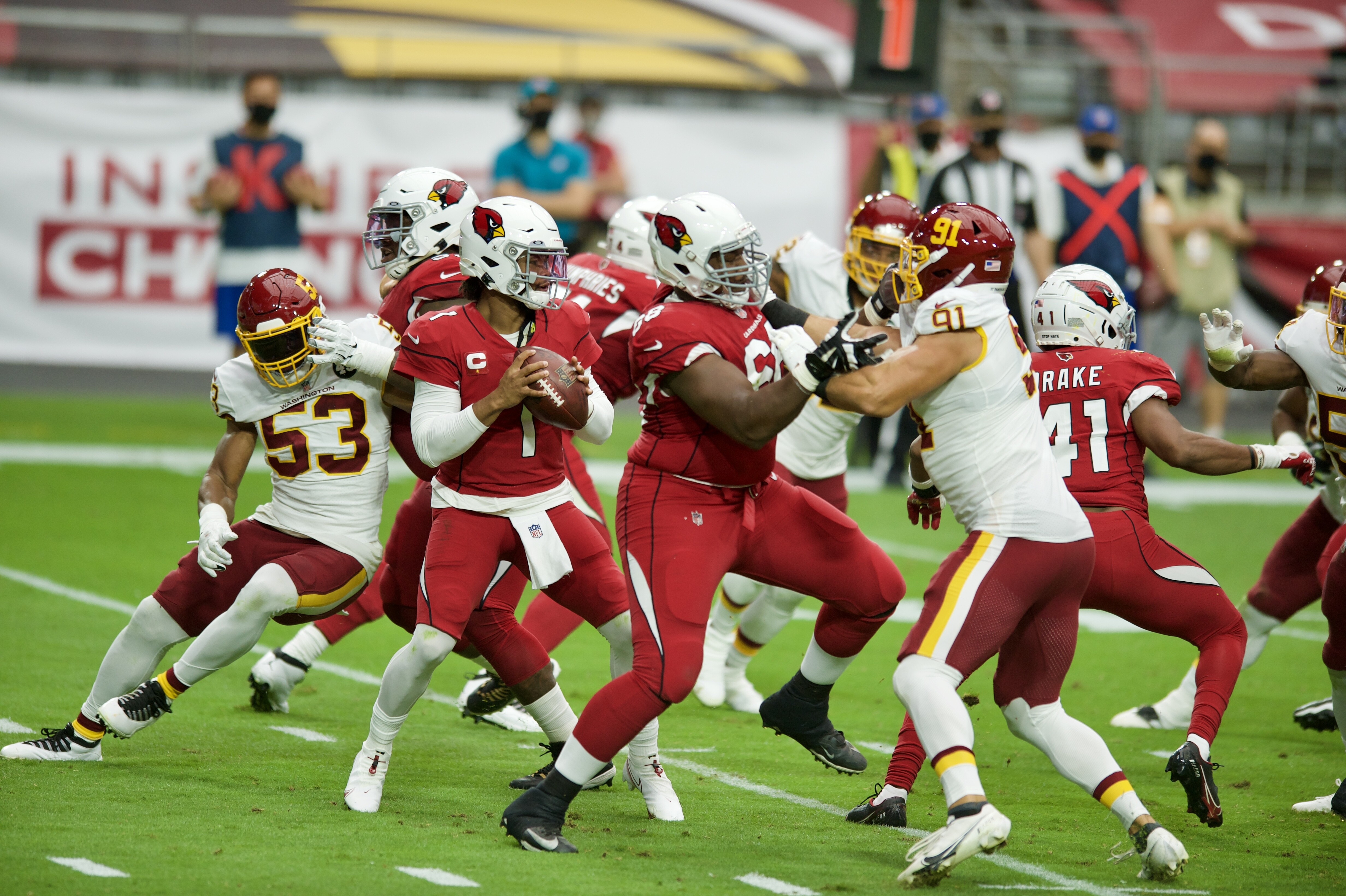
Kelvin Beachum with Arizona Cardinals, State Farm Stadium, Glendale, Arizona, September 20, 2020

Kelvin Beachum of the Arizona Cardinals during an NFL game in 2020. Image: Joe Glorioso | All-Pro Reels

Bridging the financial gap

These responsibilities resemble those faced by professional athletes and entrepreneurs, yet many college athletes have received little formal preparation in these areas.

In a 2022 NCAA survey of over 9,800 athletes, 49% indicated a need for educational resources specifically on tax and financial literacy. In the same study, only 9% of student-athletes had ever met with a financial counsellor.

The stakes are particularly high because NIL earnings can arrive quickly and unexpectedly. A viral social media moment or a standout season can suddenly elevate an athlete’s market value, bringing in sponsorship offers and appearance opportunities.

Without proper guidance, a rapid influx of income may lead to poor financial decisions, inadequate tax planning, or vulnerability to exploitative agents and advisors who often benefit personally at the expense of the athlete.

As the NIL ecosystem continues to evolve, universities, athletic departments and governing bodies are beginning to recognize that education must accompany opportunity.

Financial literacy programmes tailored specifically to NIL realities can equip athletes with the knowledge they need to protect their earnings, build sustainable financial habits and leverage their personal brands responsibly.

Embedding life skills

According to Forbes, schools may distribute up to $20.5 million annually per institution to athletes under new compensation systems and more than 1,800 brands are currently involved in NIL deals with college athletes.

In addition to the influx of capital, colleges and universities must also implement a mandatory life skills programme that includes financial literacy education, so students can learn firsthand how to manage their earnings and take personal control of their financial futures.

Players who succeed long-term are often the ones who ask questions early, build a trustworthy team, learn the basics themselves rather than outsourcing everything and plan for the reality that football won’t last forever.

At its core, it’s a story about transition, in professional sports, responsibility, identity and long-term stability – about making money and learning how to keep it, grow it and protect your future.

For many players, that means going through a crash course in adulthood under a spotlight, where the cost of trial and error is much higher than it is for most.

Ultimately, the success of the NIL era should not be measured solely by the revenue athletes generate but also by their ability to convert short-term opportunities into long-term financial stability.

More than beneficial, developing financial literacy among student-athletes is essential to ensuring that NIL fulfils its promise of empowering the very individuals it was designed to support.