
惯性聚合 高效追踪和阅读你感兴趣的博客、新闻、科技资讯
阅读原文 在惯性聚合中打开

推荐订阅源

aimingoo的专栏
aimingoo的专栏
V
V2EX
G
Google Developers Blog
F
Full Disclosure
Martin Fowler
Martin Fowler
宝玉的分享
宝玉的分享
H
Hacker News: Front Page
Exploit-DB.com RSS Feed
NISL@THU
NISL@THU
G
GRAHAM CLULEY
V
Vulnerabilities – Threatpost
Hacker News - Newest:
Hacker News - Newest: "LLM"
A
About on SuperTechFans
The Cloudflare Blog
C
Cisco Blogs
D
DataBreaches.Net
Threat Intelligence Blog | Flashpoint
Vercel News
Vercel News
P
Privacy International News Feed
Microsoft Security Blog
Help Net Security
Help Net Security
Recorded Future
Recorded Future
PCI Perspectives
PCI Perspectives
S
Schneier on Security
AI
AI
N
News | PayPal Newsroom
雷峰网
雷峰网
C
Cyber Attacks, Cyber Crime and Cyber Security
P
Proofpoint News Feed
The Last Watchdog
The Last Watchdog
L
LINUX DO - 最新话题
Hugging Face - Blog
Hugging Face - Blog
Apple Machine Learning Research
Schneier on Security
S
Securelist
云风的 BLOG
云风的 BLOG
Stack Overflow Blog
Stack Overflow Blog
博客园_首页
AWS News Blog
AWS News Blog
TaoSecurity Blog
TaoSecurity Blog
OSCHINA 社区最新新闻
OSCHINA 社区最新新闻
Recent Commits to openclaw:main
博客园 - 三生石上(FineUI控件)
C
CXSECURITY Database RSS Feed - CXSecurity.com
K
KPMG report finds enterprise disconnect between AI and its ROI | CIO
Cloudbric
Cloudbric
C
Cybersecurity and Infrastructure Security Agency CISA
Project Zero
Project Zero
C
Check Point Blog
S
Security Affairs

World Economic Forum

How giving gorillas digital wallets can help finance nature Why is leadership a strategic investment for philanthropy? Counting the many costs of the global mental health burden What we learned from the 2026 World Bank Spring Meetings Crop protection is at risk. How innovation can help Here's a playbook for boards on how to govern agentic AI Why connected data makes AI decision-ready for sustainability 3 ways better data practices are reshaping financial supervision What technology convergence looks like in practice 7 reasons the old order broke — and how it might be repaired How governments can make agentic AI re  ? Current and future uses of RNA, including mRNA vaccines Real-time deepfakes are rewriting the rules of child safety Electrification trend ‘unmistakeable’ – and more energy stories From smallpox to the common cold: A brief history of vaccines Saudi Arabia's new AI-powered sustainability platform could unlock $20 billion by 2030 Here are 6 ways that climate change is affecting sports around the world This crisis could be an opportunity for the energy transition Middle East war: 6 ways countries are responding to the historic energy shock Nature can teach us about leadership and building resilience How did the Strait of Hormuz become so important, and will it stay that way? Yes/Cities: Helping global cities become more resilient, sustainable and prosperous Healthy ageing in APAC: The role of the influenza vaccine Risk management, renewables and a rocky road ahead: Spring Meetings takeaways Japan in a world of rising middle powers EU plans to offset Iran war's energy impact, and other climate and nature news 3 cities leading on green investment for economic growth The coffee industry is making the case for climate insurance The ocean is now a subprime asset, so we need a sustainable blue economy 5 leaders on today’s growth dilemmas and how to navigate them What helps purpose-driven, early-stage start-ups scale? Why trust is key to the EU's Empowering Consumers Directive The $3 trillion maintenance gap is burning money and the planet Surging AI needs and geopolitical supply shocks renew attention on nuclear energy 5 things to know before interacting with digital assets Frontiers Planet Prize: 25 solutions for planetary crises How the Iran war is disrupting India's steel production What's needed for growth in the new economy? Why we need a humanitarian truce is Sudan Freedom of expression under attack: How do we protect the media? Why companies – and nations – should create an AI culture Anthropic’s Mythos moment: how frontier AI is redefining cybersecurity Discover this week's must-read finance stories 'Godfather of AI' Yoshua Bengio on why AI can behave unpredictably (and what needs to change) Everyone talks about critical thinking. Here's how schools should actually teach it The top international trade stories to know this month The big chart: How oil prices have reacted to world events since the 1980s Why AI needs digital public infrastructure to deliver for citizens What AI in education needs next: Lessons from youth leaders across five countries How to scale clean hydrogen to meet energy security needs Meet the Young Global Leaders Class of 2026 Ventures with blue carbon solutions for coastal restoration How peer-led reskilling is helping bridge the skills gap in East Africa China's lessons on the energy sector’s nature-positive transition Here's how Japan's green materials sector is thriving The Strait of Hormuz crisis: Rewriting the future of AI Systemic risk is the hidden tax on growth. Here's how insurance can help build economic resilience Earth Day: What is it, when is it and why is it important? The Rayner plot: What it tells us about the future of jobs This is why we’ll feel the economic effects of this war for a while How energy and finance leaders are approaching climate investment in 2026 How quantum technologies are being tested to strengthen energy systems How to think about ‘safe’ withdrawal rates in a changing global economy Is collective cyber defence the future of port security? Learnings from a Dutch initiative Cyberattacks target US infrastructure, and other cybersecurity news Rethinking workplace energy: Why our assumptions can lead to burnout What could an international panel to tackle inequality achieve? Why climate action matters for healthy longevity Workforce health is the bedrock of global supply chains. Here's how to protect it Southeast Asia may be a distinct region but its risks affect each country differently 5 ways to grow a business mindset in international development How companies can finally cut Scope 3 emissions Here's how to get the $7 trillion AI hardware buildout right Leaders are moving from systems of record to systems of work G7 One Health Summit launches global diagnostics initiative, and other health stories What stopping war-risk insurance in the Strait of Hormuz tells us Why leaders must transform cyber resilience measurement AI can help create comparability and scale impact investing What's in store for the future of multilateralism? Why food waste is a $540 billion opportunity hiding in plain sight What Afghanistan can teach us about strategic foresight This is how we use generative AI on Forum Stories How cities are turning urban complexity into coherent climate plans How non-profits and governments use data to drive real system change How demographics, not AI, will redefine the labour market Three lessons on the energy transition in an age of crisis NFL players: Why financial literacy is a game-changer for student-athletes 3 ways Africa can maximize the value of its critical minerals and finance its future What leaders are saying about the new geopolitics of energy The financial system is rebooting. Stakeholders must adapt Cancer care innovation is reshaping resilience in Japan The hidden struggle of employed youth in Africa How markets and missions are becoming allies for impact What’s changing in frontier tech – from geopolitics to AI and energy Why stablecoins are quickly becoming a geopolitical issue How public-private collaboration can help close the global gender gap It’s time to start treating AI infrastructure as critical infrastructure 5 effective choices to turn workplace well-being into a competitive advantage How to strengthen collaboration to tackle infectious disease Why the AI economy can’t rely on a single digital Suez
The future of ocean conservation is in community leadership
Ana Spalding · 2026-05-13 · via World Economic Forum
  • 30% of the ocean should be protected by 2030.
  • But, will this translate into effective and lasting ecological and social outcomes?
  • Science and philanthropy are powerful forces in ocean conservation, but their impact depends on whose knowledge, priorities and leadership they centre.

As the global community accelerates efforts towards the 30x30 target — protecting 30% of the ocean by 2030, as agreed under the Convention of Biological Diversity — marine conservation has entered a decisive phase. Governments are expanding ocean protection, multilateral agreements are advancing (e.g., the UN’s Biodiversity Beyond National Jurisdiction (BBNJ) Agreement) and financial commitments are growing (e.g., $9.1 billion in new financial commitments were secured at the 10th Our Ocean Conference). Yet, as the 2030 deadline looms, an urgent question remains: will this translate into effective and lasting ecological and social outcomes?

Evidence suggests that success will depend on how much of the ocean is protected and on who is involved and how protection is designed, implemented and governed. Drawing on experiences in social science research and philanthropy across two regions of the global tropics — Latin America and Southeast Asia — we believe that achieving effective and durable outcomes for people and the ocean requires a shift towards centring Indigenous and local community leadership.

Ocean conservation through a tropical majority lens

The majority of the world’s ocean-dependent people live in low- and middle-income countries across tropical regions, what is known as the ‘tropical majority’. These communities are on the frontlines of climate change and biodiversity loss, but they are also deeply embedded in coastal ecosystems through livelihoods, cultural practices and long-standing systems of stewardship.

Despite this, the global ocean conservation agenda remains largely shaped by scientific institutions, funding structures and policy frameworks based in high-income temperate countries. Often this has resulted in the use of standardized approaches that overlook local governance systems, socio-economic realities and ecological variability. Furthermore, the prevailing narrative often depicts tropical regions primarily as sites of crisis, characterized by overfishing, habitat degradation and climate vulnerability.

While these challenges are real and urgent, the tropics are also sites of resilience, innovation and leadership. They are home to diverse knowledge systems and governance traditions and to communities that have navigated environmental change for generations, yet are keen to learn, collaborate and design solutions to today’s environmental challenges. As inequities in ocean governance become more visible, we see an opportunity to realign systems of knowledge production, funding and associated decision-making to support this transition.

Science that centres communities

Realizing this opportunity requires, first and foremost, a fundamental shift in ocean science. Dominant research paradigms have often prioritized certain forms of knowledge (e.g., natural sciences) while marginalizing others, particularly Indigenous and local knowledge systems. Addressing this requires broadening who leads, participates and benefits from scientific research.

This means shifting towards actionable social science research, co-designing research with communities, aligning projects with local priorities and building equitable partnerships that enable researchers from the tropics to lead. It also requires sustained investment from academic institutions, philanthropies and multilateral institutions in open and accessible science. This must prioritize local and regional impact, including in-country training for data collection and analysis, ensuring fair and sustained long-term data storage and access and expanding access to scientific literature.

Beyond these structural changes, ocean science must expand its scope. Integrating social sciences, humanities and participatory action research can better reflect the social–ecological systems that shape conservation outcomes, helping to fine-tune interventions that are scientifically robust and socially grounded.
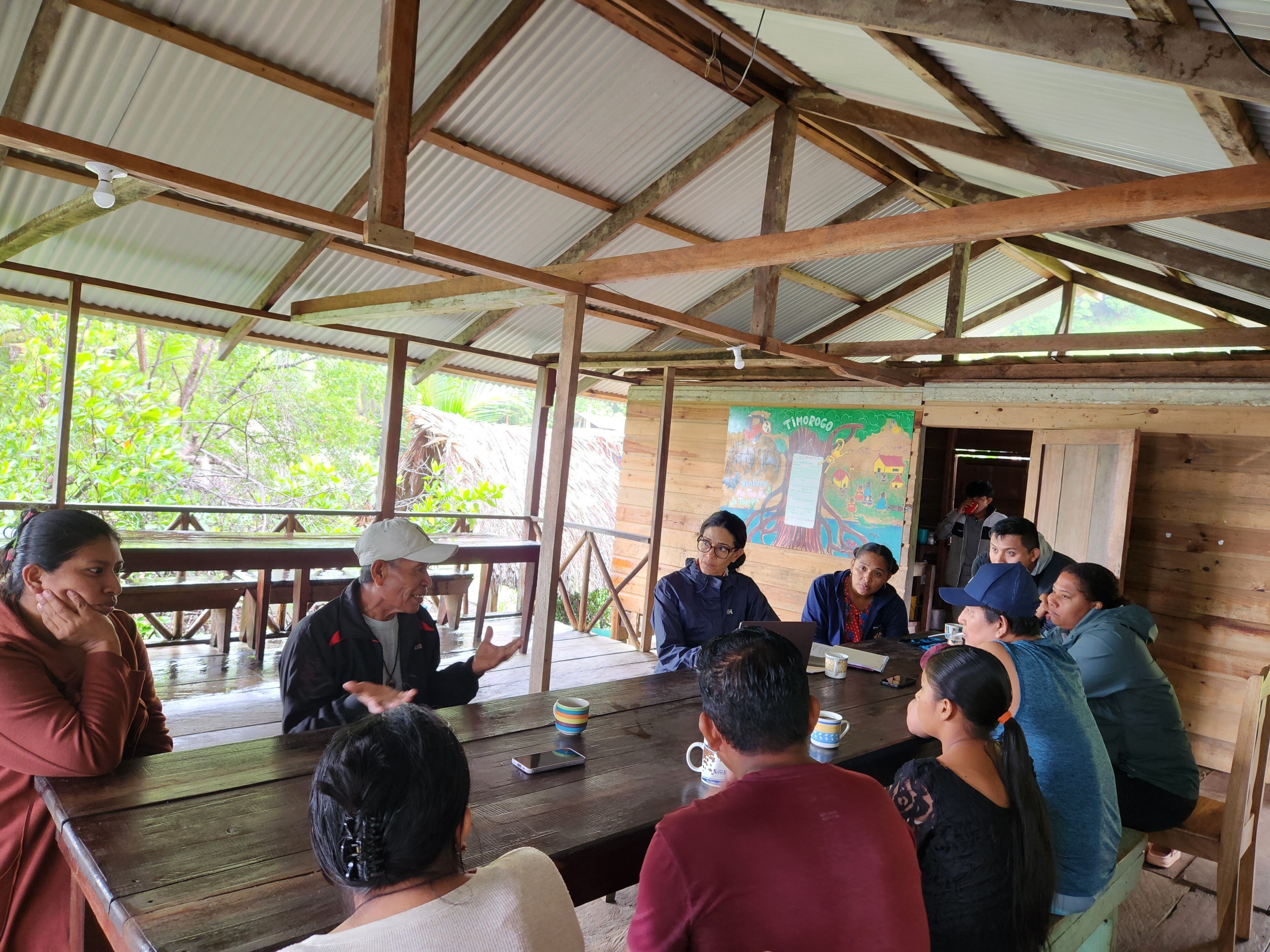
The Bocas del Toro community share their local knowledge with the Smithsonian Tropical Research Institute Image: Courtesy of the Smithsonian Tropical Research Institute

For example, a collaboration between Ngöbe communities of the Bocas del Toro archipelago of Panama and scientists from the Smithsonian Tropical Research Institute sought to harness local knowledge related to the implications of expanding a local National Park. Interviewees shared appreciation for the existing Park, broadly rejected the expansion of Park boundaries and expressed interest in a community-led conservation effort aligned with their stewardship values and goals, underscoring the need to incorporate local views to ensure effective management.

Towards community-centred philanthropy

Similar power imbalances are often mirrored in traditional philanthropic models, with funders setting priorities far from the ecosystems and communities they aim to serve. A trust-based approach offers a step forward by repositioning funders and grant partners as collaborators, yet a good funder/grant partner relationship does not automatically extend to the communities they serve.

Achieving this requires funders and grant partners to hold themselves accountable for how conservation reaches communities on the ground. This means challenging how communities are involved: whether consent is being sought and respected, traditional governance systems are being recognized and communities are genuinely shaping the work or simply receiving it. It means ensuring that Indigenous and local communities are not just consulted or accommodated, but formally represented in decision-making across the design, implementation and governance of funded projects.

Rare's network of Managed Access with Reserves, a fisheries management system that balances sustainable use and protection, offers one example of what this can look like. The organization embeds Free, Prior and Informed Consent as a foundational principle, ensuring communities shape conservation plans freely, before decisions are made and with full information. But this approach goes beyond consent: communities and local governments co-design and co-manage their marine areas, with local fishers holding preferential access rights and community-set rules governing how the fishery is managed.
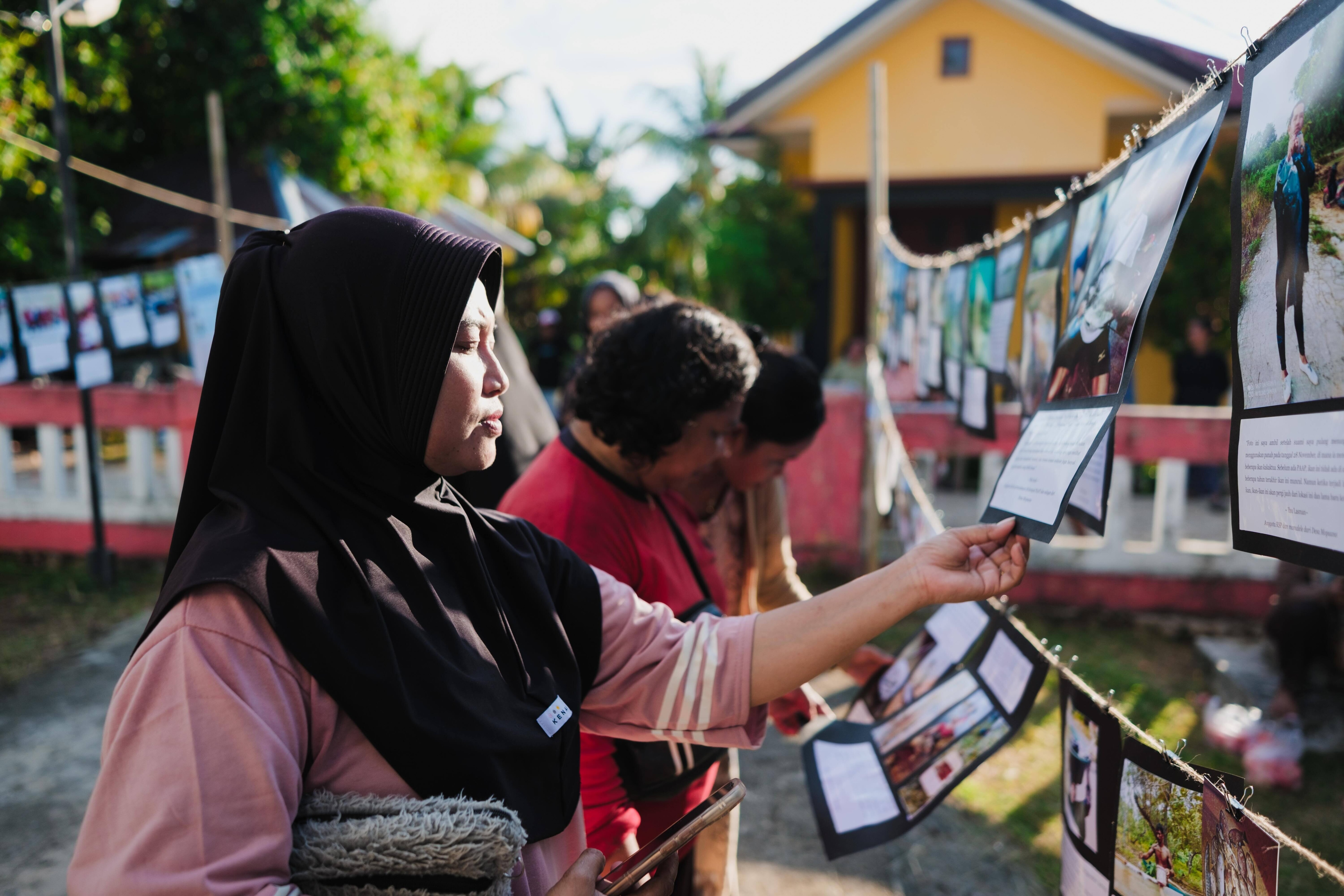
Women from coastal communities in Buton District explore a photo exhibition showcasing their fellow communities — a creative tool for learning and engagement Image: Yong Junyi

In Indonesia, communities have gone further still, committing village government funds to co-led marine surveillance — a sign of lasting stewardship and local ownership. Rare has taken the same approach to science, partnering with a researcher to pilot a participatory photo assessment in Southeast Sulawesi, capturing environmental and social change through communities' own stories and frames.

A decisive window for inclusive conservation

Science and philanthropy are powerful forces in ocean conservation, but their impact depends on whose knowledge, priorities and leadership they centre. Without this shift towards inclusion, led by socially-grounded science and community-centred philanthropy, there is a risk that conservation will deliver marine protection in name but not in practice. Embracing both can help ensure that conservation is effective and equitable. Furthermore, by recognizing the connections between people and the ocean across the tropics and embedding these relationships into governance structures, conservation efforts can become more resilient.

Realizing this potential requires concrete commitments and partnerships that bring together diverse forms of knowledge and expertise through cross-sector collaborations. Decision-makers can connect with the right science and learn from local philanthropic efforts to identify and address systemic inequities, set measurable inclusion targets and align policies to support locally-led initiatives. For funders willing to embrace community-centred philanthropy and grant partners ready to bring their full voice, knowledge and leadership to the table, the opportunity to do conservation differently has never been greater.

The authors are members of the World Economic Forum's Friends of Ocean Action, a unique community of ocean leaders connecting business, civil society, international organizations, science and technology to fast-track solutions to the most pressing issues facing the ocean.