



惯性聚合 高效追踪和阅读你感兴趣的博客、新闻、科技资讯
阅读原文 在惯性聚合中打开

推荐订阅源

P
Palo Alto Networks Blog
S
Security Affairs
T
Tor Project blog
T
Threatpost
Hacker News - Newest:
Hacker News - Newest: "LLM"
C
Cyber Attacks, Cyber Crime and Cyber Security
The Hacker News
The Hacker News
A
Arctic Wolf
K
Kaspersky official blog
O
OpenAI News
Spread Privacy
Spread Privacy
人人都是产品经理
人人都是产品经理
爱范儿
爱范儿
Simon Willison's Weblog
雷峰网
雷峰网
P
Privacy & Cybersecurity Law Blog
Know Your Adversary
Know Your Adversary
奇客Solidot–传递最新科技情报
奇客Solidot–传递最新科技情报
Last Week in AI
Last Week in AI
Martin Fowler
Martin Fowler
量子位
博客园_首页
Cyberwarzone
Cyberwarzone
博客园 - 三生石上(FineUI控件)
Exploit-DB.com RSS Feed
IT之家
IT之家
N
News and Events Feed by Topic
博客园 - 司徒正美
V2EX - 技术
V2EX - 技术
S
Schneier on Security
博客园 - 叶小钗
Attack and Defense Labs
AI
AI
Application and Cybersecurity Blog
博客园 - 【当耐特】
Jina AI
Jina AI
C
CXSECURITY Database RSS Feed - CXSecurity.com
C
Cybersecurity and Infrastructure Security Agency CISA
D
Darknet – Hacking Tools, Hacker News & Cyber Security
cs.CL updates on arXiv.org
freeCodeCamp Programming Tutorials: Python, JavaScript, Git & More
大猫的无限游戏
大猫的无限游戏
Cloudbric
Cloudbric
H
Hacker News: Front Page
The Last Watchdog
The Last Watchdog
V
V2EX
S
SegmentFault 最新的问题
V
Visual Studio Blog
PCI Perspectives
PCI Perspectives
Microsoft Security Blog

World Economic Forum

What happened at the MC14 WTO meeting in Yaoundé How giving gorillas digital wallets can help finance nature Why is leadership a strategic investment for philanthropy? Counting the many costs of the global mental health burden What we learned from the 2026 World Bank Spring Meetings Crop protection is at risk. How innovation can help Here's a playbook for boards on how to govern agentic AI Why connected data makes AI decision-ready for sustainability 3 ways better data practices are reshaping financial supervision What technology convergence looks like in practice 7 reasons the old order broke — and how it might be repaired How governments can make agentic AI re  ? Current and future uses of RNA, including mRNA vaccines Real-time deepfakes are rewriting the rules of child safety Electrification trend ‘unmistakeable’ – and more energy stories From smallpox to the common cold: A brief history of vaccines Saudi Arabia's new AI-powered sustainability platform could unlock $20 billion by 2030 Here are 6 ways that climate change is affecting sports around the world This crisis could be an opportunity for the energy transition Middle East war: 6 ways countries are responding to the historic energy shock Nature can teach us about leadership and building resilience Yes/Cities: Helping global cities become more resilient, sustainable and prosperous Healthy ageing in APAC: The role of the influenza vaccine Risk management, renewables and a rocky road ahead: Spring Meetings takeaways Japan in a world of rising middle powers EU plans to offset Iran war's energy impact, and other climate and nature news 3 cities leading on green investment for economic growth The coffee industry is making the case for climate insurance The ocean is now a subprime asset, so we need a sustainable blue economy 5 leaders on today’s growth dilemmas and how to navigate them What helps purpose-driven, early-stage start-ups scale? Why trust is key to the EU's Empowering Consumers Directive The $3 trillion maintenance gap is burning money and the planet Surging AI needs and geopolitical supply shocks renew attention on nuclear energy 5 things to know before interacting with digital assets Frontiers Planet Prize: 25 solutions for planetary crises How the Iran war is disrupting India's steel production What's needed for growth in the new economy? Why we need a humanitarian truce is Sudan Freedom of expression under attack: How do we protect the media? Why companies – and nations – should create an AI culture Anthropic’s Mythos moment: how frontier AI is redefining cybersecurity Discover this week's must-read finance stories 'Godfather of AI' Yoshua Bengio on why AI can behave unpredictably (and what needs to change) Everyone talks about critical thinking. Here's how schools should actually teach it The top international trade stories to know this month The big chart: How oil prices have reacted to world events since the 1980s Why AI needs digital public infrastructure to deliver for citizens What AI in education needs next: Lessons from youth leaders across five countries How to scale clean hydrogen to meet energy security needs Meet the Young Global Leaders Class of 2026 Ventures with blue carbon solutions for coastal restoration How peer-led reskilling is helping bridge the skills gap in East Africa China's lessons on the energy sector’s nature-positive transition Here's how Japan's green materials sector is thriving The Strait of Hormuz crisis: Rewriting the future of AI Systemic risk is the hidden tax on growth. Here's how insurance can help build economic resilience Earth Day: What is it, when is it and why is it important? The Rayner plot: What it tells us about the future of jobs This is why we’ll feel the economic effects of this war for a while How energy and finance leaders are approaching climate investment in 2026 How quantum technologies are being tested to strengthen energy systems How to think about ‘safe’ withdrawal rates in a changing global economy Is collective cyber defence the future of port security? Learnings from a Dutch initiative Cyberattacks target US infrastructure, and other cybersecurity news Rethinking workplace energy: Why our assumptions can lead to burnout What could an international panel to tackle inequality achieve? Why climate action matters for healthy longevity Workforce health is the bedrock of global supply chains. Here's how to protect it Southeast Asia may be a distinct region but its risks affect each country differently 5 ways to grow a business mindset in international development How companies can finally cut Scope 3 emissions Here's how to get the $7 trillion AI hardware buildout right Leaders are moving from systems of record to systems of work G7 One Health Summit launches global diagnostics initiative, and other health stories What stopping war-risk insurance in the Strait of Hormuz tells us Why leaders must transform cyber resilience measurement AI can help create comparability and scale impact investing What's in store for the future of multilateralism? Why food waste is a $540 billion opportunity hiding in plain sight What Afghanistan can teach us about strategic foresight This is how we use generative AI on Forum Stories How cities are turning urban complexity into coherent climate plans How non-profits and governments use data to drive real system change How demographics, not AI, will redefine the labour market Three lessons on the energy transition in an age of crisis NFL players: Why financial literacy is a game-changer for student-athletes 3 ways Africa can maximize the value of its critical minerals and finance its future What leaders are saying about the new geopolitics of energy The financial system is rebooting. Stakeholders must adapt Cancer care innovation is reshaping resilience in Japan The hidden struggle of employed youth in Africa How markets and missions are becoming allies for impact What’s changing in frontier tech – from geopolitics to AI and energy Why stablecoins are quickly becoming a geopolitical issue How public-private collaboration can help close the global gender gap It’s time to start treating AI infrastructure as critical infrastructure 5 effective choices to turn workplace well-being into a competitive advantage How to strengthen collaboration to tackle infectious disease Why the AI economy can’t rely on a single digital Suez
How did the Strait of Hormuz become so important, and will it stay that way?
John Letzing · 2026-04-24 · via World Economic Forum
  • The narrow passage fought over for centuries became crucial for the global economy when the surrounding region emerged as a key source of energy.
  • Its effective closure during the Iran war has reinvigorated interest in alternative trade routes, but there are no simple solutions.

It’s been an object of fascination at least since Milton name-checked it 360 years ago in his poem Paradise Lost. European kingdoms fought over it in galleons, and the Portuguese left behind a vestige of colonialism in the form of an abandoned fortress that still looms over one of the world’s most vital waterways.

The Strait of Hormuz has now been effectively sealed by the chaos of the Iran war for nearly two months, starving the global economy of essentials. The 39-kilometre-wide passage normally serves as a primary funnel for energy, fertilizer, and critical raw materials like sulphur. But fully free navigation might not be realistic for a long time. Dire consequences are predicted.

That begs a basic question: how did we come to rely so heavily on something that could be rendered inoperative virtually overnight?

The strait has been strategically important since the days of astrolabes, but it secured its place in the modern economy around the time of Bahrain’s first major oil strike in 1932. That was followed by Saudi Arabia’s first big strike six years later; a Saudi oil port was promptly opened not far away on the Gulf, which would eventually become the world’s biggest, and barrels began flowing through the Strait of Hormuz.

On the northern shore of the Gulf, Iran had its first big oil strike decades earlier (the formation of the Anglo-Persian Oil Company followed, and its nationalization would play a fateful role in the country’s future relations with the West). Major discoveries were also made in Iraq, Kuwait, the UAE, and Qatar, all nestled around a body of water separated from the high seas by a single, increasingly crowded exit point.
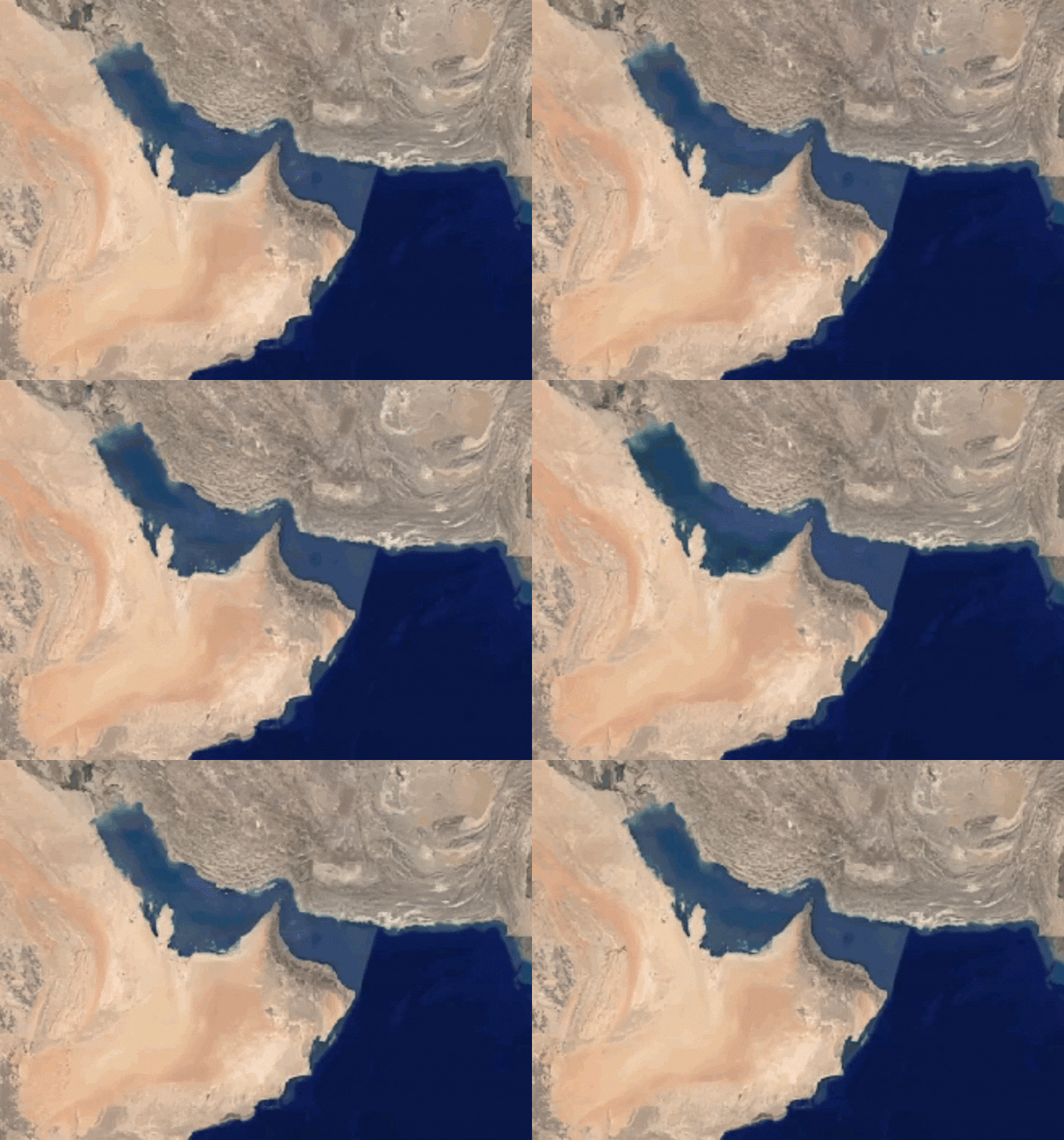
At its narrowest point the Strait of Hormuz is less than 40 km wide. Image: EarthTime

Clearly, the oil-producing countries utilizing the strait would have to organize if they wanted to maximize the benefits of their abundant resource. In 1960, four of them joined together with Venezuela to form OPEC.

A ‘Tanker War’ in Hormuz and a gas boom

The strait’s status as a flashpoint endured.

A regional conflict in the 1980s gave rise to the Tanker War, when Iraq began attacking ships carrying Iran’s exports through the Gulf. Iran eventually responded in kind; it mined the strait and even threatened a blockade, but stopped short because the move was deemed too extreme. Oil prices jumped and then recovered.

Reasons to rely on the strait only multiplied. Production of natural gas in the Gulf accelerated in the early part of this century. Qatar’s exports, much of it liquefied and loaded into cryogenic containers on ships pointed east towards the strait, increased by about 800% between 2000 and 2023.

It’s not just gas, it’s the many vital things that can be manufactured as gas byproducts. Fertilizer, for example; Qatar utilizes its massive gas capacity to churn out the most popular form of nitrogen fertilizer in large quantities. Sulphur is another byproduct – about half of the seaborne trade in this crucial element of battery production normally transits the strait.

Here’s where the inevitable search for alternatives to transporting through the Strait of Hormuz gets tricky.

Oil and gas can at least theoretically be shipped through pipelines. Saudi Arabia has already ramped up oil exports via a 1,200-kilometre pipeline that reaches the Red Sea, as way of bypassing the strait.

But something like fertilizer or sulphur requires transport on a ship, train or truck. Routing these things away from the strait would therefore require new infrastructure, which means serious investment. There has been talk of building new bridges, roads, and a regional rail network.
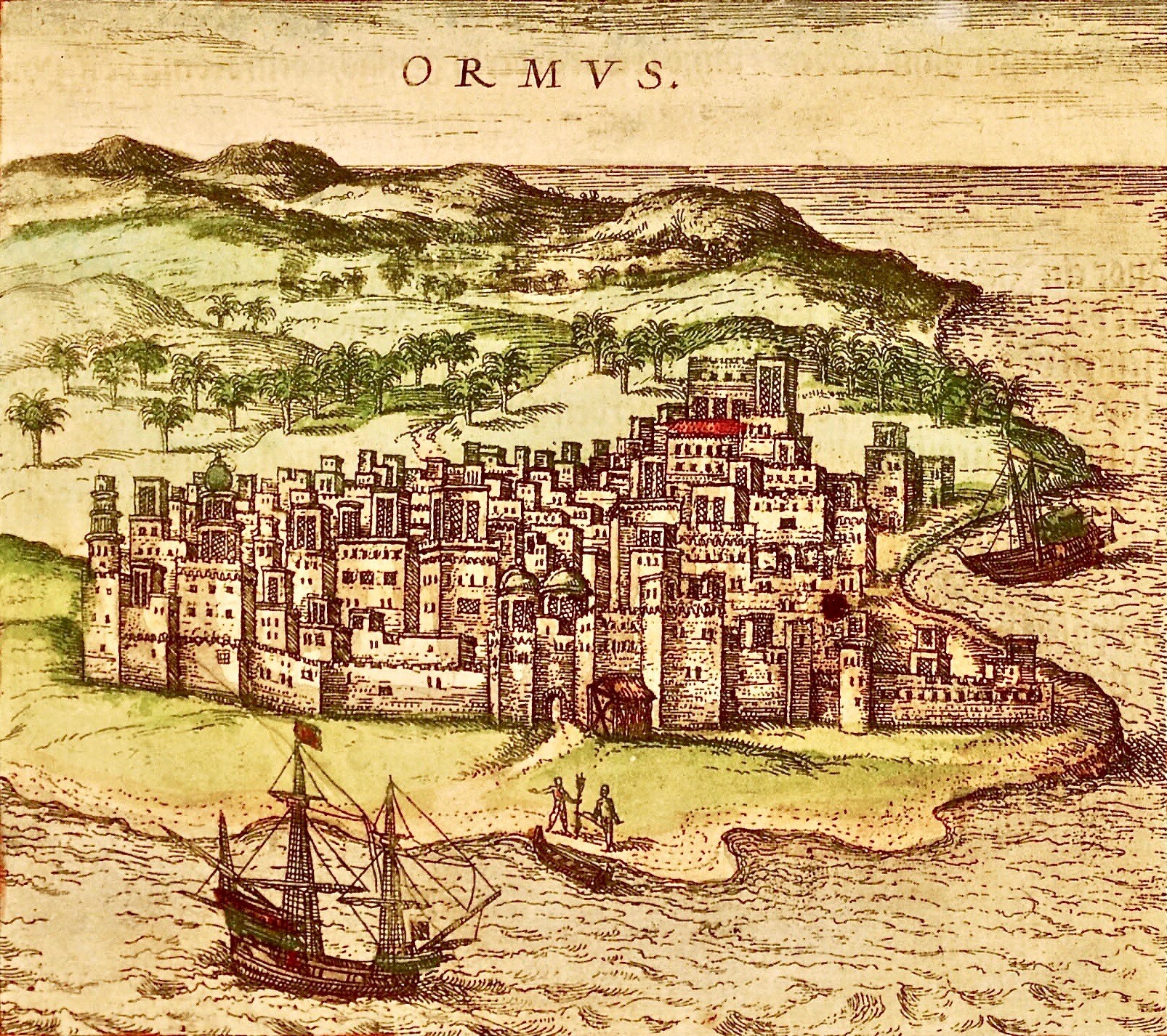
Hormuz in the days of Portuguese fortresses. Image: Wikimedia Commons

In the meantime, there seems to be a competition underway over which side can throttle traffic through the Strait of Hormuz more effectively. That's troubling in a way that transcends location; the strait may be narrow, but it’s not entirely unique. There are plenty of other potential choke points in the world.

These are mostly allowed to remain open to free-flowing trade. It wasn’t always like that.

At one point, around the same time that it built that fortress that remains on Hormuz Island, Portugal effectively operated the strait as a sort of toll booth. This wasn’t so uncommon in the past; there are remnants of these kinds of checkpoints still visible from the shores of Lake Geneva in Switzerland to mountain passes in the Caucasus.

Returning to a system like that could change daily life in ways most us probably can’t fathom.