








The use of artificial intelligence (AI) is accelerating across industries, reshaping how organizations operate and compete. At the same time, pressure to meet climate commitments is intensifying due to regulation, investor expectations and societal demand.
These forces are converging to create a central leadership challenge: how can organizations scale AI while ensuring it supports rather than undermines their environmental goals?
Technology is often seen as part of the problem when it comes to emissions. Data centres, cloud infrastructure and the growing demand for computing power are increasing the environmental footprint of digital systems.
Yet technology is also one of the most powerful tools available to reduce emissions. The paradox is clear. The same technologies that increase energy use can also enable more efficient and sustainable operations.
AI sits at the heart of this paradox. While it contributes to rising energy demand, it also enables organizations to optimize processes, reduce waste and improve resource efficiency at scale.
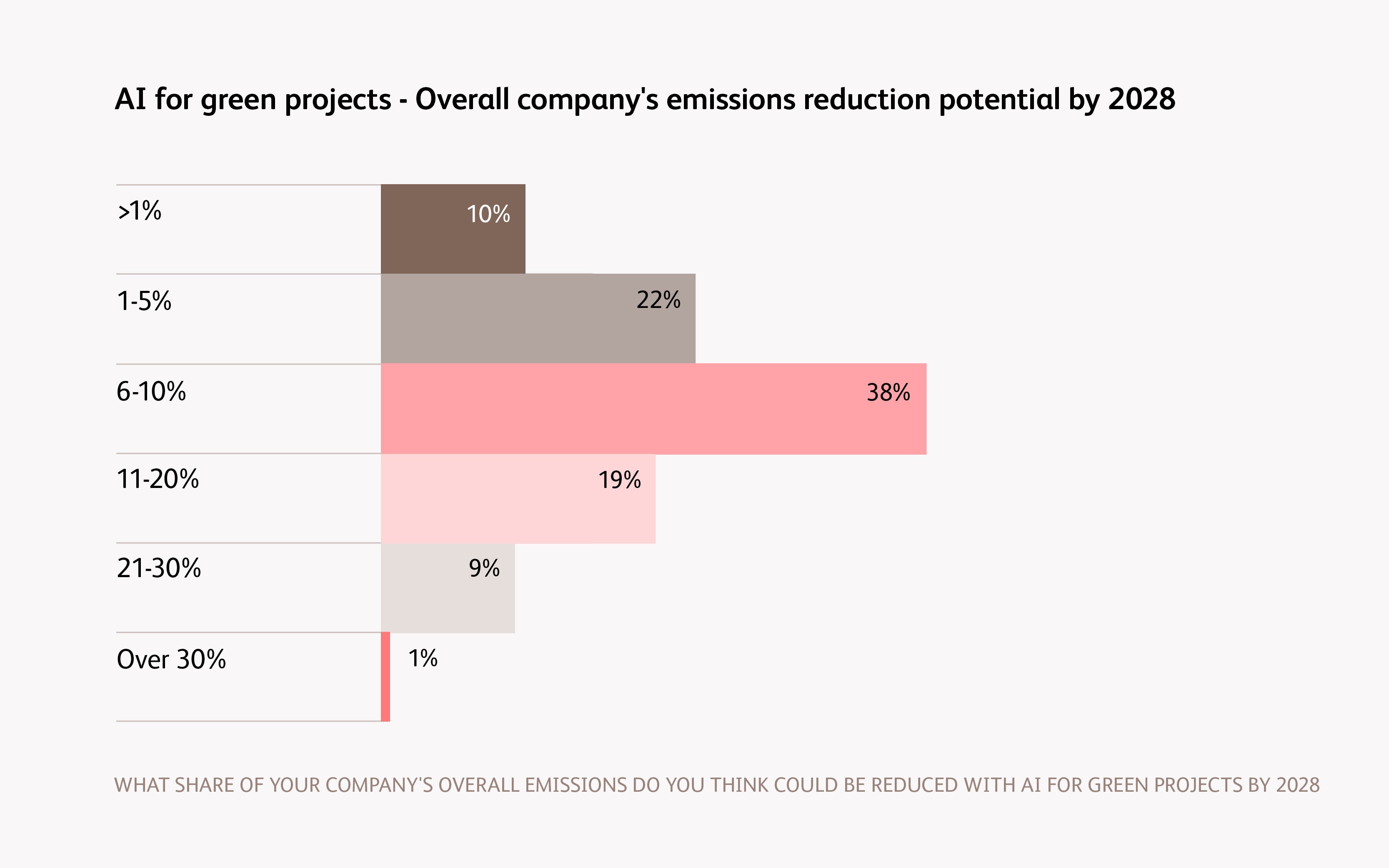
Research highlights the scale of this opportunity. Many organizations expect AI-driven initiatives to deliver measurable emissions reductions over the coming years. Meanwhile, two-thirds of technology leaders believe AI and digital initiatives could reduce business emissions by 6% to 30%.
This shows that although transformational impact is possible, for most organizations, the value of AI lies in cumulative improvements across multiple processes.
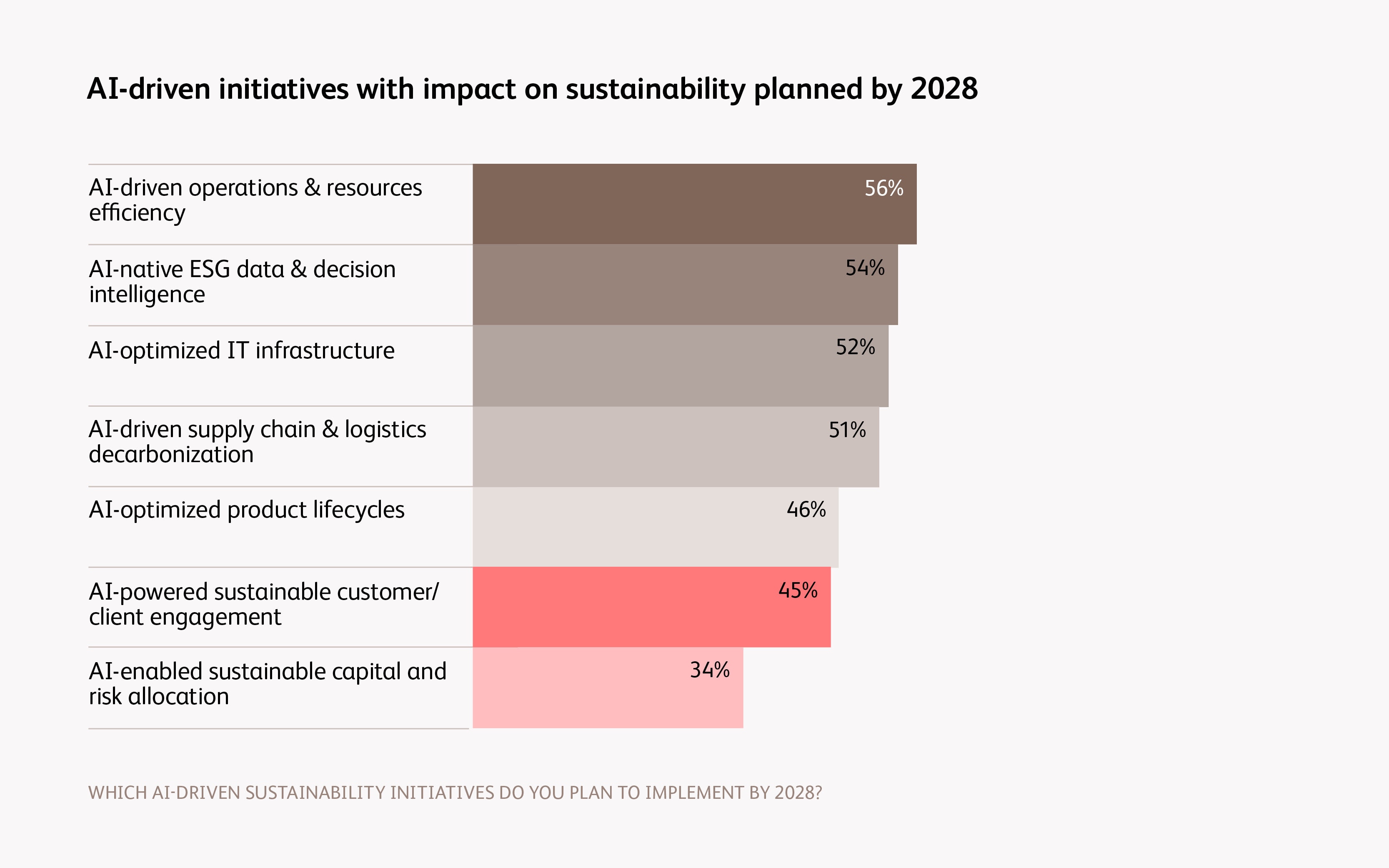
At the same time, organizations are already acting on this potential by prioritizing specific use cases where AI can directly contribute to sustainability outcomes. The strongest focus is on improving operational efficiency and resource optimization, followed closely by environmental, social and governance (ESG) data and decision intelligence, and IT infrastructure optimization.
More than half of organizations plan to deploy AI in these areas by 2028, while supply chain decarbonization and product lifecycle optimization are gaining momentum.
However, while priorities are clear, execution often remains fragmented, reinforcing the need for a more structured, portfolio-level approach.
A concrete example shows what this looks like when AI is deployed at scale and embedded into core operations.
Unilever's Beauty and Wellbeing factory in Tinsukia, India, has implemented more than 50 AI-driven initiatives across its end-to-end supply chain. Machine learning-driven planning has reduced frozen planning periods from 14 days to just one day, significantly improving responsiveness to demand.
At the same time, AI-enabled vision systems have made changeover times 85% faster, enabling shorter production runs. The site also uses an AI-enabled digital twin to simulate and test more sustainable packaging options before implementing them in production.
Such examples demonstrate that AI can deliver measurable environmental impact when applied to core business processes. In manufacturing and logistics, AI improves demand forecasting and production planning, reducing overproduction, inventory levels and unnecessary transport.
In IT operations, AI optimizes infrastructure through dynamic workload management and anomaly detection, reducing energy consumption across data centres and cloud environments. In parallel, AI-enabled platforms integrate fragmented ESG data in real time, supporting better reporting, risk detection and decision-making.
However, despite this potential, a critical gap remains. Most organizations still approach AI-driven sustainability through isolated initiatives rather than a coherent, enterprise-wide strategy. Pilots demonstrate value, but they do not automatically scale. Without this structure, organizations risk missing the full potential of AI-driven sustainability.
To unlock the full potential of AI, organizations must systematically assessing the environmental impact of AI initiatives by comparing the emissions they generate with the emissions they help avoid. In other words, organizations must ensure that their AI project portfolios deliver a measurable, net-positive environmental outcome.
This shift requires better governance and a closer alignment between technology and sustainability strategies. In many organizations, these domains still operate separately. Technology teams focus on performance and innovation, while sustainability teams focus on reporting and compliance. Bridging this divide is essential. AI initiatives should be evaluated not only on cost and business value, but also on their contribution to climate objectives.
Data is another critical enabler. Many organizations lack reliable, granular data on the environmental impact of their digital activities, particularly across complex supply chains. Without this visibility, it is difficult to measure progress, prioritize initiatives or make informed decisions. Improving transparency across the value chain will be key to strengthening accountability.
As a result, the role of the CIO and CTO is evolving. Technology leaders are no longer only responsible for system performance and reliability. They are increasingly expected to act as orchestrators of sustainability, connecting data, systems and business processes across the enterprise. This positions them to drive a more integrated approach in which sustainability is embedded into technology decisions from the start.
A green-by-design approach is emerging as a key principle. This means considering environmental impact when designing systems, selecting vendors and prioritizing investments. It also involves embedding sustainability metrics into governance processes and ensuring accountability across functions.
The opportunity is significant. When governed effectively and used in an environment-friendly way, AI can become a structural lever to achieve enterprise-wide climate targets, enabling organizations to move beyond incremental improvements toward more fundamental operational change.
AI is already delivering pockets of measurable impact; the challenge now is to make that impact systematic. This means moving from isolated use cases to portfolios that are governed, measured and held accountable for their net environmental contribution. Organizations that get this right reduce emissions and make sustainability part of how technology decisions are made and executed across the business.
此内容由惯性聚合(RSS阅读器)自动聚合整理,仅供阅读参考。 原文来自 — 版权归原作者所有。