








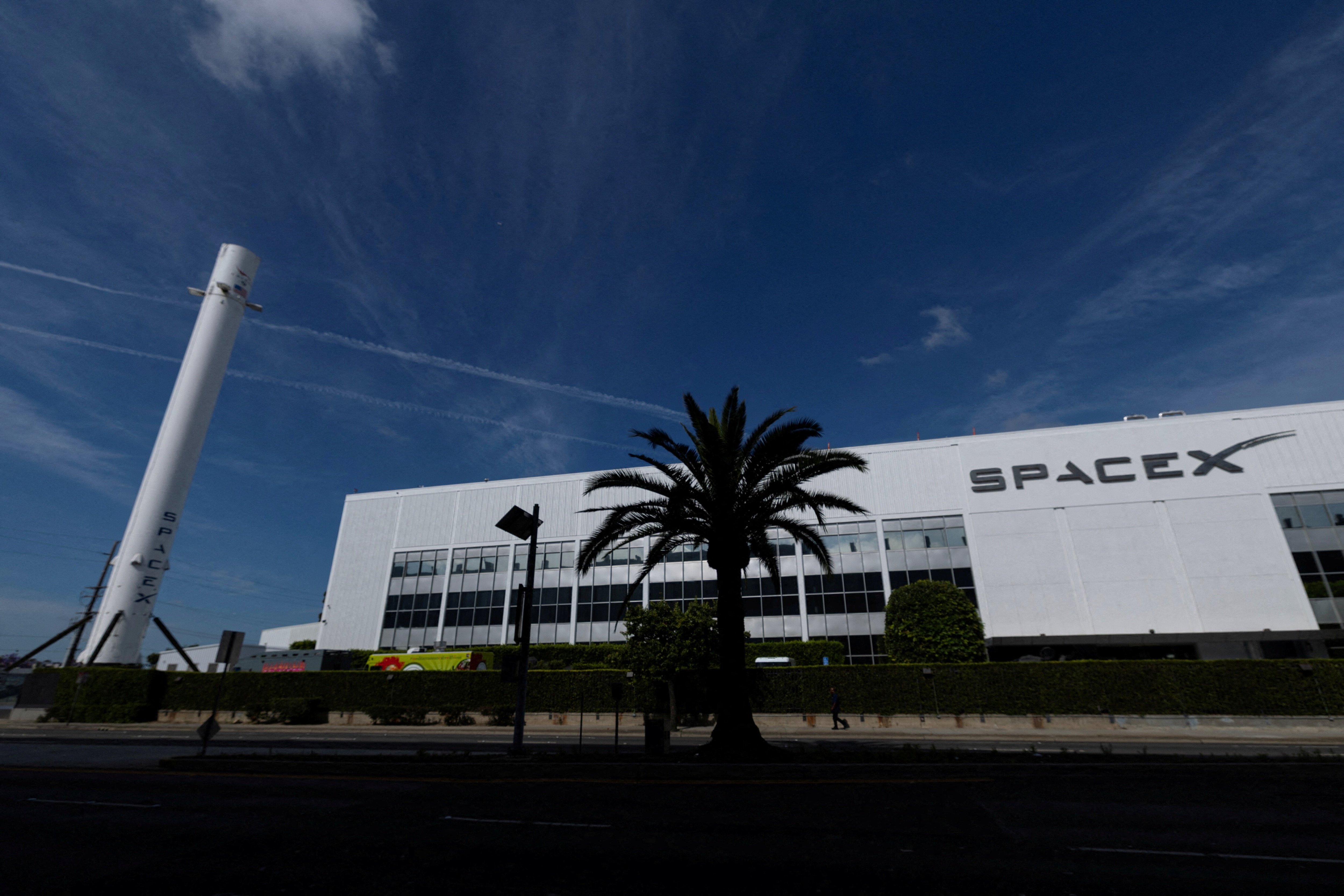
SpaceX's IPO filing has dominated recent coverage because it could be one of the largest in history, supported by its 82% market share of private-company launches and over 9 million Starlink customers.
That attention is reinforced by a wider surge in market activity within the 12 months to Q1 2026, up from 580 a year earlier.
The sector has previously declared inflection points, so scepticism is warranted. However, the volume and variety of recent transactions suggest something more durable than a single mega-IPO.
Three structural shifts explain why this wave of market activity is different and why the sector is on a path towards a $1.8 trillion market by 2035:
Space companies are increasingly competing to deliver connectivity, actionable intelligence and resilient services rather than simply building or launching hardware.
The shift from selling physical assets to providing outcome-based services expands the industry’s market potential, creates recurring revenue streams and drives broader adoption.
For customers, buying solutions is more compelling than operating complex hardware because it reduces upfront capital requirements and accelerates time to value. Once the product becomes the insight rather than the asset itself, the addressable market extends beyond traditional satellite buyers.
Synspective illustrates this shift. Its SAR-derived solutions helped drive paid project revenue and government subsidies, contributing to 145% revenue growth between 2024 and 2025. Digantara reflects the same model in space situational awareness, while T-Mobile and Starlink are applying it to direct-to-cell connectivity.
These models support recurring revenue through subscriptions and embedded services, making adoption simpler for customers and revenue more predictable for providers. Over time, investors may begin valuing space companies more like software businesses than traditional aerospace manufacturers.
In space, sovereignty – the ability to fully control capabilities – now extends beyond a national concern to alliance partners pooling capability, enterprises procuring autonomous communications, regional blocs negotiating dedicated capacity and operators vertically integrating to reduce supplier dependence.
The demand is structural: once sovereign capability is established, it is usually maintained or expanded. Nations and blocs that invest in independent space infrastructure create procurement baselines, while alliance fragmentation increases demand as partners hedge dependencies.
After deployment, buyers must maintain funding for cybersecurity, ground-segment upgrades, interoperability and redundancy, turning one-time investments into long-duration procurement programmes.
Many commercial actors are collaborating to develop solutions that meet these needs. Astranis and MB Group’s agreement to deliver sovereign connectivity to Oman shows companies supporting smaller states that cannot build domestic capacity but want control over critical infrastructure.
When governments clearly define their needs, sovereign demand can create long-term revenue streams for commercial actors, supporting growth through market cycles while building credibility in adjacent commercial and dual-use markets.
Commercial companies are increasingly better positioned to deliver capabilities at the pace demand requires, with government agencies demonstrating a greater willingness to leverage the private sector’s speed of innovation to augment their own capabilities.
Commercial operators benefit from several tailwinds: lower launch costs, shared launch economics, miniaturization, software-enabled development cycles and specialized supply chains.
Together, these forces have compressed the timeline from concept to deployment to revenue generation.
ICEYE and Pixxel illustrate the shift. ICEYE secured a €41.1 million award from Finland’s innovation agency because it could scale Earth observation and persistent monitoring faster than traditional providers.
Pixxel’s agreement with IN-SPACe to help build India’s national Earth observation constellation reflects the government’s effort to harness the private sector's speed and innovation at a national scale.
NASA’s Commercial Lunar Payload Services and the European Space Agency’s Boost! programmes reflect the same logic: using commercial providers to deliver capabilities on timelines that public agencies often struggle to match.
Faster iteration changes the economics. When deployment-to-revenue cycles run in months rather than decades, commercial actors are positioned to help government agencies innovate quickly and no longer rely on multi-decade government contracts to justify the investment.
This dynamic is most visible in data and services-based businesses, where revenue can scale independently of physical assets.
In contrast, launch and infrastructure businesses depend on longer investment horizons. Government customers remain central but they are no longer the sole path to commercial viability.
Loading...
The space economy has reached supposed inflection points before, most recently during the 2020-2022 special purpose acquisition company wave, which drove a surge of public listings. Many of those companies later contracted or traded below their initial valuations within two years.
What distinguishes the current cycle is the combination of durable sovereign demand across a broader range of missions, commercial demand growth, profitable or near-profitable IPO candidates, rather than pre-revenue concepts and recurring-revenue service models replacing one-off hardware sales.
If those conditions persist, they could support a more mature investment case for the sector and attract sustained long-term capital.
For the space economy to reach $1.8 trillion by 2035, the conditions for sustained capital formation matter more than any individual deal. Investors need:
Taylor Jordan, US Assistant Secretary of Commerce for Environmental Observation and Prediction and the Director of the Office of Space Commerce, is working on such a three-pronged approach that catalyses $50 billion in new space investment.
He says, "Our capabilities are built upon the innovation and expertise of our robust space industry; but for it to grow, we are changing how we as a government do business, providing confidence to the entire space ecosystem."
The success of the current market cycle matters but the larger test is whether governments, investors and commercial operators can ensure the next round of market activity builds a more mature and scalable sector rather than another constrained phase.
This article was created in collaboration with Deloitte Consulting LLP, a subsidiary of Deloitte LLP. The findings, interpretations and conclusions expressed herein do not necessarily represent the views of any Deloitte entity or its employees and no Deloitte entity or employee shall be liable for any loss in connection with this article.
此内容由惯性聚合(RSS阅读器)自动聚合整理,仅供阅读参考。 原文来自 — 版权归原作者所有。