






请关注公众号【碳硅化合物AI】
智能体需要与外部世界交互,这离不开模型、工具和 MCP(Model Context Protocol)的支持。AgentScope 通过统一的接口设计,让智能体能够无缝使用不同的模型提供商、执行各种工具函数,以及集成 MCP 服务。本文将深入分析 ChatModelBase 的模型无关设计、Toolkit 的工具管理机制,以及 MCP 协议的集成方式。通过阅读本文,你会理解框架如何实现"一次编程,适配所有模型",工具如何被注册和执行,以及 MCP 如何扩展智能体的能力边界。
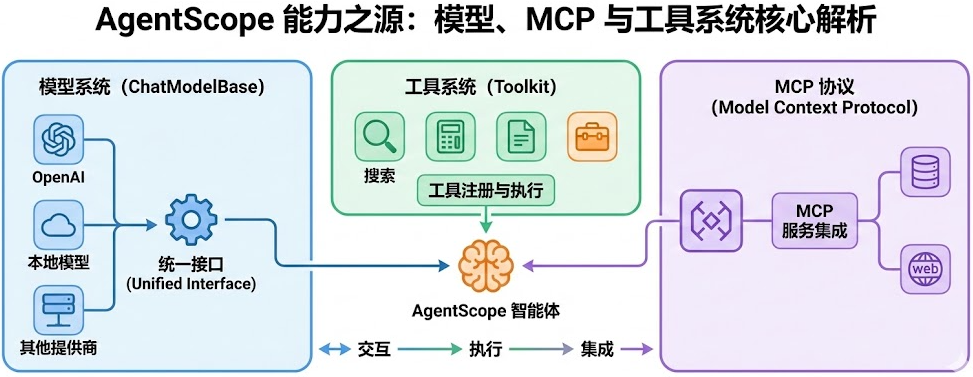
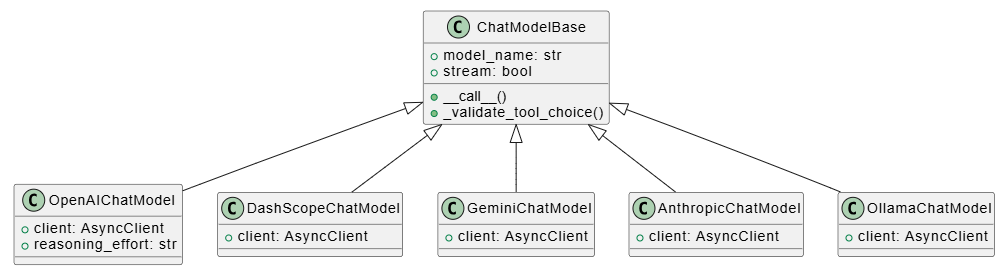
AgentScope 通过 ChatModelBase 抽象接口实现了模型无关设计:
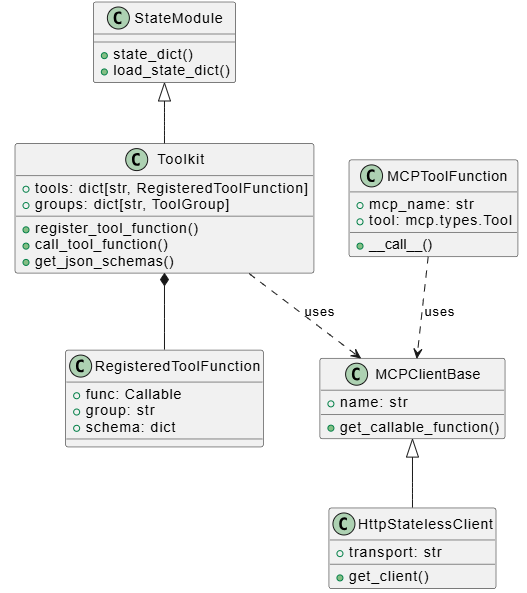
工具系统由 Toolkit 统一管理:
让我们看看模型基类是如何定义的:
class ChatModelBase:
    """Base class for chat models."""

    model_name: str
    """The model name"""

    stream: bool
    """Is the model output streaming or not"""

    def __init__(
        self,
        model_name: str,
        stream: bool,
    ) -> None:
        """Initialize the chat model base class."""
        self.model_name = model_name
        self.stream = stream

    @abstractmethod
    async def __call__(
        self,
        *args: Any,
        **kwargs: Any,
    ) -> ChatResponse | AsyncGenerator[ChatResponse, None]:
        pass

    def _validate_tool_choice(
        self,
        tool_choice: str,
        tools: list[dict] | None,
    ) -> None:
        """Validate tool_choice parameter."""
        # 验证工具选择参数的有效性
        # ...
这个接口非常简洁,只定义了核心方法。所有模型提供商都实现这个接口,这样智能体就可以无缝切换不同的模型。
模型调用的流程相对直接,但支持流式和非流式两种模式:
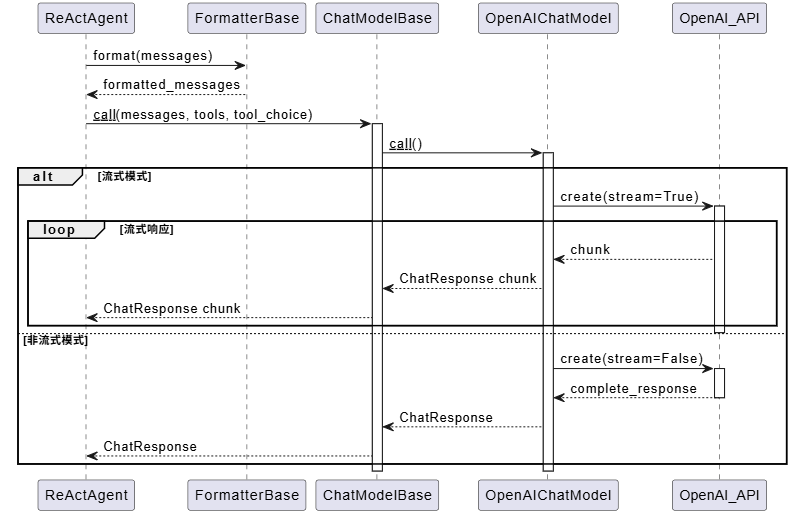
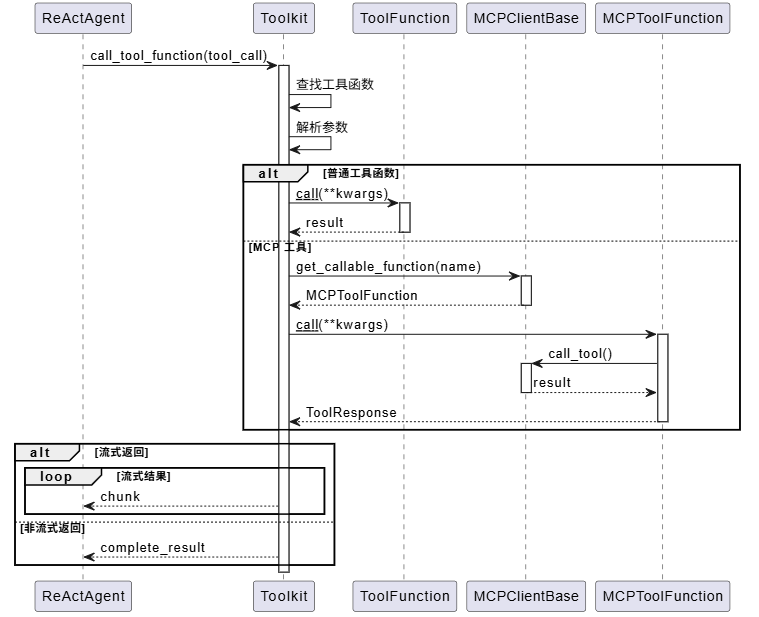
工具执行是 ReAct 模式中的关键环节:
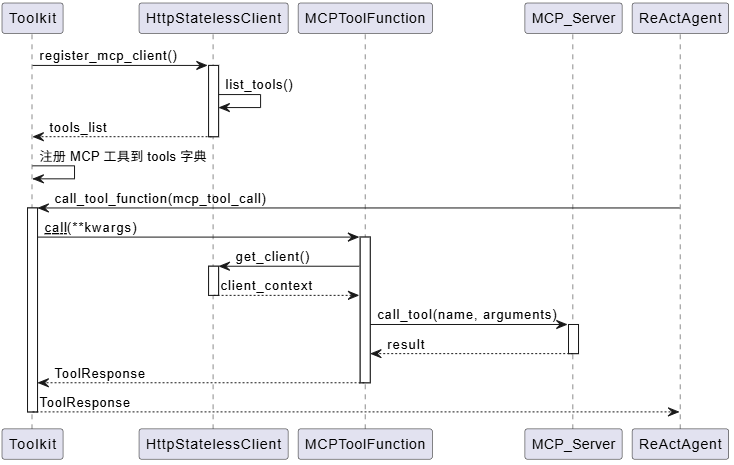
MCP 协议的集成让 AgentScope 可以使用外部服务:
这是 AgentScope 的一个核心设计理念。通过 ChatModelBase 抽象接口,所有模型提供商都实现相同的接口:
@abstractmethod
async def __call__(
    self,
    *args: Any,
    **kwargs: Any,
) -> ChatResponse | AsyncGenerator[ChatResponse, None]:
    pass
这样,当你写代码时:
# 可以轻松切换模型
model = DashScopeChatModel(...)  # 或 OpenAIChatModel、GeminiChatModel 等
agent = ReActAgent(model=model, ...)
智能体的其他代码完全不需要改变。这种设计让框架具有极强的灵活性。
AgentScope 1.0 完全拥抱异步编程。模型调用、工具执行都支持异步和流式:
# 流式调用模型
async for chunk in model(messages):
    # 处理每个 chunk
    print(chunk.content)

# 流式执行工具
async for chunk in toolkit.call_tool_function(tool_call):
    # 处理工具执行结果
    print(chunk.content)
这种设计让框架能够:
MCP(Model Context Protocol)是一个标准协议,让智能体能够使用外部服务。AgentScope 通过 MCPClientBase 抽象接口支持 MCP:
async def get_callable_function(
    self,
    func_name: str,
    wrap_tool_result: bool = True,
) -> Callable:
    """Get a tool function by its name."""
    if self._tools is None:
        await self.list_tools()

    target_tool = None
    for tool in self._tools:
        if tool.name == func_name:
            target_tool = tool
            break

    if target_tool is None:
        raise ValueError(f"Tool '{func_name}' not found in the MCP server")

    return MCPToolFunction(
        mcp_name=self.name,
        tool=target_tool,
        wrap_tool_result=wrap_tool_result,
        client_gen=self.get_client,
    )
这个设计非常巧妙:
Toolkit 的工具执行机制支持多种场景:
async def call_tool_function(
    self,
    tool_call: ToolUseBlock,
) -> AsyncGenerator[ToolResponse, None]:
    """Execute the tool function by the ToolUseBlock."""
    # 检查工具是否存在
    if tool_call["name"] not in self.tools:
        return _object_wrapper(
            ToolResponse(content=[TextBlock(...)]),
            None,
        )

    # 获取工具函数
    tool_func = self.tools[tool_call["name"]]

    # 检查工具组是否激活
    if (
        tool_func.group != "basic"
        and not self.groups[tool_func.group].active
    ):
        return _object_wrapper(
            ToolResponse(content=[TextBlock(...)]),
            None,
        )

    # 准备参数并执行
    # ...
工具执行支持:
AsyncGenerator[ToolResponse, None]模型、MCP 和工具系统是 AgentScope 框架中让智能体具备"能力"的三个核心系统:
这三个系统的设计都体现了 AgentScope 的核心理念:模块化、透明、可扩展。在下一篇文章中,我们会分析 Pipeline 和消息系统的实现,这些组件负责多智能体的协调和通信。
此内容由惯性聚合(RSS阅读器)自动聚合整理,仅供阅读参考。 原文来自 — 版权归原作者所有。