





In recent years, artificial intelligence (AI) (opens new window) has made some major transformations, especially in the domain of large language models (LLMs) (opens new window). These models, like OpenAI's (opens new window)GPT series, Google's Gemini (opens new window), and Meta's LLaMA (opens new window), have shown amazing capabilities like generating text almost similar to human writing. This makes them incredibly useful in a wide range of tasks, from writing content and translating languages to solving complex problems and improving business processes.
LLMs can help us in handling tasks, that used to require manual work in the past, which allows for faster results and opens up new opportunities for AI-powered solutions. With the increasing demand for unique AI solutions, several tools have been already developed to help developers build AI applications more easily. Two of the most popular technologies used are LangChain (opens new window) and AutoGen (opens new window). In this blog post, we'll take a closer look at these two frameworks and understand what they offer and how they are different.
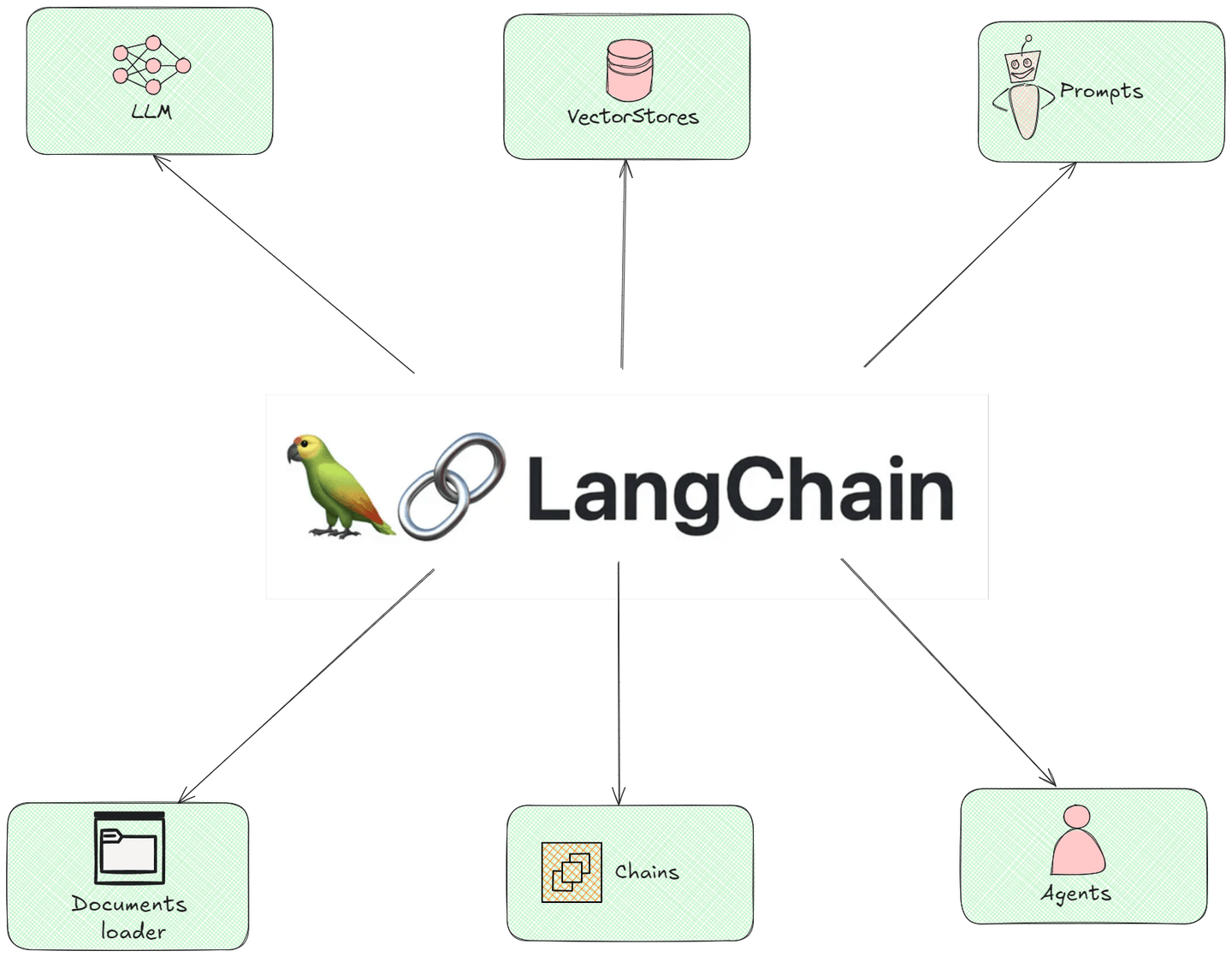
LangChain is a framework designed to facilitate the development of large language models (LLMs) based applications by enabling the creation of modular and extensible pipelines. It allows developers to integrate different components, such as prompts, memory, and external APIs, into a well-balanced application. This capability makes it particularly well-suited for building refined conversational agents, data retrieval systems, and other LLM-based applications.

The following illustration shows all the modular components of LangChain, showcasing how they interact with each other:
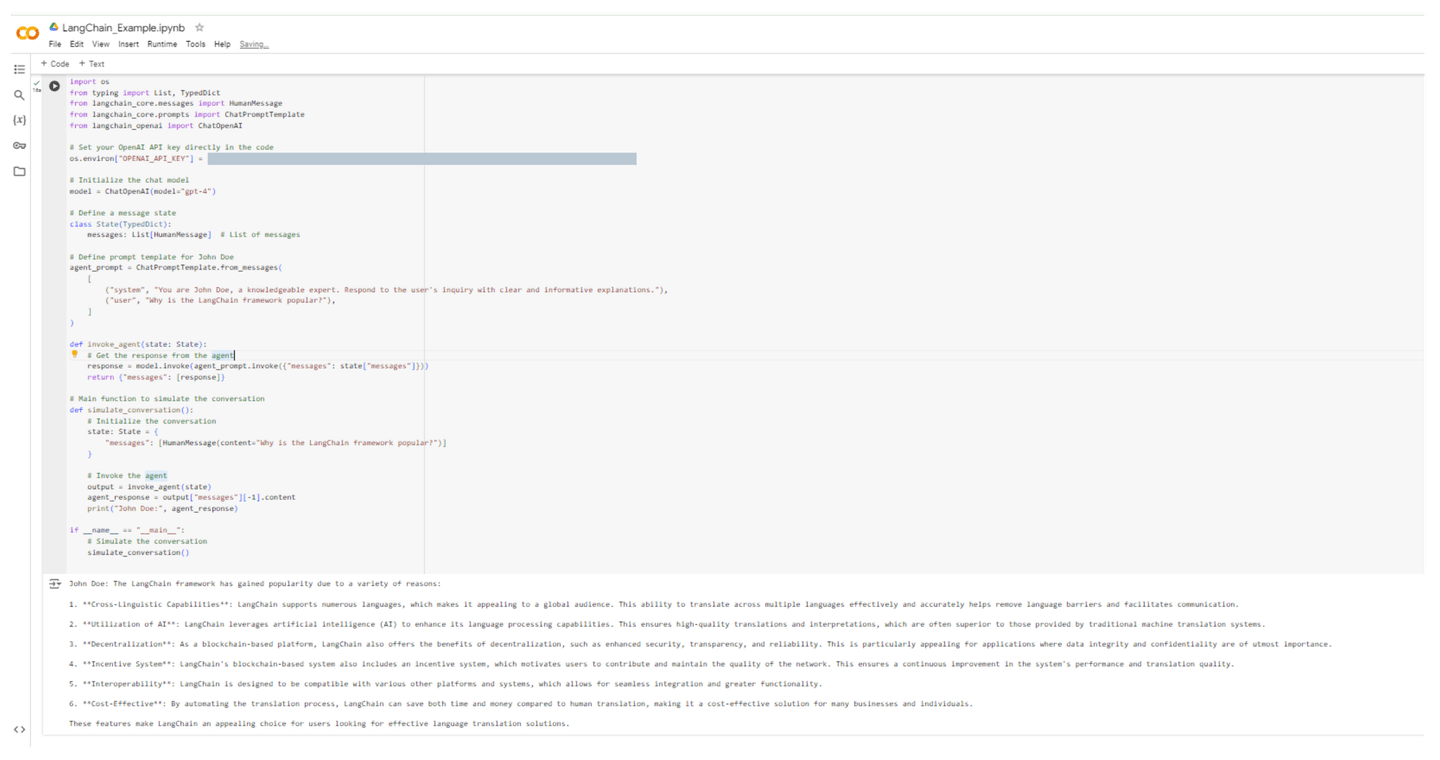
In the following example, we created a LangChain agent named John Doe, who will explain “Why is the LangChain framework popular?” The code is shown as:
After executing this code, let’s see John Doe’s answer:
The following screenshot illustrates the execution of this code in a Colab environment:
Now that we have a clear understanding of LangChain, let's move on to our next framework.
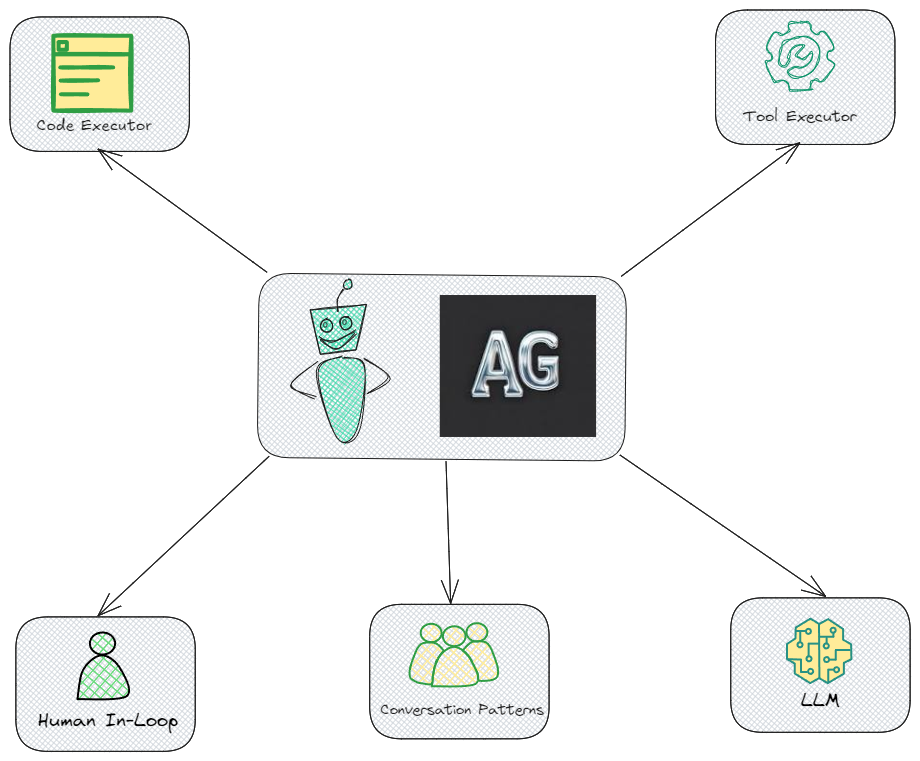
AutoGen is a framework that is more focused on automating the code generation processes and workflow management using large language models. Its primary goal is to speed up the development process by enabling users to generate functional code and automate repetitive tasks through natural language input. AutoGen is ideal for rapid prototyping, allowing users to create applications and workflows without extensive programming knowledge.
The following illustration shows all the key components of AutoGen, showcasing how they interact with each other:
Boost Your AI App Efficiency now
Sign up for free to benefit from 150+ QPS with 5,000,000 vectors
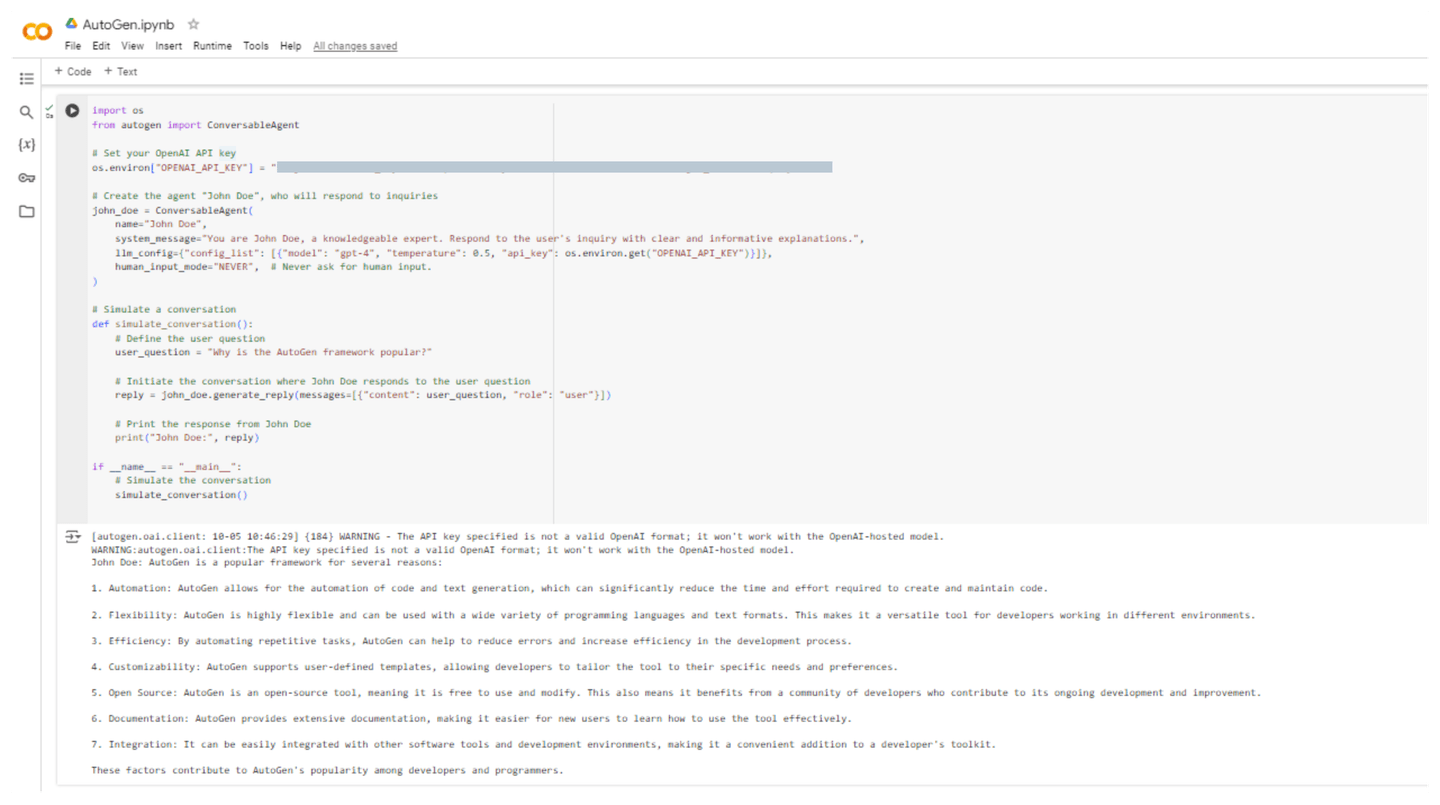
Now let’s create the same John Doe agent in AutoGen, who will explain “Why is the AutoGen framework popular?” The code is shown as:
After executing this code, John Doe gives answers with the following explanation:
The following screenshot illustrates the execution of this code in a Colab environment:
Here's a comparison table outlining key differences and similarities between LangChain and AutoGen. This table will help you understand the unique features, strengths, and intended use cases for each framework.
| Feature / Aspect | LangChain | AutoGen |
|---|---|---|
| Purpose | Framework for developing applications using language models, focusing on chaining operations and data flow. | Framework for enabling complex workflows using multiple agents that can communicate and collaborate. |
| Agent Model | Supports building custom agents and workflows. | Uses conversational agents that can send and receive messages, simplifying multi-agent interactions. |
| Community | Established community with extensive documentation and examples. | Growing community with active development and research focus. |
| Complex Workflows | Can build complex workflows but primarily through chaining operations. | Designed for complex workflows with multiple agents, facilitating interaction between them. |
| Ease of Use | Straightforward for those familiar with LLMs, but might have a learning curve for beginners. | User-friendly for building multi-agent systems, focusing on collaboration and communication. |
| Use Cases | Ideal for applications in data processing, content generation, and conversational agents. | Suitable for applications requiring multi-agent systems, such as debate, customer support, or collaborative problem-solving. |
| Integration | Integrates well with various LLMs, tools, and external services. | Specifically designed for integration of agents and their components, including human input. |
| Human-in-the-loop | Limited support for human involvement; focuses more on automation. | Supports human-in-the-loop scenarios, allowing agents to seek human input when necessary. |
| API Usage | Requires an API key for LLMs like OpenAI, but less focus on interactions between agents. | Requires an API key for LLMs, specifically designed for agent interactions and workflows. |
| Supported Models | Works with a variety of models, including GPT-3, GPT-4, and others. | Primarily integrates with OpenAI models but can be extended to support other models as well. |
This table provides a quick overview of the strengths and considerations for both LangChain and AutoGen, helping you decide which tool best suits your project's needs.
Join Our Newsletter
LangChain and AutoGen are robust frameworks designed for various purposes within the field of artificial intelligence. LangChain specializes in creating organized applications that make use of language models using modular components and workflow chaining. This makes it perfect for tasks such as data processing and generating content. On the other hand, AutoGen stands out in developing interactive systems with multiple agents that can work together and communicate efficiently to address difficult tasks, making it easier for humans to be involved in solving problems.
By combining MyScale (opens new window) with both frameworks, the functionality is greatly improved as it allows for the effective storage and retrieval of vector embeddings. This integration enables quick retrieval of pertinent information, enhancing the appropriateness of context and accuracy of responses in applications. Moreover, the MSTG algorithm (opens new window) from MyScale improves search and retrieval operations for efficient handling of extensive datasets. Collaboratively, these tools allow developers to build strong and efficient AI-based platforms.
此内容由惯性聚合(RSS阅读器)自动聚合整理,仅供阅读参考。 原文来自 — 版权归原作者所有。