


惯性聚合 高效追踪和阅读你感兴趣的博客、新闻、科技资讯
阅读原文 在惯性聚合中打开

推荐订阅源

奇客Solidot–传递最新科技情报
奇客Solidot–传递最新科技情报
小众软件
小众软件
博客园 - 三生石上(FineUI控件)
让小产品的独立变现更简单 - ezindie.com
博客园_首页
Last Week in AI
Last Week in AI
美团技术团队
OSCHINA 社区最新新闻
OSCHINA 社区最新新闻
Apple Machine Learning Research
WordPress大学
WordPress大学
钛媒体:引领未来商业与生活新知
钛媒体:引领未来商业与生活新知
博客园 - Franky
The Cloudflare Blog
罗磊的独立博客
月光博客
月光博客
N
Netflix TechBlog - Medium
C
Check Point Blog
Microsoft Security Blog
F
Fortinet All Blogs
freeCodeCamp Programming Tutorials: Python, JavaScript, Git & More
Microsoft Azure Blog
IT之家
IT之家
Jina AI
Jina AI
J
Java Code Geeks

Tech - South China Morning Post

Multinational pharmaceutical companies to benefit from new China guidelines: analysts Hong Kong lawmaker swipes at US lack of ‘clarity’ as city eyes crypto lead China’s Hesai adds colour to lidar to help EVs level up in self-driving ‘State-of-the-art’ models can struggle with basic office work, says AI executive Opinion | As AI evolves, school syllabuses must evolve with it Winner of second Beijing robot half-marathon smashes human world record by 6 minutes Asia’s supply chains could give it edge over US in AI race: Granite Asia’s Foo Chinese software firms defy ‘SaaSpocalypse’ with strategic AI partnerships Huawei retains lead in China smartphones, Apple shipments surge in first quarter China’s drug makers are speeding up – will AI be their secret weapon? Hong Kong seen leading Asia in push to scale stablecoins, HSBC says ByteDance, Tencent step up AI talent battle amid reports of DeepSeek loss White House and Anthropic CEO discuss working together amid Mythos AI fears Chinese LED chipmaker’s purchase of Dutch firm collapses after US opposition How Amazon uses closer China supply ties to counter tariffs, Shein and Temu ‘Horrible’ for US if DeepSeek AI models run on Huawei chips: Nvidia CEO Chinese platforms fined 3.6b yuan over ‘ghost’ takeaways amid cutthroat rivalry Manycore, one of Hangzhou’s ‘Six Little Dragons’, surges on Hong Kong IPO debut How the rise of AI agents could finally make China’s open-source models pay ‘Buy what they can, steal what they can’t’: US lawmakers slam China’s AI tactics China’s lithium giant Ganfeng sees profit jump as EV, ESS battery demand soars Chinese tech giants, AI ‘godmother’ Li Fei-Fei race into world models Black market workarounds scale up for Claude as Anthropic tightens ID checks TSMC targets over 30% revenue surge in 2026, ramps up capex amid AI boom BrainCo’s brain-computer interface wows at HSBC summit with mind-controlled hand Chinese investors cheer Tesla’s AI chip progress, boosting shares of suppliers ASML boosts 2026 sales forecast despite shrinking China sales China’s EV battery giant CATL to set up mining arm to secure supply chain From ‘probing minds’ to verified account: how Musk’s stance on TikTok shifted Amazon bets on Shenzhen smart warehouse to cut merchant storage costs by 45%
The View | Energy crisis showcases strengths of China’s d...
Nicholas Spi · 2026-05-04 · via Tech - South China Morning Post

Earlier this year, Nvidia CEO Jensen Huang likened artificial intelligence (AI) to “a five-layer cake”. At the top are applications, such as chatbots. The layer below is the software, which includes language models. Further down are infrastructure and memory chips.

The bottom layer is the most important. “At the foundation is energy,” Huang said, noting that “energy is the first principle of AI infrastructure and the binding constraint on how much intelligence the system can produce”.

Driving the AI boom is the US-China battle for technological supremacy. At the heart of the race is the buildout of data centres. According to Bank of America, AI-related capital expenditure globally is expected to triple over the next five years to US$1.2 trillion. While the US accounts for the bulk of the investment, China’s share is forecast to reach 27 per cent by 2030.

Before the “DeepSeek moment” in January last year, China’s AI ambitions were perceived to be constrained by US export restrictions that made it hard for companies to buy or build the advanced memory chips AI models rely on. In a July report, Morgan Stanley said the availability of advanced chips had been “the biggest risk” to the Chinese data centre/AI growth engine.

Yet since the energy crisis triggered by the war in Iran erupted, the narrative around China’s data centre market has shifted towards the strengths of the sector. The bottom layer of Huang’s cake – the electricity vital to building digital infrastructure – has become even more critical to the outlook for data centres globally.
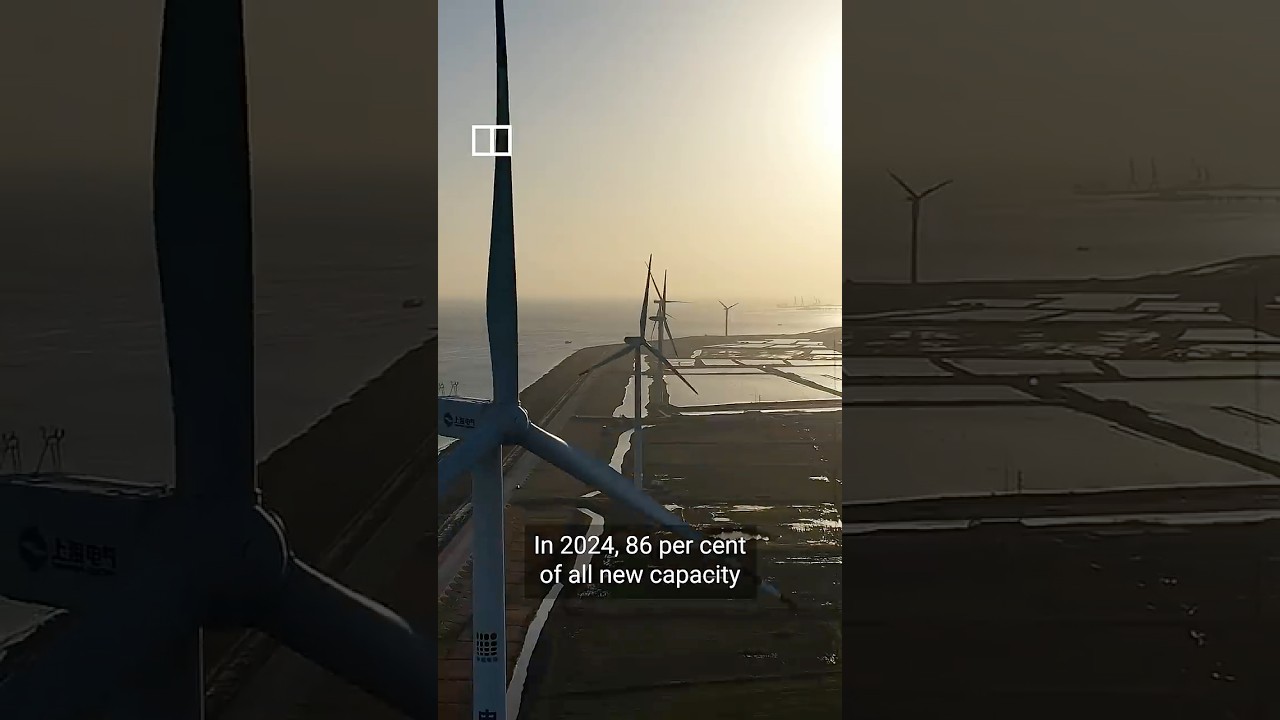
How China’s energy structure cushions the blows of global oil crisis

How China’s energy structure cushions the blows of global oil crisis

China’s relative resilience to the energy shock, accentuated by the acute vulnerabilities of other Asian economies, has drawn attention to the country’s abundant and cheap electricity. As Nomura noted in an April 2 report, the power sector “is almost self-sufficient on primary sources: it uses almost no natural gas and oil and relies heavily on coal, which is mainly mined in China”. The report points to the “rapid progress” in incorporating renewable energy sources and to the sector being heavily regulated.