


惯性聚合 高效追踪和阅读你感兴趣的博客、新闻、科技资讯
阅读原文 在惯性聚合中打开

推荐订阅源

L
LangChain Blog
博客园_首页
钛媒体:引领未来商业与生活新知
钛媒体:引领未来商业与生活新知
月光博客
月光博客
S
SegmentFault 最新的问题
量子位
Apple Machine Learning Research
博客园 - 司徒正美
博客园 - Franky
Google DeepMind News
Recent Announcements
B
Blog RSS Feed
C
Check Point Blog
The Cloudflare Blog
M
MIT News - Artificial intelligence
OSCHINA 社区最新新闻
OSCHINA 社区最新新闻
F
Fortinet All Blogs
Hugging Face - Blog
Hugging Face - Blog
博客园 - 叶小钗
V
Visual Studio Blog
V
V2EX
Microsoft Azure Blog
博客园 - 聂微东
freeCodeCamp Programming Tutorials: Python, JavaScript, Git & More

Tech - South China Morning Post

Multinational pharmaceutical companies to benefit from new China guidelines: analysts Hong Kong IPOs lure mainland China insurers seeking higher returns Hong Kong lawmaker swipes at US lack of ‘clarity’ as city eyes crypto lead China’s Hesai adds colour to lidar to help EVs level up in self-driving ‘State-of-the-art’ models can struggle with basic office work, says AI executive Opinion | As AI evolves, school syllabuses must evolve with it Winner of second Beijing robot half-marathon smashes human world record by 6 minutes Asia’s supply chains could give it edge over US in AI race: Granite Asia’s Foo Chinese software firms defy ‘SaaSpocalypse’ with strategic AI partnerships Huawei retains lead in China smartphones, Apple shipments surge in first quarter China’s drug makers are speeding up – will AI be their secret weapon? Hong Kong seen leading Asia in push to scale stablecoins, HSBC says ByteDance, Tencent step up AI talent battle amid reports of DeepSeek loss White House and Anthropic CEO discuss working together amid Mythos AI fears Chinese LED chipmaker’s purchase of Dutch firm collapses after US opposition How Amazon uses closer China supply ties to counter tariffs, Shein and Temu ‘Horrible’ for US if DeepSeek AI models run on Huawei chips: Nvidia CEO Chinese platforms fined 3.6b yuan over ‘ghost’ takeaways amid cutthroat rivalry Manycore, one of Hangzhou’s ‘Six Little Dragons’, surges on Hong Kong IPO debut How the rise of AI agents could finally make China’s open-source models pay ‘Buy what they can, steal what they can’t’: US lawmakers slam China’s AI tactics China’s lithium giant Ganfeng sees profit jump as EV, ESS battery demand soars Chinese tech giants, AI ‘godmother’ Li Fei-Fei race into world models Black market workarounds scale up for Claude as Anthropic tightens ID checks TSMC targets over 30% revenue surge in 2026, ramps up capex amid AI boom BrainCo’s brain-computer interface wows at HSBC summit with mind-controlled hand Chinese investors cheer Tesla’s AI chip progress, boosting shares of suppliers ASML boosts 2026 sales forecast despite shrinking China sales China’s EV battery giant CATL to set up mining arm to secure supply chain From ‘probing minds’ to verified account: how Musk’s stance on TikTok shifted
How prolonged Iran war could disrupt Asia tech from chipm...
Coco Feng · 2026-04-14 · via Tech - South China Morning Post

Asia’s technology industry is bracing for longer and deeper disruptions from the Middle East turmoil as analysts warn that prolonged hostilities could throttle semiconductor production and the buildout of artificial intelligence data centres.

The Strait of Hormuz, which carries about a quarter of global seaborne crude oil trade and 20 per cent of liquefied natural gas (LNG) shipments, remained effectively closed after US President Donald Trump said he would block the channel following the collapse of peace talks with Iran.

Markets responded negatively. South Korea’s benchmark Kospi index closed nearly 1 per cent lower on Monday, while shares of Samsung Electronics, the world’s largest memory chipmaker, dropped 2.4 per cent. Taiwan Semiconductor Manufacturing Company, the biggest contract chipmaker, slipped 0.5 per cent.

Crude oil bounced back to above US$100 per barrel, while the Japan/Korea Marker – the spot price for LNG delivered in Northeast Asia – approached US$20 per million British thermal units. Although lower than late March, it was still among the highest levels since 2023.

Unlike Europe, where “the primary transmission mechanism runs through natural gas”, the Asia-Pacific region’s exposure was concentrated in “crude oil and refined petroleum products, feeding directly into manufacturing input costs, transport and trade financing”, according to a report by BMI, a unit of Fitch Solutions.
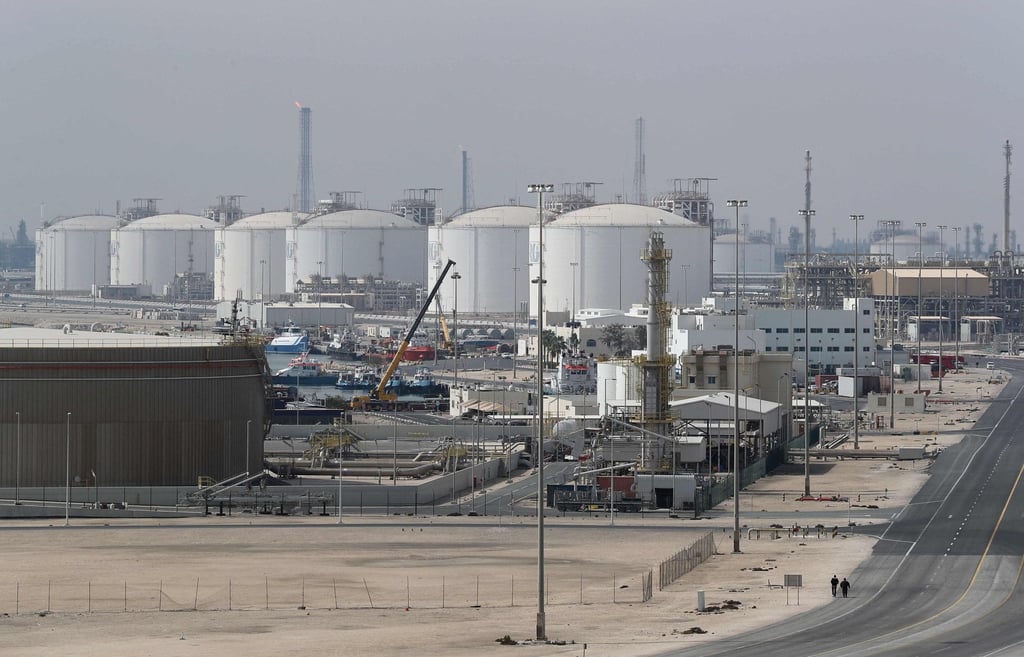
The Ras Laffan complex in Qatar before the attacks in March. Photo: AFP

The Ras Laffan complex in Qatar before the attacks in March. Photo: AFP

South Korea, Taiwan and Singapore rely on Qatari LNG for between 15 and 35 per cent of their total gas supply, and Singapore generates around 90 per cent of its electricity from natural gas. However, Qatar’s Ras Laffan complex, responsible for roughly a third of global supply, was struck by Iran in March, with Qatar’s energy minister Saad Sherida al-Kaabi telling Reuters last month that repairs could take three to five years.