


惯性聚合 高效追踪和阅读你感兴趣的博客、新闻、科技资讯
阅读原文 在惯性聚合中打开

推荐订阅源

G
Google Developers Blog
OSCHINA 社区最新新闻
OSCHINA 社区最新新闻
Martin Fowler
Martin Fowler
Cyber Security Advisories - MS-ISAC
IT之家
IT之家
云风的 BLOG
云风的 BLOG
奇客Solidot–传递最新科技情报
奇客Solidot–传递最新科技情报
Google DeepMind News
Microsoft Azure Blog
Engineering at Meta
Engineering at Meta
P
Proofpoint News Feed
博客园_首页
J
Java Code Geeks
C
Check Point Blog
I
InfoQ
Apple Machine Learning Research
大猫的无限游戏
大猫的无限游戏
D
Docker
U
Unit 42
T
The Blog of Author Tim Ferriss
F
Fortinet All Blogs
GbyAI
GbyAI
N
Netflix TechBlog - Medium
T
Tailwind CSS Blog

Tech - South China Morning Post

Multinational pharmaceutical companies to benefit from new China guidelines: analysts Hong Kong lawmaker swipes at US lack of ‘clarity’ as city eyes crypto lead China’s Hesai adds colour to lidar to help EVs level up in self-driving ‘State-of-the-art’ models can struggle with basic office work, says AI executive Opinion | As AI evolves, school syllabuses must evolve with it Winner of second Beijing robot half-marathon smashes human world record by 6 minutes Asia’s supply chains could give it edge over US in AI race: Granite Asia’s Foo Chinese software firms defy ‘SaaSpocalypse’ with strategic AI partnerships Huawei retains lead in China smartphones, Apple shipments surge in first quarter China’s drug makers are speeding up – will AI be their secret weapon? Hong Kong seen leading Asia in push to scale stablecoins, HSBC says ByteDance, Tencent step up AI talent battle amid reports of DeepSeek loss White House and Anthropic CEO discuss working together amid Mythos AI fears Chinese LED chipmaker’s purchase of Dutch firm collapses after US opposition How Amazon uses closer China supply ties to counter tariffs, Shein and Temu ‘Horrible’ for US if DeepSeek AI models run on Huawei chips: Nvidia CEO Chinese platforms fined 3.6b yuan over ‘ghost’ takeaways amid cutthroat rivalry Manycore, one of Hangzhou’s ‘Six Little Dragons’, surges on Hong Kong IPO debut How the rise of AI agents could finally make China’s open-source models pay ‘Buy what they can, steal what they can’t’: US lawmakers slam China’s AI tactics China’s lithium giant Ganfeng sees profit jump as EV, ESS battery demand soars Chinese tech giants, AI ‘godmother’ Li Fei-Fei race into world models Black market workarounds scale up for Claude as Anthropic tightens ID checks TSMC targets over 30% revenue surge in 2026, ramps up capex amid AI boom BrainCo’s brain-computer interface wows at HSBC summit with mind-controlled hand Chinese investors cheer Tesla’s AI chip progress, boosting shares of suppliers ASML boosts 2026 sales forecast despite shrinking China sales China’s EV battery giant CATL to set up mining arm to secure supply chain From ‘probing minds’ to verified account: how Musk’s stance on TikTok shifted Amazon bets on Shenzhen smart warehouse to cut merchant storage costs by 45%
AI agents face trust issues in ‘high-risk’ industrial sec...
Iris Deng · 2026-05-17 · via Tech - South China Morning Post

China’s industrial sectors are racing to integrate artificial intelligence to boost efficiency, bolstered by state support, but experts warn that critical vertical markets – such as healthcare and aerospace – may be too “high risk” for the shift towards autonomous agents.

Hailed as the driver of a “fourth industrial revolution”, AI is shifting away from chatbots to agentic AI – systems capable of independent execution within a workflow, industry experts said at the International Data Corporation (IDC) CIO Summit in Shenzhen on Friday.

Upper-layer software, which includes consumer-facing apps and internal management systems, will be “entirely replaced by agents”, said Liu Xiangyang, chief information security officer of Midea Group, as these agents are designed to understand business logic and execute workflows

“In the future, 90 per cent of an AI agent’s value will come from industrial expertise,” said Du Yanze, senior research manager at IDC. “The core of the industrial AI value chain has shifted from how you build the software, to the industry knowledge inside it.”

AI agents could drastically compress the time needed to manually deliver a supply chain order from two hours to several minutes through automated data analysis, planning, risk recognition and decision making, according to an example given by Du.
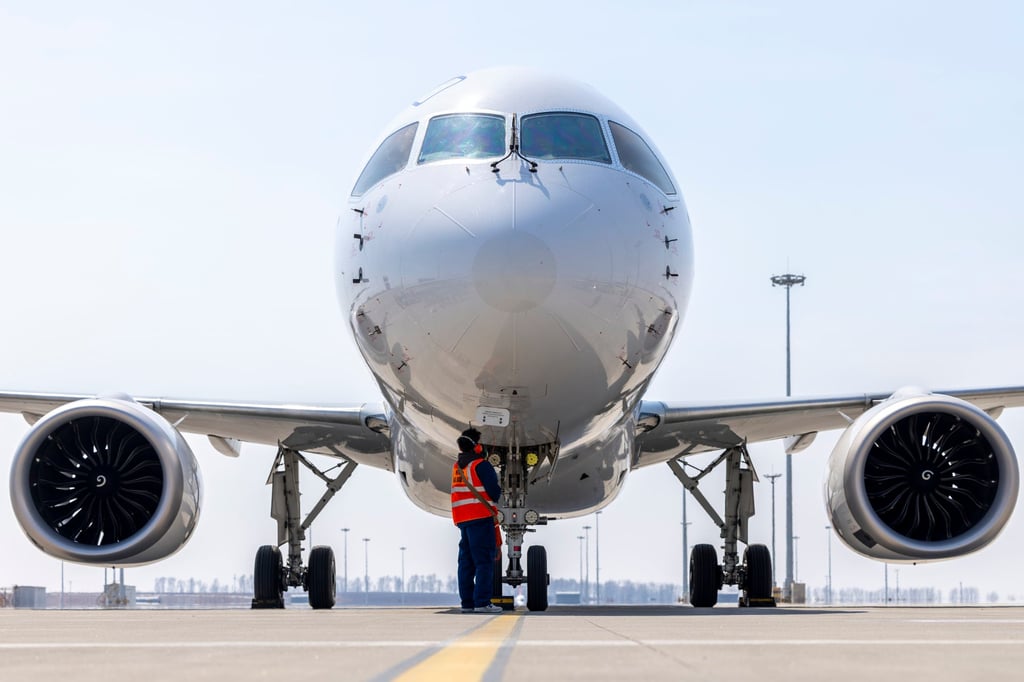
A ground crew member works at Harbin Taiping International Airport in Harbin, Heilongjiang province, April 15, 2026. Photo: Xinhua

A ground crew member works at Harbin Taiping International Airport in Harbin, Heilongjiang province, April 15, 2026. Photo: Xinhua

The shift is fuelled by Beijing’s “AI Plus” strategy, which mandates aggressive adoption targets across manufacturing, agriculture and services: over 70 per cent by 2027 and more than 90 per cent by 2030. This ambition comes as China’s industrial software currently lags, especially in advanced manufacturing, including electronic design automation software for semiconductors which is still heavily dependent on foreign technology.