



惯性聚合 高效追踪和阅读你感兴趣的博客、新闻、科技资讯
阅读原文 在惯性聚合中打开

推荐订阅源

P
Proofpoint News Feed
D
DataBreaches.Net
雷峰网
雷峰网
WordPress大学
WordPress大学
Microsoft Security Blog
云风的 BLOG
云风的 BLOG
Google DeepMind News
Blog — PlanetScale
Blog — PlanetScale
MongoDB | Blog
MongoDB | Blog
F
Fortinet All Blogs
B
Blog
让小产品的独立变现更简单 - ezindie.com
Engineering at Meta
Engineering at Meta
月光博客
月光博客
V
Visual Studio Blog
美团技术团队
I
InfoQ
Stack Overflow Blog
Stack Overflow Blog
Hugging Face - Blog
Hugging Face - Blog
爱范儿
爱范儿
博客园 - 【当耐特】
V
V2EX
Microsoft Azure Blog
博客园 - 聂微东

Tech - South China Morning Post

Multinational pharmaceutical companies to benefit from new China guidelines: analysts Hong Kong lawmaker swipes at US lack of ‘clarity’ as city eyes crypto lead China’s Hesai adds colour to lidar to help EVs level up in self-driving ‘State-of-the-art’ models can struggle with basic office work, says AI executive Opinion | As AI evolves, school syllabuses must evolve with it Winner of second Beijing robot half-marathon smashes human world record by 6 minutes Asia’s supply chains could give it edge over US in AI race: Granite Asia’s Foo Chinese software firms defy ‘SaaSpocalypse’ with strategic AI partnerships Huawei retains lead in China smartphones, Apple shipments surge in first quarter China’s drug makers are speeding up – will AI be their secret weapon? Hong Kong seen leading Asia in push to scale stablecoins, HSBC says ByteDance, Tencent step up AI talent battle amid reports of DeepSeek loss White House and Anthropic CEO discuss working together amid Mythos AI fears Chinese LED chipmaker’s purchase of Dutch firm collapses after US opposition How Amazon uses closer China supply ties to counter tariffs, Shein and Temu ‘Horrible’ for US if DeepSeek AI models run on Huawei chips: Nvidia CEO Chinese platforms fined 3.6b yuan over ‘ghost’ takeaways amid cutthroat rivalry Manycore, one of Hangzhou’s ‘Six Little Dragons’, surges on Hong Kong IPO debut How the rise of AI agents could finally make China’s open-source models pay ‘Buy what they can, steal what they can’t’: US lawmakers slam China’s AI tactics China’s lithium giant Ganfeng sees profit jump as EV, ESS battery demand soars Chinese tech giants, AI ‘godmother’ Li Fei-Fei race into world models Black market workarounds scale up for Claude as Anthropic tightens ID checks TSMC targets over 30% revenue surge in 2026, ramps up capex amid AI boom BrainCo’s brain-computer interface wows at HSBC summit with mind-controlled hand Chinese investors cheer Tesla’s AI chip progress, boosting shares of suppliers ASML boosts 2026 sales forecast despite shrinking China sales China’s EV battery giant CATL to set up mining arm to secure supply chain From ‘probing minds’ to verified account: how Musk’s stance on TikTok shifted Amazon bets on Shenzhen smart warehouse to cut merchant storage costs by 45%
Can Huawei’s ‘chip queen’ help China beat the US tech blo...
Ann Cao · 2026-06-13 · via Tech - South China Morning Post

After seven years working in the shadows, He Tingbo stepped back into the limelight last month.

The head of Huawei Technologies’ secretive semiconductor business – widely dubbed the company’s “chip queen” – had been out of the public view since 2019, when Washington severed the Chinese company’s global access to advanced technology, including semiconductors.

Her retreat into the background became a symbol of Huawei’s battle for survival. That all changed last month on a global academic stage in Shanghai – the IEEE International Symposium on Circuits and Systems.

It was there that He introduced the “Tau (τ) Scaling Law”, which Huawei claimed could achieve transistor densities equivalent to the cutting-edge 1.4-nanometre process by 2031 – all without the need for advanced extreme ultraviolet (EUV) lithography machines out of reach due to US sanctions.

The announcement ignited a debate across the global semiconductor industry: Had Huawei truly unlocked a revolutionary chapter for China’s drive towards tech self-reliance, or was it just an ambitious theory, or even hype, destined to stumble when it came to the realities of manufacturing?
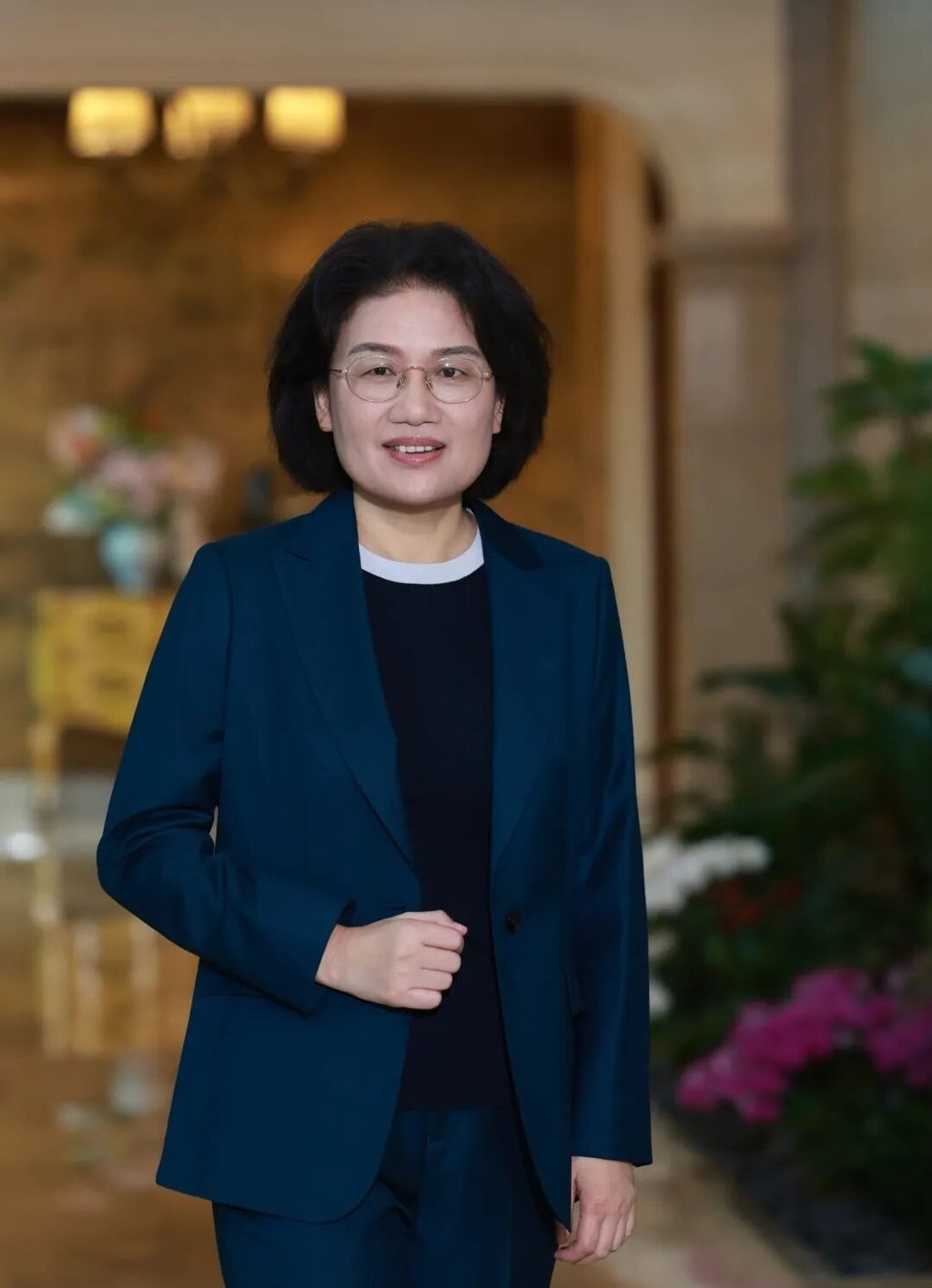
He Tingbo, head of Huawei’s secretive semiconductor business, has been out of public view since 2019. Photo: Handout

He Tingbo, head of Huawei’s secretive semiconductor business, has been out of public view since 2019. Photo: Handout

Redefining ‘advanced’

For half a century, the electronics industry treated Moore’s Law – the principle that the number of transistors on a chip doubles roughly every two years – as gospel. But as silicon structures approached atomic limits, geometric scaling was yielding diminishing economic returns and hitting an architectural brick wall.