

惯性聚合 高效追踪和阅读你感兴趣的博客、新闻、科技资讯
阅读原文 在惯性聚合中打开

推荐订阅源

D
DataBreaches.Net
J
Java Code Geeks
有赞技术团队
有赞技术团队
H
Hackread – Cybersecurity News, Data Breaches, AI and More
The GitHub Blog
The GitHub Blog
T
The Blog of Author Tim Ferriss
Apple Machine Learning Research
量子位
D
Docker
V
Visual Studio Blog
博客园 - 司徒正美
Martin Fowler
Martin Fowler
人人都是产品经理
人人都是产品经理
WordPress大学
WordPress大学
U
Unit 42
M
MIT News - Artificial intelligence
freeCodeCamp Programming Tutorials: Python, JavaScript, Git & More
G
Google Developers Blog
Engineering at Meta
Engineering at Meta
V
V2EX
大猫的无限游戏
大猫的无限游戏
雷峰网
雷峰网
Vercel News
Vercel News
C
Check Point Blog

Robotics - South China Morning Post

From cars to humanoids: Xpeng boss takes over robotics unit in ‘strategic pivot’ New Chinese police tech uses AI to scan suspects’ health and mental states From dance to factory floor: China moves to fast track humanoids into industry China’s EV giants challenge Tesla in race to commercialise humanoid robots Indonesian police in the market for hi-tech Chinese equipment Chinese researchers tackle AI training bottleneck for household robots US public cheers dancing Unitree robots while Congress looks to ban them China just beat Nvidia on a global robotics ranking. Is a new tech war brewing? Opinion | How foreign investors should view China’s ‘little giants’ scheme Unitree clears Shanghai IPO hurdle as China’s humanoid robot wave gathers pace World of humanoid robots set for new blueprint as Nvidia teams with Asian firms ‘Arms race’: why investors can’t let go of robotic hand developers in China Alibaba, Tencent lead pivot from chatbots to embodied AI for robotics Unitree’s IPO progress spurs stock buying of firms with exposure to robot maker As China’s humanoid-robot hype cools, Unitree sees profit plunge ‘Sharif speed’ meets Qwen AI: how Alibaba sealed a sweeping deal with Pakistan Every humanoid robot in China set to receive personal identification number Ancient Chinese texts show ‘immortal mirror’ linking to early notion of robots Inside the Chinese auto-glass maker whose chairman sat beside Elon Musk Why Singapore wants to become the world’s ‘living lab’ for physical AI China unveils first humanoid robot for household chores, ready as early as 2027 Chinese firm Xpeng builds driverless cabs, challenging Tesla’s FSD software Editorial | China’s AI-enabled robots set to transform global playing field Unitree debuts US$574,000 ‘mecha’ robot that ‘transforms’ from 2 legs to 4 Robots to the rescue? South Korea looks for solutions to falling army numbers China robotics to drive next chapter of manufacturing dominance: Morgan Stanley Baggage bots: Chinese humanoids clock on at Japanese airports amid labour crunch Hype or real: China’s robot boom faces reality check as commercialisation lags China’s robots step into real-world roles, from cleaning to directing traffic Exiting China market a ‘self-inflicted wound’ for US tech, think tank warns
Asia’s supply chains could give it edge over US in AI rac...
Yulu Ao · 2026-04-19 · via Robotics - South China Morning Post

As the artificial intelligence race moves beyond language models into the physical world, Asia’s manufacturing and supply chain strengths could give it an edge over the US, says Granite Asia’s Jixun Foo.

The veteran venture capitalist said the current wave of AI development, sparked by breakthroughs in foundation models over the past two years, had entered a new phase where physical applications – from robotics to industrial automation – were becoming increasingly important, playing to Asia’s long-standing manufacturing strengths.

“AI is not just about models or applications in software,” said Foo, senior managing partner at Granite Asia, in a recent interview with the South China Morning Post. “If you look at Asia, our advantage is in the supply chain, hardware and engineering capabilities.”

That advantage, he added, stemmed from a deeply integrated industrial base spanning mainland China, Japan, South Korea and Southeast Asia, allowing faster iteration and large-scale deployment of AI-enabled hardware, which could give Asia an edge as the focus of AI shifted from “language models” to “real-world applications”.

The shift was also being reflected in venture capital flows, with investors increasingly focusing on application-layer companies that could generate tangible use cases and revenue, rather than purely model-driven businesses, according to Foo.
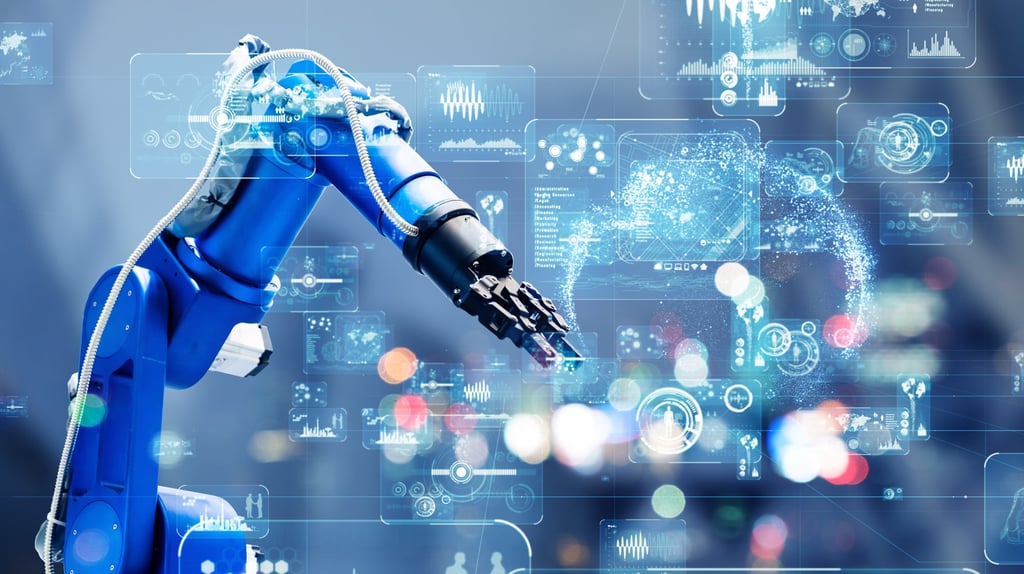
Asia has the AI advantage in supply chains, hardware and engineering capabilities, according to a venture capitalist.

Asia has the AI advantage in supply chains, hardware and engineering capabilities, according to a venture capitalist.

“When we look at [opportunities in] AI, we don’t just look at models or applications in isolation – we look at the entire ecosystem,” Foo said. “The key question is what industries it can transform and what kind of value it can unlock.”