








Getty
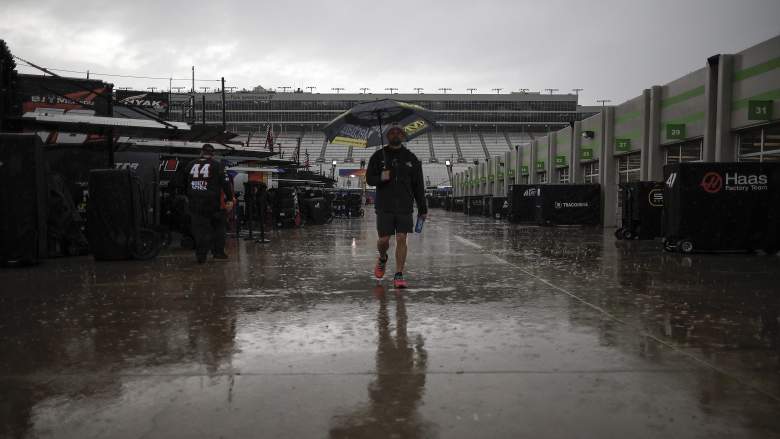
HAMPTON, GEORGIA - FEBRUARY 21: A general view of the rain-soaked garage area after qualifying was canceled for the NASCAR Cup Series Ambetter Health 400 at Atlanta Motor Speedway on February 21, 2026 in Hampton, Georgia.
When rain hits during a NASCAR race, officials immediately evaluate track conditions. If the racing surface becomes too wet for cars to safely maintain grip, NASCAR will throw a red flag, stopping the race.
Cars are brought to a stop on track and are often later directed to pit road. Under red flag conditions, teams are generally not permitted to work on their cars, with only limited exceptions allowed at NASCAR’s discretion.
Unlike other forms of motorsports, NASCAR primarily competes on slick tires, which are not designed for wet surfaces — making rain a significant safety concern, especially at high-speed tracks.
The primary issue comes down to tire design and speed.
NASCAR has introduced wet-weather tires and windshield wipers for road courses and has experimented with them at select short tracks. However, they are not used at high-speed oval tracks due to safety concerns.
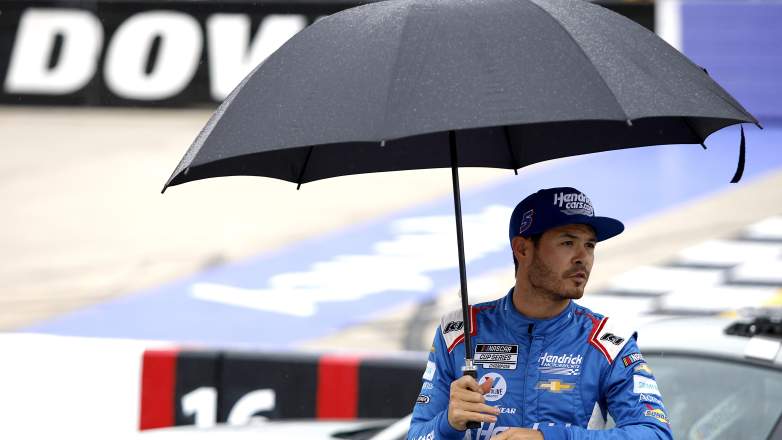
GettyDOVER, DELAWARE – MAY 01: Kyle Larson, driver of the #5 HendrickCars.com Chevrolet, stands under an umbrella during a rain delay in the NASCAR Cup Series DuraMAX Drydene 400 presented by RelaDyne at Dover Motor Speedway on May 01, 2022 in Dover, Delaware.
Once a race is stopped, NASCAR and track crews begin a coordinated process to prepare for a possible restart.
NASCAR deploys specialized equipment, including:
Drying the track typically takes 90 minutes to several hours, depending on rainfall, track size, and weather conditions such as sunlight and wind.
While track crews work, teams and drivers go into a holding pattern:
Teams are not allowed to make competitive changes to the car during the red flag.
A NASCAR race becomes official once it reaches halfway distance or the conclusion of Stage 2, whichever comes first.
If rain prevents the race from continuing beyond that point, the current leader is declared the winner.
If the race has not yet reached that threshold, NASCAR will make every effort to resume the event — including delaying it for several hours or postponing it to another day.
Yes. If weather conditions do not improve, NASCAR can postpone a race.
This decision is based on:
Most postponed races are moved to the following day, though NASCAR will attempt to complete the event the same day if possible.
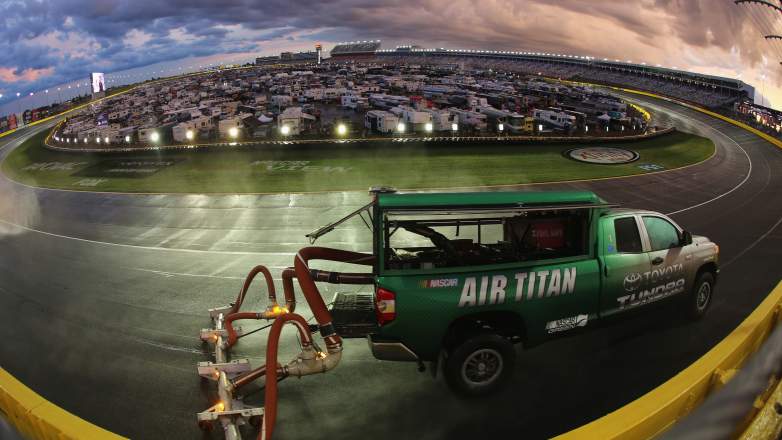
GettyCHARLOTTE, NORTH CAROLINA – MAY 28: An Air Titan dries the track during a rain delay in the NASCAR Cup Series Coca-Cola 600 at Charlotte Motor Speedway on May 28, 2017 in Charlotte, North Carolina.
Once the track is deemed safe, NASCAR begins the restart process:
Officials monitor track conditions closely during the restart phase to ensure safe racing.
Rain delays are one of the few variables that can completely halt a NASCAR race, particularly on oval tracks where wet-weather racing is not viable.
From the red flag to the eventual restart or postponement, NASCAR follows a structured process that prioritizes safety while working to complete the race whenever possible.
With weather always a factor during the season, rain delays can play a major role in shaping race strategy, timing — and ultimately, the outcome.
Maggie MacKenzie Maggie MacKenzie covers NASCAR for Heavy.com. She previously worked for NASCAR.com, where she reported, wrote, and edited race-weekend coverage and traveled to key events throughout the season. She has more than ten years of experience in sports media and is based in Boston, Massachusetts. More about Maggie MacKenzie
此内容由惯性聚合(RSS阅读器)自动聚合整理,仅供阅读参考。 原文来自 — 版权归原作者所有。