


Alibaba vs AliExpress: you’re not sure which one is the best fit for your business? We’ve got you covered!
👀 In this article, we clarify the differences between these two well-known Chinese suppliers so that you can make an informed decision on where to get products for your e-commerce business.
🛒 It can be confusing! Alibaba and AliExpress are both part of the Alibaba Group, China’s — and by some measures, the world’s — biggest online commerce company. They connect suppliers with buyers worldwide and offer a massive range of products, including dropshipping solutions for your online e-commerce business. To give you an idea, they are as popular in China as Amazon is in the US.
In this post, we explain ⬇️
- How Does Alibaba Work?
- What Sort of Products Can I Find on Alibaba?
- Alibaba Payment Options
- Alibaba Shipping Costs
- Is It Safe to Buy from Alibaba?
- How Does AliExpress Work?
- What Sort of Products Can I Find on AliExpress?
- AliExpress Payment Options
- AliExpress Shipping Costs
- Is It Safe to Buy from AliExpress?
- The Cases of Dropshipping and Private Labeling
- AliExpress vs. Alibaba: Conclusion
📌 Alibaba vs AliExpress: What is Alibaba?
Alibaba is a Chinese marketplace dedicated to wholesale and dropshipping.
How Does Alibaba Work?
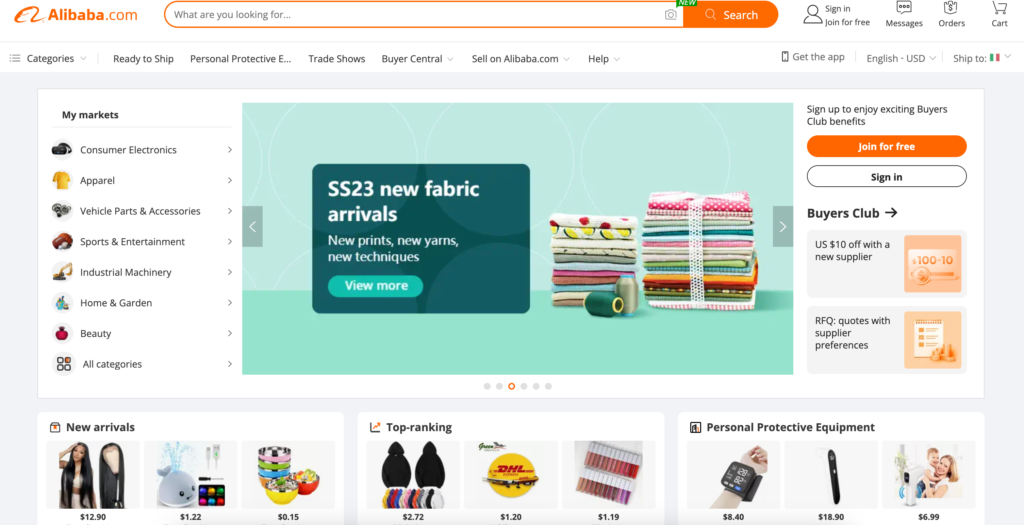
Launched in 1999, Alibaba operates as a B2B marketplace, offering products and services primarily to wholesale buyers and suppliers.
In fact, the platform streamlines services for businesses. It allows you to contact suppliers and negotiate, use Alibaba’s transportation services (in partnership with logistics providers) or their order fulfillment services for dropshipping.
Alibaba’s model is clearly based on wholesale, which involves buying products in bulk and reselling in smaller quantities.
What Sort of Products Can I Find on Alibaba?
On Alibaba, you can find basic product categories like clothing or electronics, but also raw materials, vehicle parts, machinery or goodies for your marketing tradeshows. In fact, this platform is a better fit for B2B.
Due to its wholesale business model, there is usually a minimum order quantity.
Alibaba Payment Options
Alibaba offers a range of secured payment options, with 20+ currencies and 20+ payment methods accepted globally, including credit cards, wire transfers or online payment services (i.e. PayPal).
It has a Trade Assurance that protects online orders when payment is made through Alibaba.com. If the product quality or delivery date varies from the initial agreement, you can receive assistance, including refunds up to 30 days after products are delivered.
Alibaba Shipping Costs
Alibaba offers a range of shipping options to buyers, including air, sea, and express shipping. Shipping costs are determined by the weight and size of the order, the method of shipping, and the destination country. In most cases, suppliers quote shipping costs, and buyers can choose the shipping method that best suits their needs.
You can get a quote on approximate shipping costs from the product page after choosing the quantity.
Is it safe to buy from Alibaba?
In general, Alibaba seems to be safe, as long as you apply common sense and basic precautions while on the site. For example, you can decide to rely on suppliers that have been on the platform for a long time, that have a high rating and lots of comments.
As mentioned previously, payment methods are secure and reliable. When making a purchase through the Trade Assurance, you are also protected when it comes to product quality, scams or delays, and Alibaba takes care of refund requests.
There is a system in place for dispute resolution, reporting an IPR infringement, and customers can submit complaints in case of issues.
💡 We still recommend being cautious. Look for any red flags that may indicate a potential scam. It’s always better to go for verified suppliers (Alibaba has their own verification program), research them, contact them, and eventually request product samples.
Are Alibaba and AliExpress the same thing?
No, Alibaba and AliExpress are not the same thing, but both are owned by the same Chinese parent company, the Alibaba Group. They are similar in that they are both platforms that connect suppliers with buyers around the world, and offer a massive range of cost-effective products.
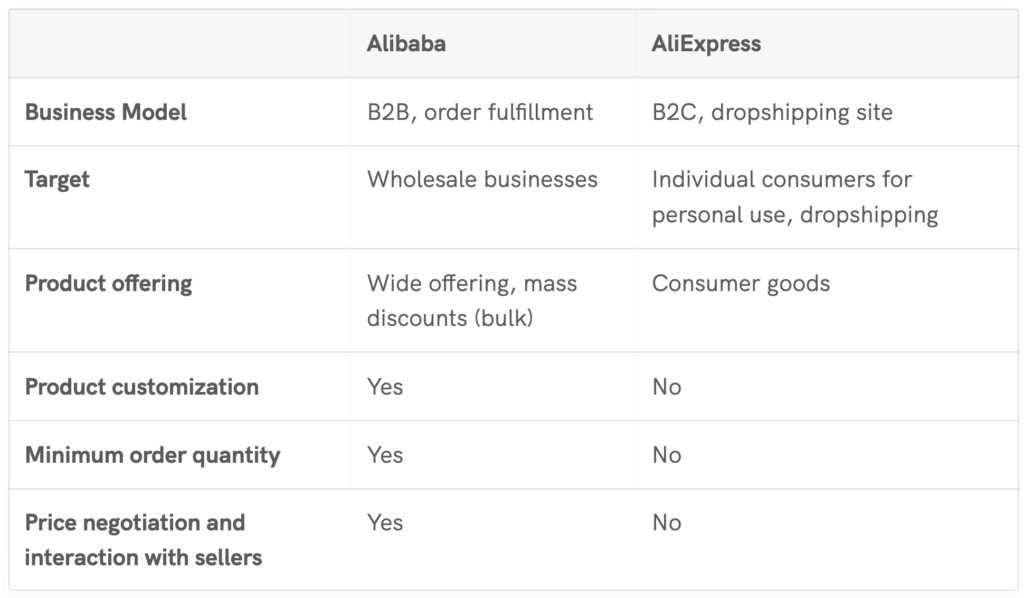
However, they tend to serve different purposes and markets. Alibaba is primarily a B2B platform where manufacturers, wholesalers, and exporters list their products for businesses that are looking to purchase in bulk. On the other hand, AliExpress operates as a B2C retail platform and targets individuals or small businesses wanting to buy in smaller quantities or even single items.
📌 Alibaba vs AliExpress: What is AliExpress?
AliExpress is a renown Chinese retail marketplace. It also operates as a dropshipping model.
How Does AliExpress Work?
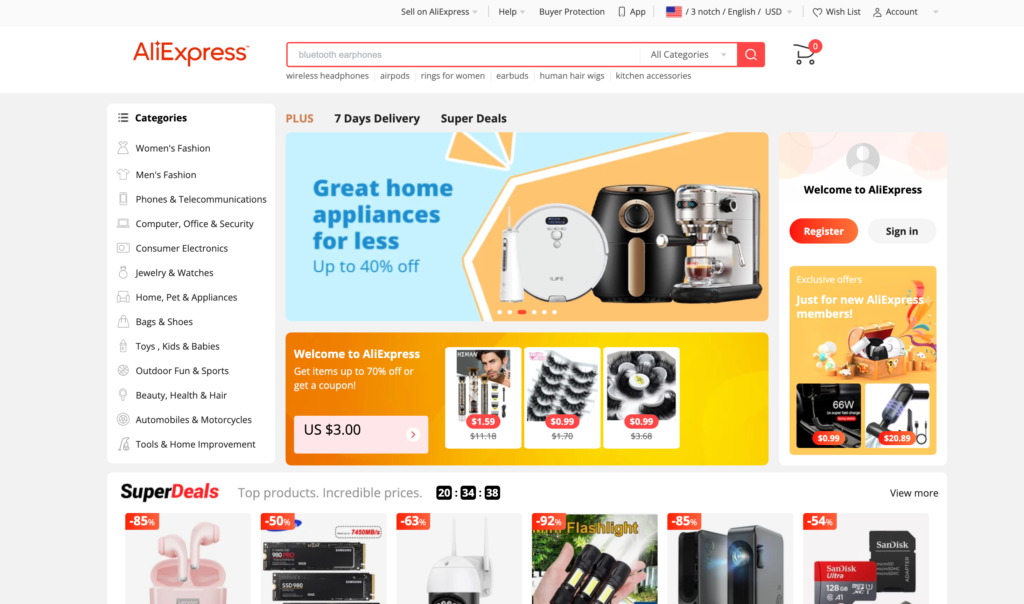
Unlike Alibaba, AliExpress acts primarily as a B2C marketplace and is designed for individual consumers, not for wholesale purchases. As an online retail platform, it allows consumers to purchase products directly from various suppliers.
💡 AliExpress’ business model it is quite similar to Amazon’s but offers products mainly from China, cheap prices and heavy discounts.
However, AliExpress also acts as a dropshipping platform and easily integrates with dropshipping tools like DSers.
What Sort of Products Can I Find on AliExpress?
On AliExpress, you can find product categories such as clothing, electronics, accessories, beauty, home goods… They are more B2C-related than the ones on Alibaba, and also pre-made, so rarely customizable.
AliExpress offers products at retail prices to individual consumers, mostly with no minimum order requirements.
AliExpress Payment Options
Similarly to Alibaba, AliExpress allows you to pay with the most popular payment methods like Alipay, debit and credit cards, PayPal, bank transfers…
A Pay after Delivery option is available. A credit card hold for the full purchase amount of the order is placed.
Is It Safe to Buy from AliExpress?
Apart from secure payment methods, AliExpress has a Buyer Protection program in place:
- if the item received is not what was expected, or is not delivered in time, you can get a refund;
- some items are eligible for “free return” (within 15 calendar days).
Customer support is available for customers to reach out to AliExpress.
💡 Naturally, as with any online shopping platform, you should always be mindful of potential scams or frauds. Make sure to check reviews from other buyers, don’t go for offers that seem too good to be true, don’t communicate personal information to sellers or pay them directly (always pay through AliExpress).
📌 The Cases of Dropshipping and Private Labeling
Alibaba vs AliExpress for Dropshipping
AliExpress is more suited than Alibaba for beginners in dropshipping and those who are managing small to medium-sized businesses.
It tends to be defined as a retail platform, meaning you can buy products in single units. This is ideal for dropshippers as they don’t have to invest in bulk inventory; they can simply order products as and when their customers place orders.
The platform is user-friendly, it simplifies the order process by handling tasks such as payment processing, packaging, shipping and tracking with the service called ePacket shipping.
Alibaba vs AliExpress for Private Label
Alibaba is likely the better choice if you’re a company looking to produce a large quantity of private-labeled products.
It’s designed for larger scale production, offers more customization than AliExpress, and many suppliers specialize in private labeling or OEM services. It also allows you to negotiate specific requirements with suppliers for achieving better pricing for bulk orders
If you’re a small business or an individual looking to test only a few products or need a smaller quantity, AliExpress might be a suitable option. However, for a scalable private label business, it may not be as effective in the long run.
📌 AliExpress vs Alibaba: Conclusion
Why Should I Use AliExpress or Alibaba for my Business?
Platforms like AliExpress or Alibaba have been so successful for a number of reasons. Here are some below:
✅ Wide Range of Products: Both platforms offer an extensive variety of products across numerous categories. Whether it’s raw materials, machinery, fashion, electronics, or home goods, businesses can find almost anything they need.
✅ Cost-Effective: Since many suppliers on these platforms are manufacturers or primary wholesalers, businesses can often obtain products at a much lower price compared to buying from local distributors. This price advantage can lead to higher profit margins for resellers.
✅ Flexibility in Order Size: Alibaba will be a better fit for bulk and wholesale orders, which is ideal for businesses that want to maintain an inventory. AliExpress is more suited for dropshipping or smaller order quantities, giving startups and smaller businesses a chance to test products without committing to large orders.
✅ Customization and Private Labeling: If you want to customize your products at a low price, we recommend Alibaba. You can tailor products to your own specifications, or add branding in order to differentiate yourself from competitors.
✅ Global Reach: Have access to an extensive supplier base from different parts of the world, especially from manufacturing hubs like China. For businesses, this means a chance to diversify their supply chain and possibly mitigate risks associated with relying on a single geographic region.
✅ Customer Reviews: With such a large user base, you will aso find plenty of customer reviews, which can help with valuable insights into product quality and supplier reliability.
✅ Easy to Start: Both platforms are an easy entry point for entrepreneurs venturing into e-commerce or dropshipping for the first time. The process is straightforward: list products on your platform, and when an order comes in, purchase it and have it shipped directly to the customer.
For concluding our comparison of AliExpress vs Alibaba, both platforms are reliable when they are used wisely. If you are a business owner who wants to source products, Alibaba is probably the way to go, especially if you want to buy in bulk!