





As a blogger or website owner, it’s essential to have a privacy policy for your blog. A privacy policy for bloggers outlines the types of information that you collect from your readers and how that information is used.
💡 It’s also a legal requirement in general for website owners in many countries and regions, including the United States and Europe.
Privacy policies are important as they give legally required disclosures about how you handle the personal data your readers manually and automatically share with you every time they visit your site (keep in mind that even IP addresses can be considered personal data).
In this article, we will go over the basics of creating a privacy policy for your blog or website, including what to include, how to write it, and how to maintain it.
At a glance ⬇️
- What is a Privacy Policy?
- What to Include in a Privacy Policy?
- How do I write a Privacy Policy for a Blogger?
- 📌 Privacy Policy Blog Example
- 📌 Tips for Maintaining a Privacy Policy
- 📌 Tips to consider when using a privacy policy generator

What is a Privacy Policy?
A privacy policy is a document that explains how users’ personal information is collected, used, and stored by a website or blog. As mentioned above, it is a legal requirement in many countries, including the United States and the European Union.
The purpose of a privacy policy is to provide transparency to your readers about how you collect and use their personal data. This outlines the methods and purposes, and includes information such as their name, email address, IP address, and other personal data.
What to Include in a Privacy Policy?
A privacy policy for blogger should include the following basic elements:
- Types of data collected on a blog
- How data is collected, used, and stored
- Sharing of data with third parties
- Security measures in place to protect data
- How readers can control their data
- Link to a cookie policy
A privacy policy for blogger should outline what types of personal data you collect from users. This can include their name, email address, IP address, and any other data that you collect through forms or cookies.
Your privacy policy should explain how you collect, use, and store users’ personal data and specify for which specific purposes the data are collected. This includes information about how you use their data to personalize content or for marketing purposes. ie. Remarketing. Keep in mind that even IP addresses can be personal data.
If you share users’ personal data with third-party services, your privacy policy should outline what data is shared and why. Basically, which third parties will have access to the information. Not sure what third-party integrations are running on your site, try a free site scanner.
Your privacy policy should explain the security measures that you have in place to protect readers’ personal data from being accessed or used without permission.
Your privacy policy should also explain how users can control their personal data. This includes the ability to access, update, or delete their data from your records. Also, a description of the process for notifying users and visitors if you update or change your privacy policy.
If you use third party cookies on your blog, you should also link a cookie policy in your privacy policy. This should explain what cookies are used, how they are used, and why they are used.
And other important details including: effective date of the privacy policy, who is the site/app owner
How do I write a Privacy Policy for a Blogger?
Creating a privacy policy for blogger can seem like a daunting task, but it’s a critical step that should not be ignored. The first step is to determine the types of data that you collect from your users, including vital information such as their name, email address, and browsing behavior.
Next, you’ll need to outline how this information is collected, stored, and used on your blog. It’s also important to provide details on any third parties that you share data with, and the practices you have in place to protect your users’ data.
Don’t worry if you’re not sure where to start, we’ll show you how to create your own privacy policy easily and with no need for a lawyer.
- Determine the privacy laws that apply to you, and identify the data you are collecting
Creating a privacy policy and identifying the data it should include may seem daunting, but it doesn’t have to be. There are several steps that you can follow to create a privacy policy for your blog. These include researching privacy laws in your country or region, identifying the types of personal data that you collect from your readers, and writing a clear and concise policy that outlines how that data is used, stored, and protected.
- Write a clear and concise policy for your users.
When writing your privacy policy, it is important to use clear and concise language that is easy for your readers to understand. Make sure your policy is easy to read and clearly visible on your website.
Once you’ve identified what data your site is processing and who you’re sharing it with, you’ll need to prepare a document that discloses:
- What data you’re processing
- The purposes of the collection
- How long you keep user data
- A list of third-party apps, integrations and processors that can also access the users’ information through your site/ activities (think social buttons, logins, newsletter management, payment processors like stripe, web fonts etc.)
👉 You’ll also need to make disclosures about the user’s rights in regard to their data. These statements will differ depending on the laws that apply to the user.
- 🇪🇺 🇬🇧 If they or you are based in Europe, you’ll need to list and explain the user’s legal rights under laws like the GDPR
- 🇺🇸 If you’re targeting users based in the US, you’ll likely need to make disclosures based on the State law that applies (this includes CCPA, VCDPA, CalOPPA and more).
Lastly, you’ll need to include valid contact information.
📌 Privacy Policy Blog Example
👉 To see how this all comes together, see the sample here:
💡Writing your privacy policy is possible, but if very difficult given that so much legal information is required and having inaccurate privacy documents can leave you open to lawsuits and fines under many region’s laws (especially the US and Europe) we suggest using a quality privacy policy generator like ours.
The text is written by legal professionals, it covers multiple countries’ laws and the best part is, you can get started for free.
📌 Tips for Maintaining a Privacy Policy
- Regular review of privacy policy
Your privacy policy should be reviewed regularly to ensure that it is up-to-date and accurate. If you make any changes or updates to how you collect or use users’ personal data, or add a third party service, for example Google Analytics, or a mailing list or newsletter, your privacy policy should be updated to reflect those changes.
While it’s important to keep your Privacy Policy and data collection practices up to date, our Site Scanner is incredibly time-saving as it periodically scans your site and alerts you to any changes you’ve made, suggesting which clauses you need to add or remove. Scan your site now 👉 try our free site scanner.
- Alerting users about any updates to your privacy policy
If you make any changes to your privacy policy, you should inform your readers of those changes. This can be done via email for readers that are subscribed to you, or by adding a notice to your blog to alert visitors.
For example, you could create a pop-up that states something like “We’ve updated our privacy policy. You can read it here”.
📌 Tips to consider when using a privacy policy generator
A high-quality privacy policy generator is probably one of the most convenient ways to generate a privacy policy for your blog. But besides being convenient, it’s important to be safe as having inaccurate privacy documents can leave you open to lawsuits and fines.
Here’s what to look out for.
Be sure to choose a high-quality privacy policy generator that, at a minimum:
- contains clauses written by experienced legal professionals,
- allows you to customize your document based on your particular needs entirely,
- gives you helpful info and tips about each clause before adding it, and
- lets you go back in and edit or modify your documents when you add or make adjustments to your blog.
With iubenda, it’s easier than you think!
Do you need to create a privacy policy for your blog?
With iubenda, it’s easier than you think!
- Scan your blog with our Site Scanner.
- Add all the relevant clauses in one click.
- Copy and paste to add your privacy policy to your blog!
- 🎉 Now your policy is ready and visible on your blog!
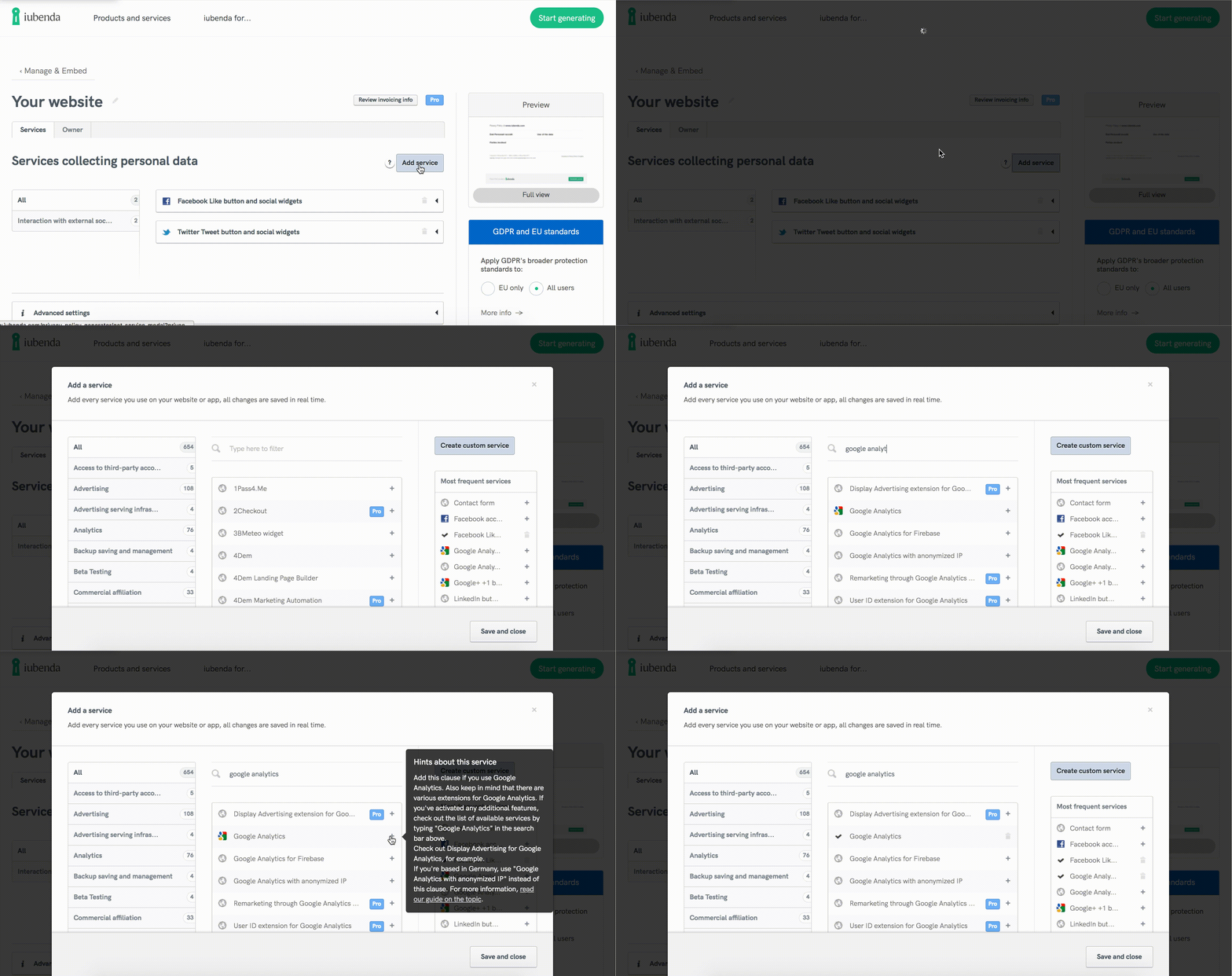
It only takes a few minutes
About us

The solution to draft, update and maintain your Terms and Conditions. Optimised for eCommerce, marketplace, SaaS, apps & more.