惯性聚合 高效追踪和阅读你感兴趣的博客、新闻、科技资讯
阅读原文 在惯性聚合中打开

推荐订阅源

K
Kaspersky official blog
Threat Intelligence Blog | Flashpoint
AI
AI
SecWiki News
SecWiki News
宝玉的分享
宝玉的分享
Scott Helme
Scott Helme
D
Darknet – Hacking Tools, Hacker News & Cyber Security
Exploit-DB.com RSS Feed
Engineering at Meta
Engineering at Meta
博客园 - 叶小钗
The GitHub Blog
The GitHub Blog
Microsoft Azure Blog
N
News and Events Feed by Topic
Cloudbric
Cloudbric
B
Blog
Cisco Talos Blog
Cisco Talos Blog
V
Vulnerabilities – Threatpost
N
News and Events Feed by Topic
V
Visual Studio Blog
A
Arctic Wolf
奇客Solidot–传递最新科技情报
奇客Solidot–传递最新科技情报
U
Unit 42
S
Security @ Cisco Blogs
博客园 - 聂微东
T
Threat Research - Cisco Blogs
OSCHINA 社区最新新闻
OSCHINA 社区最新新闻
Apple Machine Learning Research
Y
Y Combinator Blog
G
GRAHAM CLULEY
L
LINUX DO - 热门话题
量子位
NISL@THU
NISL@THU
Webroot Blog
Webroot Blog
让小产品的独立变现更简单 - ezindie.com
T
Troy Hunt's Blog
Application and Cybersecurity Blog
T
Tenable Blog
月光博客
月光博客
S
Security Affairs
K
KPMG report finds enterprise disconnect between AI and its ROI | CIO
The Hacker News
The Hacker News
Spread Privacy
Spread Privacy
D
Docker
www.infosecurity-magazine.com
雷峰网
雷峰网
博客园 - 司徒正美
T
The Exploit Database - CXSecurity.com
Hugging Face - Blog
Hugging Face - Blog
Help Net Security
Help Net Security
D
DataBreaches.Net

Compliance Solutions for Websites, Apps and Organizations | iubenda

AI can build your website. It can't manage your consent. | iubenda Browser signals and machine-readable consent: what they are and what the EU’s Digital Omnibus could change California Consumer Privacy Act (CCPA): Complete Guide How to increase your cookie banner opt-in rates: 5 mistakes to fix today | iubenda DPO Newsletter: Global Data Protection & Privacy News (issue #153) Why your consent management setup is a marketing performance question Everything you need to know about GDPR The redesigned cookie banner and configurator What nobody tells you about handing over the company you built European marketers are betting on retention. Privacy could be the edge they’re not using yet. The 5 best alternatives to Didomi in 2026: Pros, cons, pricing, and comparison Looking back on 15 years: what iubenda's founder would tell his 2011 self | iubenda The best cookie policy generator in 2026 DPO Newsletter: Global Data Protection & Privacy News (issue #152) | iubenda What publishers should expect from the EU’s Digital Omnibus proposal Uncertainty is the biggest blocker to AI adoption in marketing | iubenda Everything AI app builders need to know about vibecoding and privacy compliance | iubenda Introducing 1-Click Embedding for Google Tag Manager The Essential Small Business Terms and Conditions Template: What You Need to Know Terms of Use Template | iubenda IAB Europe Raises Concerns Over GDPR Procedural Regulation Draft Report | iubenda Learn from HelloFresh's Costly Mistake: Ensure Compliance with iubenda | iubenda Understanding the Spanish DPA Guide on Audience Measurement Cookies | iubenda The Austrian Data Protection Authority's FAQs on Cookies and Privacy | iubenda DPO Newsletter: Global Data Protection & Privacy News (issue #127) | iubenda Microsoft Ensuring European Data Stays Within the EU Cloud Boundary | iubenda Businesses Beware: ICO’s Record £14.3m in Fines for Data Misuse in 2023 Understanding the Risks and Responsibilities of Model-as-a-Service Companies in AI Development Facebook's New “Link History” Feature: A Blend of Convenience and Surveillance? | iubenda OpenAI’s Strategic Move in the EU: Aligning with Data Privacy Regulations TikTok Faces Lawsuit Over Tracking Non-Users What’s the Digital Markets Act (DMA) and how will it affect you? | iubenda Simplifying Cookie Consent: The European Commission's Approach | iubenda Google Settles Landmark Privacy Lawsuit for $5 Billion | iubenda Navigate GDPR Compliance with Confidence: Lessons from Recent Fines in Italy Simplifying the Commission's New Reporting Template for Digital Market Gatekeepers | iubenda Understanding the GDPR Complaint Against X (Twitter) for Illegal MicroTargeting | iubenda Spanish Media Giants Take On Meta in a Groundbreaking $600 Million Lawsuit | iubenda DPO Newsletter: Data Protection & Privacy News (issue #126) | iubenda Belgian DPA Mandates Cookie Banner Changes for Major Media Websites | iubenda UK's Top Websites Warned by ICO to Revise Cookie Practices | iubenda Understanding the European Union's Data Act | iubenda Google Announces Consent Mode v2 – here’s what it means for your business and advertising Noyb Challenges EU Commission Over Controversial Ad Campaign | iubenda OECD Updates AI Definition: A Step Forward in Shaping EU’s AI Law Firefox To Introduce Simplified Global Privacy Control Berlin Court Cracks Down on LinkedIn’s Privacy Violations The YouTube Ad Blocker Controversy: A Test of the ePrivacy Directive? | iubenda DPO Newsletter: Data Protection & Privacy News (issue #125) Facebook and Instagram Subscription: Meta adds a paywall | iubenda GDPR Violation: Lack of Transparency in Data Processing via Google Fonts Amazon Introduces AWS European Sovereign Cloud to Address EU Regulations | iubenda Texas New Data Privacy Law TDPSA: Everything you need to know How to Make Money with a Website Without Selling Anything Oregon Consumer Privacy Act: Overview | iubenda Google’s Move to Disable Third-Party Cookies: What Advertisers Need to Know IMY Fines H&M for GDPR Violations: A Closer Look EU Commission Requests Information from X Under Digital Services Act: What You Need to Know | iubenda Understanding California’s “Delete Act” and Data Broker Regulations TCF v 2.2 Initial Layer (Banner) Requirements | iubenda Grindr Faces €5.8 Million Fine: A Reminder on the Importance of GDPR Compliance | iubenda Newly Enacted Iowa Consumer Data Protection Act (ICDPA) | iubenda The Witch’s Brew of Privacy: A Halloween Tale of Compliance and Consequences IAB TCF 2.2 – What you need to do DPO Newsletter: Data Protection & Privacy News (issue #124) Blog Ideas That Make Money: How To Make Money From Your Blog + Examples | iubenda Maximize your Growth with Online Presence Management | iubenda Meta's New Pivot in Europe: To Pay or Not to Pay for an Ad-Free Experience? | iubenda Consumer Reports Launches Free ‘Permission Slip’ App to Protect Your Data | iubenda DAZN’s Access Request Saga Personal Brand Logo: How to Stand Out in a Crowded Marketplace UK-US Data Bridge: A New Era for Secure Data Transfers 7 Ways How to Promote Affiliate Links Effectively (And Boost Commissions) | iubenda Mastering LinkedIn Personal Branding: A Guide to More Opportunities Meta's New Approach: Pay for Your Privacy? | iubenda No Return, No Refund Policy Template & Guide GDPR in the US: a GDPR Checklist for US Companies Crafting a Niche with Branding and Identity Design | iubenda The Online Safety Bill: A Leap Towards a Safer Digital United Kingdom Understanding Google's $93m Settlement over Consumer Location Data Accusations | iubenda CCPA vs CPRA: Key Differences You Need to Know | iubenda How To Use Ecommerce Retargeting to Grow Your Business | iubenda PECR: Everything you need to know | iubenda How Mobile Apps Illegally Share Your Personal Data: A Deep Dive | iubenda Legal Spotlight: Privacy Concerns Surrounding OpenAI’s ChatGPT and Microsoft’s Involvement Legal Scrutiny Looms Over Transatlantic Data Deal: French MEP Takes Action Understanding the Digital Markets Act: A Comprehensive Guide Block AI Crawlers: Here’s How To Stop Your Site From Being Used for AI Training (OpenAI and Google Bard Irish Regulator Slaps $368M Fine on TikTok DPO Newsletter: Data Protection & Privacy News (issue #123) | iubenda The Privacy Pitfalls of Vehicle Data Collection: What You Need to Know | iubenda Twitter customer’s data on the menu for xAI models Update: Revised Swiss Privacy Law Takes Effect Fitbit and the GDPR Hurdle: What You Need to Know About Your Data Privacy | iubenda Terms of Service Template for your site | iubenda Senators Urge FTC to Investigate YouTube and Google for Violating Children's Privacy: What You Need to Google AdSense Requirements: Here's What You Need to Know | iubenda Users can’t opt out from marketing emails: FTC fines Experian $650,000 | iubenda DPO Newsletter: Data Protection & Privacy News (issue #122) | iubenda 7 Ways Business Process Automation Can Increase Your Profits
Android Studio vs. Xcode - Pros and Cons of each Application Development Platform | iubenda
Juan Ruiz · 2023-05-03 · via Compliance Solutions for Websites, Apps and Organizations | iubenda

Mobile app development is a highly lucrative industry, so every day we see hundreds of new applications and, at the same time, tools that simplify the process of creating an app. In other words, nowadays, with a bit of dedication and the right application development platform, this process is becoming more and more accessible.

To create a successful app, developers need to use a mobile application development platform that provides them with everything they need to integrate the multiple components that make up an app. In line with this, Google and Apple both offer exceptional development platforms, Android Studio and Xcode, respectively.

So, let’s take a look at the benefits of using these platforms for custom application development, as well as the differences between both platforms.

  • What is an Application Platform?
  • Benefits of Using an Application Development Platform
  • Android Studio vs. Xcode
    • Pros and Cons of Android Studio development
    • Pros and Cons of Xcode development
  • Don’t forget it! 👉 Is Your App Protected?

First let’s look in detail at what is an application development platform 👀 →

What is an Application Platform?

An application development platform is a tool or a framework of services that provides developers with everything they need to create a mobile app, including an integrated development environment (IDE), programming languages, and frameworks.

These platforms simplify and optimize the app development process by providing developers with pre-built components, libraries, and templates to create their apps more easily and efficiently.

With the rise of mobile devices and the increasing demand for mobile apps, application development platforms have become essential tools for developers. They allow developers to focus on creating unique and innovative apps, rather than spending time on building basic functionalities from scratch.

Benefits of Using an Application Development Platform

  • Saves Time and Effort

An application development platform provides developers with pre-built components and templates, which significantly reduce the amount of time and effort required to create an app from scratch. This is especially true for low code application development platforms, which offer a drag-and-drop interface that makes app development even easier.

  • Offers High-Quality Development Tools

An application development platform provides a wide range of high-quality tools that developers can use to create complex apps. This includes code editors, debugging tools, and emulators. Developers can also access documentation and community forums to get help and guidance on how to use these tools.

  • Provides Excellent User Experience

An application development platform guarantees the creation of high-quality, bug-free apps that deliver an excellent user experience. Developers can utilize the platform to optimize their apps for the specific platform, maintain a consistent user interface, and design a seamless user experience.

🔍 Want to more about planning and creating a mobile game? Check out our beginner’s guide here.

Application Development Platform: Android Studio vs. Xcode

Now let’s take a closer look at the two most popular mobile application development platforms: Android Studio and Xcode.

📌 Android Studio
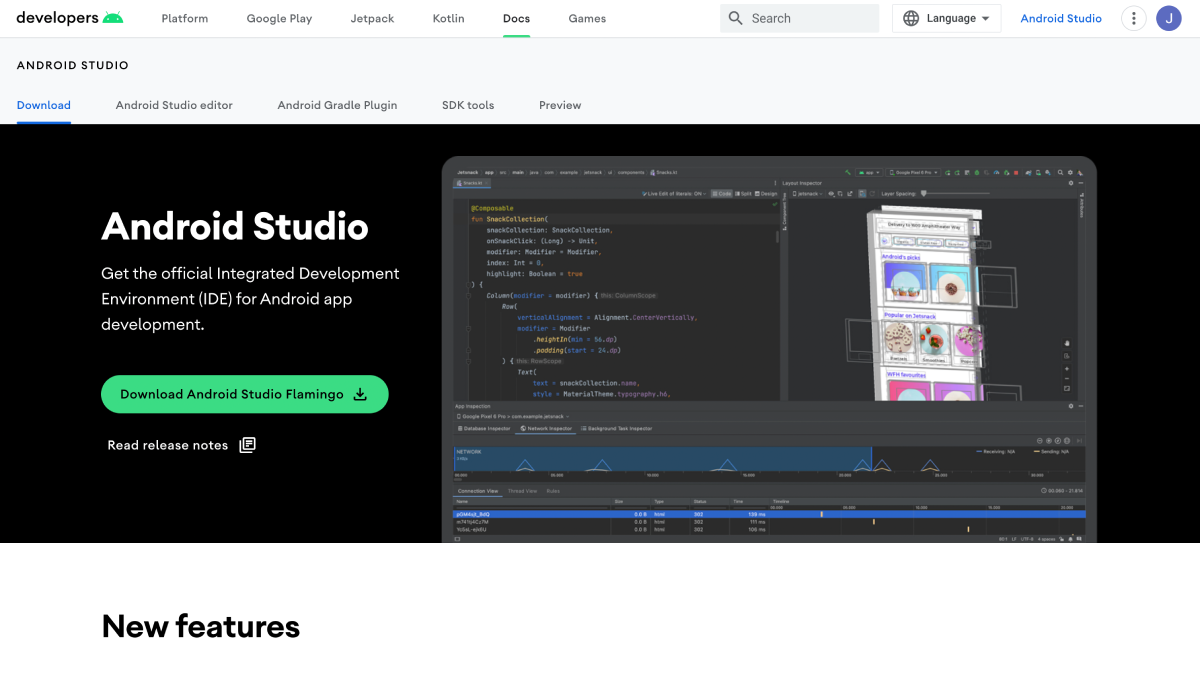
Application Development Platform Android Studio

Android Studio is Google’s official IDE for developing Android apps. It is a powerful tool that offers a wide range of features to help developers create high-quality apps.

Android Studio is built on top of the IntelliJ IDEA platform and includes a variety of tools for developing, testing, and debugging Android apps. It also includes an Android emulator, which allows developers to test their apps on different devices and screen sizes.

✅ Pros of Android Studio development

  • Integrated development environment: Android Studio provides an all-in-one development environment with a code editor, visual layout editor, and debugging tools, making it easier to develop and test Android apps.
  • Open-source platform: Android is an open-source platform, which means developers have access to the source code and can modify it to suit their needs.
  • Large user base: Android has a larger user base than iOS, which means there is a wider market for Android apps.
  • Integration with Google services: Android Studio seamlessly integrates with Google services such as Firebase and Google Play, making it easier to incorporate these services into apps.
  • Cost-effective: Android Studio is free to use, which makes it a cost-effective option for app development.

❌ Cons of Android Studio development

  • Fragmentation: Due to the variety of Android devices and versions in the market, developers may have to deal with fragmentation issues while developing apps.
  • Steep learning curve: Android Studio has a steep learning curve, which means developers may need some time to get used to its features and functionality.
  • Security concerns: Android devices are more vulnerable to security threats, which means developers need to take extra precautions to ensure the security of their apps.

📌 Xcode

Application Development Platform Xcode

Xcode is Apple’s official IDE for developing iOS apps. It is a comprehensive tool that includes everything developers need to create high-quality apps for iOS devices. Xcode includes a code editor, a graphical interface designer, a debugger, and an iOS simulator. It also includes a wide range of tools for testing, profiling, and optimizing apps.

✅ Pros of Xcode development

  • Integrated development environment: Xcode provides a comprehensive development environment with a code editor, visual layout editor, and debugging tools, making it easier to develop and test iOS apps.
  • Tight integration with Apple services: Xcode seamlessly integrates with Apple services such as App Store Connect, making it easier to upload apps to the App Store.
  • High-quality user experience: iOS apps are known for their high-quality user experience, which can help apps stand out in the market.
  • Security: iOS devices are less vulnerable to security threats, which means apps developed on Xcode are more secure.
  • Simplified app development process: Xcode offers a simplified app development process with features such as Interface Builder, which allows developers to create user interfaces without writing code.

❌ Cons of Xcode development

  • Limited market share: iOS has a smaller market share than Android, which means there is a smaller audience for iOS apps.
  • Limited hardware options: iOS devices are limited to Apple devices, which means developers need to ensure their apps work seamlessly across all supported devices.
  • Closed platform: iOS is a closed platform, which means developers have limited access to the source code and may face restrictions while developing apps.

In conclusion, both Android Studio and Xcode are excellent mobile application development platforms that offer a wide range of benefits to developers. While Android Studio is better suited for developing Android apps and has stronger integration with Google services, Xcode is the go-to platform for iOS app development and offers seamless integration with Apple services.

Ultimately, the choice between the two depends on the developer’s preference and the app’s target platform. No matter which platform a developer chooses, using an application development platform can significantly simplify the app development process and lead to the creation of high-quality apps.

Finally, don’t overlook this last recommendation no matter which platform you choose! 👇🏽

💡Is Your App Protected? 👉 If you don’t have a privacy policy in place, you risk getting rejected from app stores

Google Play Store and Apple App Store are also companies that are subject to privacy laws and must comply as everyone else. As a result, they require app developers to comply with applicable law and provide a valid privacy policy when submitting their app.

Not having a proper privacy in place will not only be a violation of their terms, but will also likely result in app store rejection.

Don’t risk your app being rejected by app stores

Generate a privacy policy for your app

About us

iubenda

Attorney-level solutions to make your websites and apps compliant with the law across multiple countries and legislations.

www.iubenda.com