

惯性聚合 高效追踪和阅读你感兴趣的博客、新闻、科技资讯
阅读原文 在惯性聚合中打开

推荐订阅源

F
Full Disclosure
OSCHINA 社区最新新闻
OSCHINA 社区最新新闻
AI
AI
博客园 - Franky
博客园 - 叶小钗
MyScale Blog
MyScale Blog
Microsoft Azure Blog
V
Visual Studio Blog
U
Unit 42
C
Check Point Blog
美团技术团队
博客园 - 【当耐特】
MongoDB | Blog
MongoDB | Blog
WordPress大学
WordPress大学
aimingoo的专栏
aimingoo的专栏
A
About on SuperTechFans
G
Google Developers Blog
腾讯CDC
Jina AI
Jina AI
博客园 - 三生石上(FineUI控件)
人人都是产品经理
人人都是产品经理
酷 壳 – CoolShell
酷 壳 – CoolShell
N
Netflix TechBlog - Medium
S
SegmentFault 最新的问题
H
Help Net Security
T
Threat Research - Cisco Blogs
T
Tenable Blog
J
Java Code Geeks
奇客Solidot–传递最新科技情报
奇客Solidot–传递最新科技情报
T
Threatpost
T
The Blog of Author Tim Ferriss
The Cloudflare Blog
Cyberwarzone
Cyberwarzone
Spread Privacy
Spread Privacy
K
Kaspersky official blog
G
GRAHAM CLULEY
Cisco Talos Blog
Cisco Talos Blog
Project Zero
Project Zero
C
CERT Recently Published Vulnerability Notes
AWS News Blog
AWS News Blog
Know Your Adversary
Know Your Adversary
T
Tor Project blog
S
Secure Thoughts
cs.AI updates on arXiv.org
PCI Perspectives
PCI Perspectives
P
Palo Alto Networks Blog
Webroot Blog
Webroot Blog
N
News | PayPal Newsroom
cs.CV updates on arXiv.org
C
Cyber Attacks, Cyber Crime and Cyber Security

Compliance Solutions for Websites, Apps and Organizations | iubenda

AI can build your website. It can't manage your consent. | iubenda Browser signals and machine-readable consent: what they are and what the EU’s Digital Omnibus could change California Consumer Privacy Act (CCPA): Complete Guide How to increase your cookie banner opt-in rates: 5 mistakes to fix today | iubenda DPO Newsletter: Global Data Protection & Privacy News (issue #153) Why your consent management setup is a marketing performance question Everything you need to know about GDPR The redesigned cookie banner and configurator What nobody tells you about handing over the company you built European marketers are betting on retention. Privacy could be the edge they’re not using yet. The 5 best alternatives to Didomi in 2026: Pros, cons, pricing, and comparison Looking back on 15 years: what iubenda's founder would tell his 2011 self | iubenda The best cookie policy generator in 2026 DPO Newsletter: Global Data Protection & Privacy News (issue #152) | iubenda What publishers should expect from the EU’s Digital Omnibus proposal Uncertainty is the biggest blocker to AI adoption in marketing | iubenda Everything AI app builders need to know about vibecoding and privacy compliance | iubenda Introducing 1-Click Embedding for Google Tag Manager The Essential Small Business Terms and Conditions Template: What You Need to Know Terms of Use Template | iubenda IAB Europe Raises Concerns Over GDPR Procedural Regulation Draft Report | iubenda Learn from HelloFresh's Costly Mistake: Ensure Compliance with iubenda | iubenda Understanding the Spanish DPA Guide on Audience Measurement Cookies | iubenda The Austrian Data Protection Authority's FAQs on Cookies and Privacy | iubenda DPO Newsletter: Global Data Protection & Privacy News (issue #127) | iubenda Microsoft Ensuring European Data Stays Within the EU Cloud Boundary | iubenda Businesses Beware: ICO’s Record £14.3m in Fines for Data Misuse in 2023 Understanding the Risks and Responsibilities of Model-as-a-Service Companies in AI Development Facebook's New “Link History” Feature: A Blend of Convenience and Surveillance? | iubenda OpenAI’s Strategic Move in the EU: Aligning with Data Privacy Regulations TikTok Faces Lawsuit Over Tracking Non-Users What’s the Digital Markets Act (DMA) and how will it affect you? | iubenda Simplifying Cookie Consent: The European Commission's Approach | iubenda Google Settles Landmark Privacy Lawsuit for $5 Billion | iubenda Navigate GDPR Compliance with Confidence: Lessons from Recent Fines in Italy Simplifying the Commission's New Reporting Template for Digital Market Gatekeepers | iubenda Understanding the GDPR Complaint Against X (Twitter) for Illegal MicroTargeting | iubenda Spanish Media Giants Take On Meta in a Groundbreaking $600 Million Lawsuit | iubenda DPO Newsletter: Data Protection & Privacy News (issue #126) | iubenda Belgian DPA Mandates Cookie Banner Changes for Major Media Websites | iubenda UK's Top Websites Warned by ICO to Revise Cookie Practices | iubenda Understanding the European Union's Data Act | iubenda Google Announces Consent Mode v2 – here’s what it means for your business and advertising Noyb Challenges EU Commission Over Controversial Ad Campaign | iubenda OECD Updates AI Definition: A Step Forward in Shaping EU’s AI Law Firefox To Introduce Simplified Global Privacy Control Berlin Court Cracks Down on LinkedIn’s Privacy Violations The YouTube Ad Blocker Controversy: A Test of the ePrivacy Directive? | iubenda DPO Newsletter: Data Protection & Privacy News (issue #125) Facebook and Instagram Subscription: Meta adds a paywall | iubenda GDPR Violation: Lack of Transparency in Data Processing via Google Fonts Amazon Introduces AWS European Sovereign Cloud to Address EU Regulations | iubenda Texas New Data Privacy Law TDPSA: Everything you need to know How to Make Money with a Website Without Selling Anything Oregon Consumer Privacy Act: Overview | iubenda Google’s Move to Disable Third-Party Cookies: What Advertisers Need to Know IMY Fines H&M for GDPR Violations: A Closer Look EU Commission Requests Information from X Under Digital Services Act: What You Need to Know | iubenda Understanding California’s “Delete Act” and Data Broker Regulations TCF v 2.2 Initial Layer (Banner) Requirements | iubenda Grindr Faces €5.8 Million Fine: A Reminder on the Importance of GDPR Compliance | iubenda Newly Enacted Iowa Consumer Data Protection Act (ICDPA) | iubenda The Witch’s Brew of Privacy: A Halloween Tale of Compliance and Consequences IAB TCF 2.2 – What you need to do DPO Newsletter: Data Protection & Privacy News (issue #124) Blog Ideas That Make Money: How To Make Money From Your Blog + Examples | iubenda Maximize your Growth with Online Presence Management | iubenda Meta's New Pivot in Europe: To Pay or Not to Pay for an Ad-Free Experience? | iubenda Consumer Reports Launches Free ‘Permission Slip’ App to Protect Your Data | iubenda DAZN’s Access Request Saga Personal Brand Logo: How to Stand Out in a Crowded Marketplace UK-US Data Bridge: A New Era for Secure Data Transfers 7 Ways How to Promote Affiliate Links Effectively (And Boost Commissions) | iubenda Mastering LinkedIn Personal Branding: A Guide to More Opportunities Meta's New Approach: Pay for Your Privacy? | iubenda No Return, No Refund Policy Template & Guide GDPR in the US: a GDPR Checklist for US Companies Crafting a Niche with Branding and Identity Design | iubenda The Online Safety Bill: A Leap Towards a Safer Digital United Kingdom Understanding Google's $93m Settlement over Consumer Location Data Accusations | iubenda CCPA vs CPRA: Key Differences You Need to Know | iubenda How To Use Ecommerce Retargeting to Grow Your Business | iubenda PECR: Everything you need to know | iubenda How Mobile Apps Illegally Share Your Personal Data: A Deep Dive | iubenda Legal Spotlight: Privacy Concerns Surrounding OpenAI’s ChatGPT and Microsoft’s Involvement Legal Scrutiny Looms Over Transatlantic Data Deal: French MEP Takes Action Understanding the Digital Markets Act: A Comprehensive Guide Block AI Crawlers: Here’s How To Stop Your Site From Being Used for AI Training (OpenAI and Google Bard Irish Regulator Slaps $368M Fine on TikTok DPO Newsletter: Data Protection & Privacy News (issue #123) | iubenda The Privacy Pitfalls of Vehicle Data Collection: What You Need to Know | iubenda Twitter customer’s data on the menu for xAI models Update: Revised Swiss Privacy Law Takes Effect Fitbit and the GDPR Hurdle: What You Need to Know About Your Data Privacy | iubenda Terms of Service Template for your site | iubenda Senators Urge FTC to Investigate YouTube and Google for Violating Children's Privacy: What You Need to Google AdSense Requirements: Here's What You Need to Know | iubenda Users can’t opt out from marketing emails: FTC fines Experian $650,000 | iubenda DPO Newsletter: Data Protection & Privacy News (issue #122) | iubenda 7 Ways Business Process Automation Can Increase Your Profits
Quick Guide on Choosing the Best Language For App Development | iubenda
Alice Perseval · 2023-04-21 · via Compliance Solutions for Websites, Apps and Organizations | iubenda

Ready to start developing your app? It can be an exciting, but complex task! The success of your mobile app project relies on many factors, and a crucial element is selecting the best language for app development. With numerous programming languages available, it can be difficult to determine which one is the perfect fit for you.

👀 In this quick guide, we’ll explore the main programming languages used for developing an app on various platforms, including iOS and Android. Let’s get started!

Short on time? Jump to… ⬇️

  • Tips for Choosing the Best Language for App Development
  • Choosing the Best Language for Native iOS Apps
  • Choosing the Best Language for Native Android Apps
  • Cross-Platform Mobile App Programming Languages

Tips for Choosing the Best Language for App Development

Programming languages are fundamental building blocks for developers to create software that runs on various devices.

Each language comes with its own characteristics, and it’s important to choose one that aligns with your app’s requirements, target audience, and desired platform(s).

There are many mobile app development languages out there, so choosing the best really depends on what you need. Here are a few questions you should answer before getting started:

  1. Determine your app’s primary platform 👉 is your app meant for iOS, Android, or both?
  2. Consider your existing skill set 👉 do you or does your team already have some expertise in a particular language that you could leverage?
  3. Analyze performance requirements 👉 some languages are better suited for high-performance apps. What are your requirements in terms of UX and performance?
  4. Assess the language’s ecosystem 👉 is there a great community with lots of resources such as libraries, frameworks, and development tools to support you during the development process?

💡 Pro tip: before making a final decision, make sure to understand what’s the difference between native and hybrid apps.

Now, let’s dive into the top mobile app development languages for different types of platforms.

mobile app development languages

Choosing the Best Language for Native iOS Apps Development

Note: This list is not published in any particular order. Choose a solution that is best suited to your unique situation.

Swift

Given that Swift is Apple’s own open-source programming language for building apps (iOS, Mac, Apple TV, Apple Watch), many find it to be the best language for app development when it comes to iOS.

Introduced in 2014, it has quickly become the go-to iOS language for many developers due to its modern syntax, safe and reliable features, and excellent performance. It can be seamlessly incorporated into existing Objective-C code. Apple says Swift is up to 2.6 times faster than Objective-C and 8.4 times faster than Python 2.7.

Objective-C

Objective-C is the predecessor of Swift and was the primary language for iOS and OS X development for many years. It’s a superset of the C programming language.

Although Swift has taken the lead in popularity since it is easier to use and offers a lot of new features, Objective-C remains relevant, particularly for maintaining and updating legacy iOS apps. It is known for its strong integration with Apple’s frameworks and its extensive developer community.

💡 Ready to create your app for iOS? Here’s our 10 tips for a successful development.

Choosing the Best Language for Native Android Apps Development

Java

Java has long been the standard language for Android app development. With its platform independence, rich libraries, and strong community support, Java continues to be a popular choice for Android developers. Java allows for the development of robust, feature-rich apps that can run on various Android devices. It’s an object-oriented option for mobile development.

Kotlin

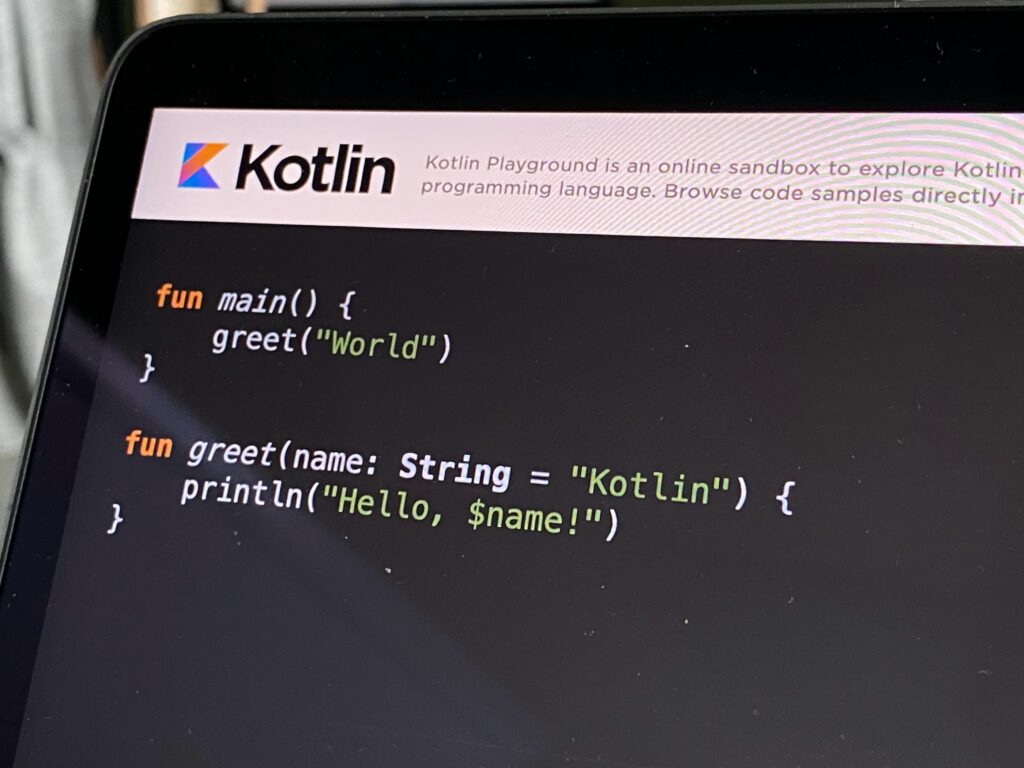
Kotlin is a modern programming language that runs on the Java Virtual Machine (JVM). It was introduced by JetBrains and gained official support from Google as an Android development language in 2017. Kotlin’s clean syntax, null safety, and seamless interoperability with Java make it an increasingly popular choice for Android app development.

Kotlin Multiplatform technology also simplifies the development of cross-platform projects and will work on different operating systems, such as iOS, Android, macOS, Windows, Linux, watchOS, and others.

👋 Want to know the best practices for iOS and Android development?

🔍 Read this
best language for app development

Cross-Platform Mobile App Programming Languages

Talking about cross-platform projects, there are a few languages that don’t particularly target any platform like Swift does with iOS, for instance. Let’s see some of them below.

React Native (JavaScript)

React Native is a popular cross-platform app development framework that uses JavaScript as its core language. Developed by Facebook, React Native allows developers to create native-like apps for both iOS and Android. It provides a seamless development experience, reusable components, and access to native device features.

With React Native, you can create platform-specific versions of components so a single codebase can share code across platforms.

Xamarin (C#)

Xamarin is an open source cross-platform app development framework that utilizes C# as its primary programming language. Developed by Microsoft, Xamarin allows developers to build apps for iOS, Android, and Windows using a single codebase.

Xamarin offers the benefits of C#’s strong type system, modern language features, and the vast .NET ecosystem, making it a compelling choice for cross-platform app development.

Flutter (Dart)

Flutter is a cross-platform app development framework created by Google that uses Dart as its programming language. Dart is a language optimized for fast apps, with a syntax similar to languages like C++. Flutter allows developers to build, test, and deploy mobile, web, desktop, and embedded apps from a single codebase.

Is C++ enough for app development?

C++ can technically be used for iOS and Android mobile application development. However, an application cannot be created only using C++. It can be more difficult to install and less flexible. Because it is a complex language, it can also increase bugs and lead to more errors. For this reason, C++ is not as much of a good fit as the languages mentioned in the article.

We hope this list was useful!