






Van Marcke is a wholesaler and market leader in the sanitary installation and HVAC industries of Belgium and Luxembourg and continues to grow in other regions like France, Switzerland, the Netherlands, and the United States.
This family-owned business has been in operation for over 90 years, generating over $400 million in annual revenue. They are also recognized as an innovator, having been nominated as the 2020 Company of the Year by Belgian financial newspaper De Tijd.
However, with manufacturers starting to focus on direct sales, Van Marcke’s business is under increasing pressure. The differentiator for Van Marcke moving ahead isn’t simply buying and selling.
“The only way we can differentiate from our competition is in the way or in the services that we offer to our customers,” said Stijn Hoegaerts, Van Marcke’s CIO. This desire has inspired the team at Van Marcke to create a new “high-level blueprint of our future system landscape,” Hoegarts added.
At Mendix World 2021, Hoegaerts and Jan Ickroth, Managing Partner at Mendify, discussed how low-code has helped Van Marcke implement this blueprint to improve both their internal and external customer experience.
Van Marcke was already in the middle of a S/4HANA implementation with SAP, occupying a substantial amount budget and developers.
Any new functionality would have to be built on top of the existing SAP core to keep SAP as simple as possible. And while Van Marcke has a robust internal development team, each developer is very specialized, so there’s not a lot of flexibility to swarm on any given project.
Van Marcke had also recently encountered difficulties in redesigning an existing mobile app to be compatible with a new Android release. Development took twice the time anticipated, and the experience was so resource-intensive that Van Marcke decided to launch the application without adding any new features.
A colleague recommended the Mendix development platform as a potential alternative for future app development. Hoegarts evaluated the platform and gained confidence when seeing case studies about IT expertise improving the final offering. He also noted the value and speed that could be gained by building one solution and reusing assets across Van Marcke’s portfolio. Hoegaerts built a prospective portfolio of business and SAP applications that could be built with low-code.
As soon as the CEO signed off, the team got to building.
The COVID pandemic forced Van Marcke, like many organizations, to shift to a remote working model, among the consequences of which was a delay to the start of Mendix development. Despite drastic changes in their day-to-day, Van Marcke’s CEO challenged Hoegaerts and his team to build a contact tracing app for Van Marcke employees.
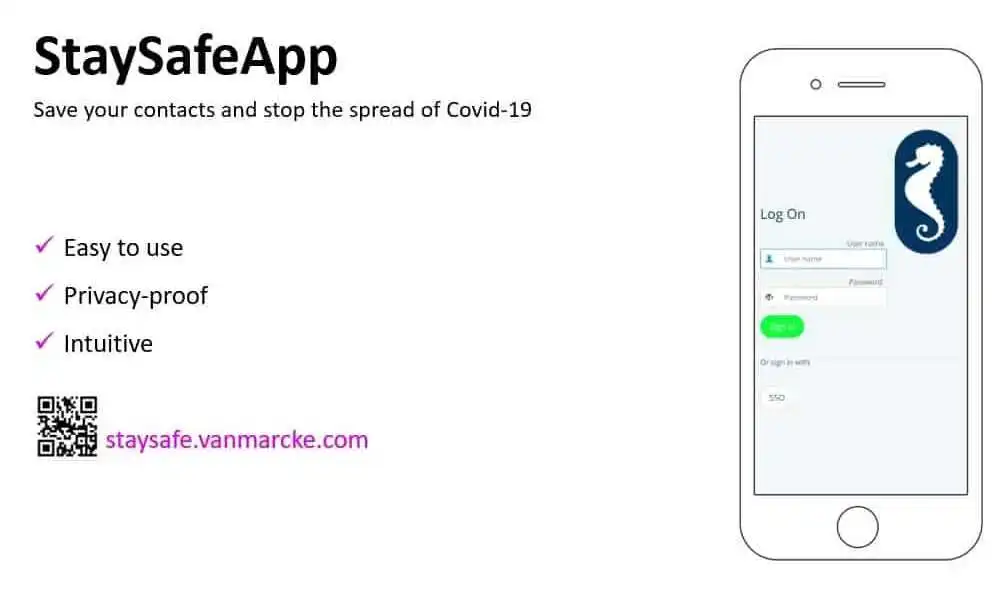
Hoegaerts researched existing solutions in progress by Google and Apple and decided to connect with Ickroth’s team at Mendify to see what could be build with Mendix. “And by the end of the week,” Hoegaerts recalled, “our StaySafeApp was launched.”
This app immediately enabled over 1000 Van Marcke colleagues to register contacts, and the launch was so successful that it gained national media coverage. This unforeseen issue proved to be a great first case study for low-code and was a springboard into the SAP enhancements Van Marcke wanted.
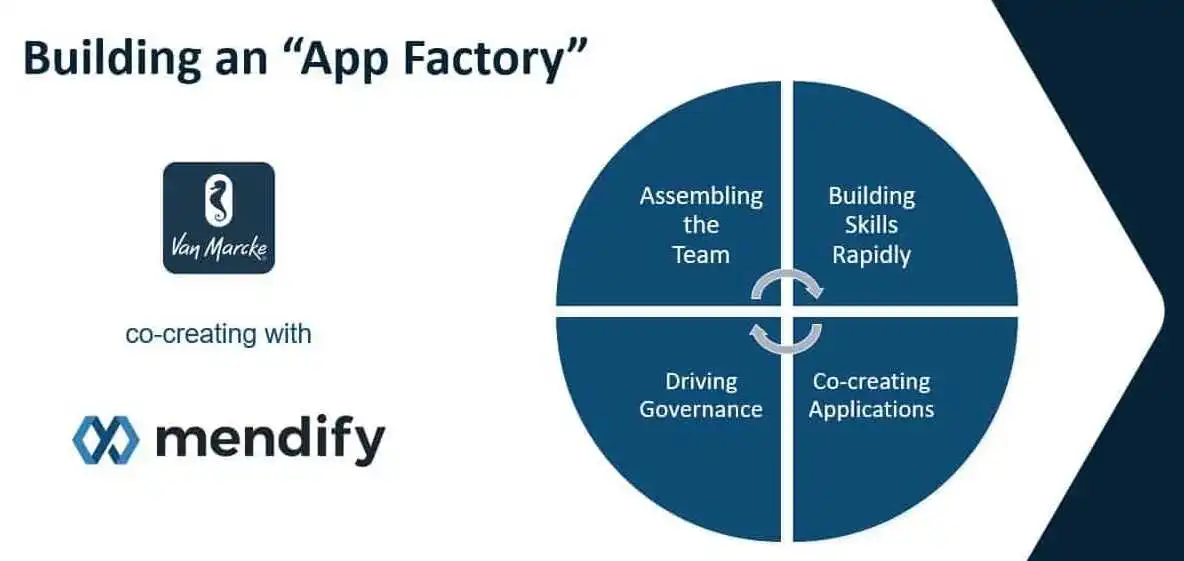
To maximize the benefits from their growing low-code practice, the teams at Van Marcke and Mendify collaborated to build out an App Factory. Ickroth described, “An App Factory is a team [or set of teams] that build applications, multiple applications together at scale, according to a standardized way of working.” This process is an always-revolving circle with four steps:
The first SAP enhancement Van Marcke built with low-code was a shop scanning app. The scope and interface are similar to a self-scanning app you might use in a grocery store, and the app was built both for Van Marcke customers and employees.
“Our staff uses it for standard transactions available in SAP in order to do receiving,” noted Hoegaerts. “Or to tell the system that certain goods have moved from one shelf to another one, or to do cycle counting. All of them are done with this app.”
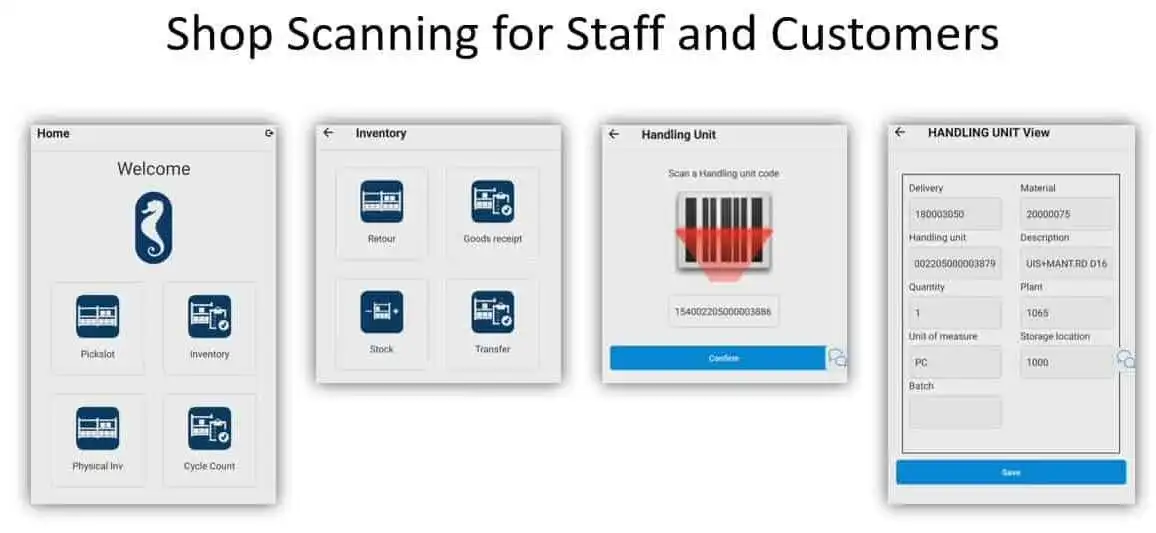
The shop scanning tool receives data directly from SAP, which is processed within the app then sent back to update SAP in real-time. This process affords employees a better user experience as they keep track of stock while ensuring data remains accurate and complete.
Next, a discount matrix app was created. Van Marcke routinely offers discounts to customers based on order size and other factors. “However,” said Hoegaerts, “it’s not the same discount percentage for every product they buy from us. It’s all depending on the turnover in a certain product family, what they did last year, [and] how they are perceived in growth.”
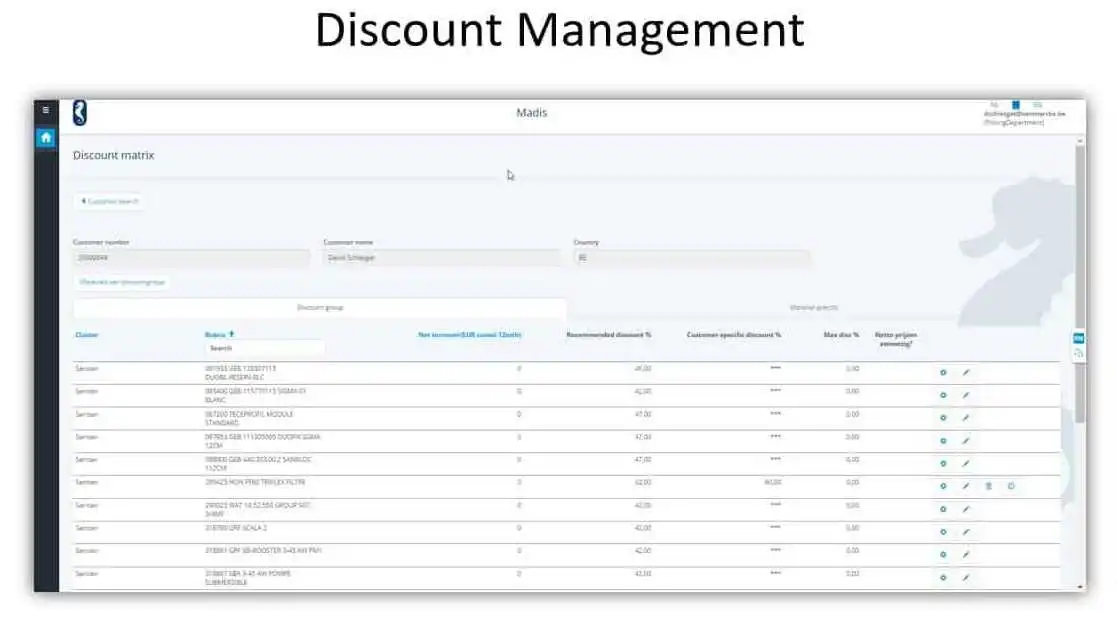
These discounts are often applied in SAP, but the team had trouble maintaining them using a core system. Further, any account manager was permitted to update discounts, providing an additional security challenge.
With the new app, account managers enter relevant customer information, then the app does the rest. Hoegaerts described that the app “fetches the data from SAP. It does the entire process of assigning the right discount percentages and then afterward it updates SAP immediately.” This process ensures that customers will always see the correct discounts and reduces the administrative overhead required of Van Marcke account managers.
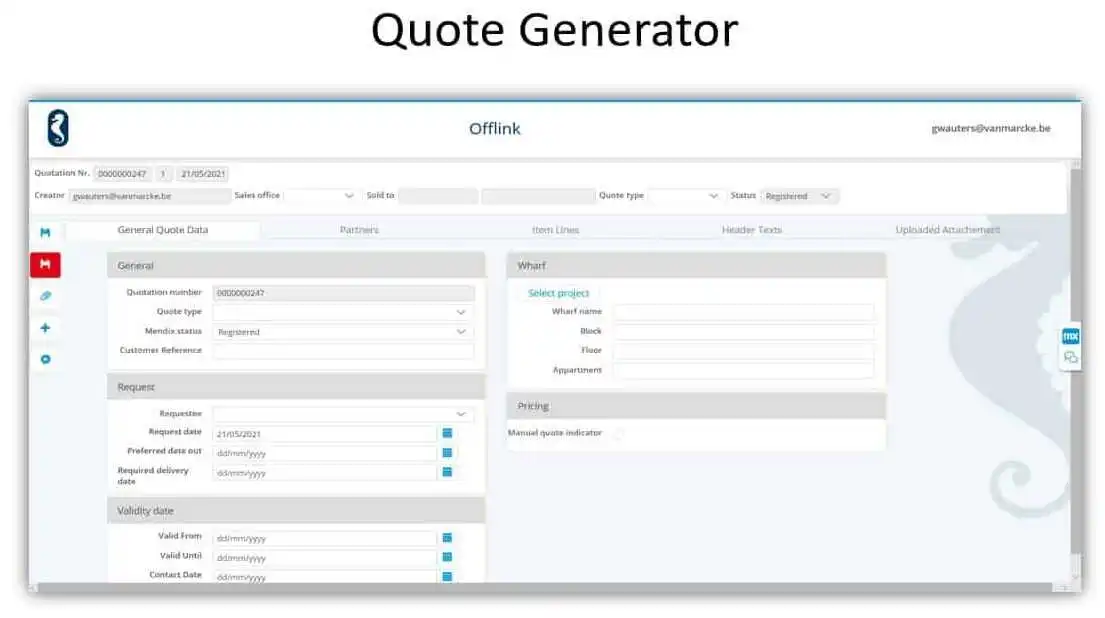
Another early success story is a new Quote Generator. According to Hoegaerts, Van Marcke generates “about 20,000 quotes every month…containing several tens to up to hundreds of lines.” Sales staff were using SAP templates, copying and pasting data manually.
While reflecting on Van Marcke’s low-code journey to date, Hoegaerts noted a number of lessons that could be useful for organizations considering a similar path.
For Van Marcke, getting buy-in from the business was easy because of Mendix’s speed and flexibility. SAP developers had some initial concerns, but once the team saw “that Mendix is respecting the document flows in SAP and that the Mendix platform could add features which are hard to realize in SAP, they embraced it,” said Hoegaerts.
Part of Van Marcke’s success is that they found a partner in Mendify who understood Mendix and worked well with Van Marcke’s internal team. Speaking about co-development, Hoegart said that “I would definitely recommend it because co-creation means that you’re going to invite more experienced people that have already been working with Mendix into your team.”
Setting up a governance process early helped ensure that development was meeting business goals at speed without sacrificing the high standards for quality Van Marcke holds itself to.
OData services are web services needed to link Mendix applications with other systems such as SAP. Van Marcke’s experience was that setting up those connections early in the development cycle helped them to avoid deployment delays. Van Marcke also cautioned users to maximize Mendix capabilities and reuse those connections where possible: “Try not to fall into the trap that you create web services for each application again and again. Otherwise, you will end up with a spaghetti of web services.”
In their 18 months using the Mendix platform, Van Marcke has realized a number of benefits to their business:
Most importantly, Van Marcke’s key stated goal was to avoid adding complexity to SAP and to “keep the core clean,” according to Hoegaerts.
此内容由惯性聚合(RSS阅读器)自动聚合整理,仅供阅读参考。 原文来自 — 版权归原作者所有。