





惯性聚合 高效追踪和阅读你感兴趣的博客、新闻、科技资讯
阅读原文 在惯性聚合中打开

推荐订阅源

L
LINUX DO - 热门话题
Threat Intelligence Blog | Flashpoint
K
Kaspersky official blog
Google Online Security Blog
Simon Willison's Weblog
Hacker News - Newest:
Hacker News - Newest: "LLM"
cs.AI updates on arXiv.org
P
Privacy International News Feed
D
Docker
Cisco Talos Blog
Cisco Talos Blog
Spread Privacy
Spread Privacy
Jina AI
Jina AI
Last Week in AI
Last Week in AI
The Last Watchdog
The Last Watchdog
WordPress大学
WordPress大学
Project Zero
Project Zero
小众软件
小众软件
V
V2EX
OSCHINA 社区最新新闻
OSCHINA 社区最新新闻
L
Lohrmann on Cybersecurity
T
Troy Hunt's Blog
www.infosecurity-magazine.com
cs.CL updates on arXiv.org
P
Privacy & Cybersecurity Law Blog
AWS News Blog
AWS News Blog
C
CXSECURITY Database RSS Feed - CXSecurity.com
W
WeLiveSecurity
V
Vulnerabilities – Threatpost
让小产品的独立变现更简单 - ezindie.com
爱范儿
爱范儿
奇客Solidot–传递最新科技情报
奇客Solidot–传递最新科技情报
Apple Machine Learning Research
月光博客
月光博客
博客园 - 三生石上(FineUI控件)
Cloudbric
Cloudbric
罗磊的独立博客
TaoSecurity Blog
TaoSecurity Blog
cs.CV updates on arXiv.org
Google DeepMind News
雷峰网
雷峰网
IT之家
IT之家
A
Arctic Wolf
The Hacker News
The Hacker News
T
Tailwind CSS Blog
Know Your Adversary
Know Your Adversary
博客园 - 司徒正美
腾讯CDC
S
SegmentFault 最新的问题
P
Palo Alto Networks Blog
NISL@THU
NISL@THU

Ubuntu blog

Tracing a memory leak bug in PID 1 and contributing an upstream fix: a Linux support story | Ubuntu MAAS installation: bare metal provisioning is easier than ever | Ubuntu Januscape vulnerability CVE-2026-53359 mitigations available | Ubuntu Managing Ubuntu on bare metal at scale Ubuntu Server: a platform made for enterprise scale | Ubuntu Building an open source chain of trust: new research uncovers key blockers and ways forward | Ubuntu Beyond safety and security: Why automotive open source demands dependability  | Ubuntu DirtyClone Linux kernel local privilege escalation vulnerability fixes available | Ubuntu pedit COW kernel local privilege escalation vulnerability mitigations | Ubuntu Canonical becomes Gold Sponsor of Trifecta Tech Foundation | Ubuntu Challenges designers face in open source (and how to fix them) | Ubuntu Hunting a 16-year-old SQLite bug with TLA+: is dqlite affected? | Ubuntu Anbox Cloud on C4A metal: Android, at scale, without friction | Ubuntu Canonical announces live kernel patching for Arm64 | Ubuntu How to use RISC-V custom instructions with Ubuntu | Ubuntu Ubuntu Summit 26.04: connected by open source | Ubuntu So you need to add microcontrollers to your fleet: now what? | Ubuntu Validating real-world skills through Canonical Academy | Ubuntu Virtualized Android comes to Anbox Cloud | Ubuntu Template: Streamlining open source design contributions | Ubuntu Beyond Mythos: responding to a new threat landscape | Ubuntu A look into Ubuntu Core 26: Building a local AI inference appliance in a virtual machine | Ubuntu A decade of Ubuntu on IBM Z and IBM LinuxONE | Ubuntu AI at the edge: simplifying infrastructure with Cisco and Canonical | Ubuntu The next era of telco clouds: get open infrastructure choice with Sylva and Canonical Kubernetes | Ubuntu What is RDMA over Converged Ethernet (RoCE)? | Ubuntu Beyond tokens per watt – using Ubuntu 26.04 LTS for AI | Ubuntu A look into Ubuntu Core 26: Deploying AI models on Renesas RZ/V series for production | Ubuntu RISC-V profiles – why is RVA23 significant? | Ubuntu AI with AMD ROCm on Ubuntu: your questions answered | Ubuntu Ubuntu and Ubuntu Pro on Azure Cobalt 200 VMs | Ubuntu What is InfiniBand? | Ubuntu How Canonical Support solves hard Linux performance bugs  – even in 12-year old code | Ubuntu Securing AI agent workflows on Ubuntu with the new NVIDIA OpenShell snap | Ubuntu Canonical announces optimized Ubuntu images for TPU virtual machines by Google Cloud | Ubuntu VMware hypervisor deployment using MAAS | Ubuntu Migrating from Apache Spark 3 to Spark 4 | Ubuntu Introducing Workshop: launch sandboxed development environments on Ubuntu with a single command | Ubuntu Run agentic workloads on Arm and Ubuntu | Ubuntu Decoding design: How design and engineering thrive together in open source | Ubuntu Developing web apps with local LLM inference | Ubuntu PinTheft Linux kernel vulnerability mitigation | Ubuntu Canonical announces fully Managed Kubeflow AI operations platform on the Microsoft Azure Marketplace | Ubuntu A look into Ubuntu Core 26: Cloud-powered edge computing with AWS IoT Greengrass and Azure IoT Edge | Ubuntu CVE-2026-46333 (ssh-keysign-pwn) Linux kernel vulnerability mitigations | Ubuntu Finding the blind spot: How Canonical hunts logic flaws with AI | Ubuntu Fragnesia Linux kernel local privilege escalation vulnerability mitigations | Ubuntu Rethinking BYOD security: protecting data without trusting devices | Ubuntu Dirty Frag Linux kernel local privilege escalation vulnerability mitigations | Ubuntu Three weeks to go: A sneak peek of the Ubuntu Summit 26.04 experience | Ubuntu How to use Ubuntu on Windows | Ubuntu Fixes available for CVE-2026-31431 (Copy Fail) Linux Kernel Local Privilege Escalation Vulnerability | Ubuntu Run NVIDIA Nemotron 3 Nano Omni locally in a single command | Ubuntu Why Web Engineering is great | Ubuntu Ubuntu 16.04 LTS has reached the end of standard Expanded Security Maintenance with Ubuntu Pro. Here are your options. | Ubuntu Understanding disaggregated GenAI model serving with llm-d | Ubuntu From Jammy to Resolute: how Ubuntu’s toolchains have evolved | Ubuntu Hybrid search and reranking: a deeper look at RAG | Ubuntu Canonical expands Ubuntu support to next-generation MediaTek Genio 520 and 720 platforms | Ubuntu Intentional leadership at Canonical | Ubuntu Ubuntu Pro comes to Nutanix bare-metal Kubernetes | Ubuntu RISC-V 101 – what is it and what does it mean for Canonical? | Ubuntu Ubuntu Summit 26.04 is coming: Save the date and share your story! | Ubuntu How to manage Ubuntu fleets using on-premises Active Directory and ADSys | Ubuntu How to Harden Ubuntu SSH: From static keys to cloud identity | Ubuntu The “scanner report has to be green” trap | Ubuntu Modern Linux identity management: from local auth to the cloud with Ubuntu | Ubuntu Canonical welcomes NVIDIA’s donation of the GPU DRA driver to CNCF | Ubuntu Hot code burns: the supply chain case for letting your containers cool before you ship | Ubuntu
Simplify bare metal operations for sovereign clouds | Ubuntu
David Beamonte (David Beamonte) · 2026-03-31 · via Ubuntu blog

The way enterprises are thinking about their infrastructure has changed. 

Digital sovereignty of all kinds – data sovereignty, operational sovereignty, and software sovereignty – have begun to dominate the infrastructure discussion. Today, these abstract terms have become practical concerns for platform teams. Changing regulations, geopolitical uncertainty, and growing concerns about vendor dependency are forcing organizations to take a closer look at where their infrastructure runs, and who truly controls it.

We’ve discussed how to achieve enhanced data security in your sovereign cloud previously. However, in this blog, we’ll be diving into an underexplored topic: the metal underlying sovereign clouds. We’ll consider sovereignty and how it relates to infrastructure, highlighting the reasons why avoiding vendor dependence is so important, and how bare metal automation can help to make sovereignty sustainable.

Sovereignty: getting control of your metal

Most enterprises aiming to improve their control over their data and infrastructure begin with data sovereignty. Data residency, encryption, access controls, and compliance frameworks are the most visible requirements, and they are usually the first to be addressed. These measures are necessary, but they only answer part of the question. For a deep dive into the factors driving sovereignty, and why data sovereignty isn’t enough, check out our webpage and our whitepaper, “Sovereign cloud: the essential guide for enterprises.”

For sovereign clouds, a specific aspect is often overlooked: the ability to provision, change, and recover infrastructure independently, without relying on vendor-specific tooling. Control on paper does not always translate into control in practice, especially below the operating system.

Operational dependency is a sovereignty risk

The weakest point in many sovereign cloud designs lives beneath the layers that platform teams usually focus on. Firmware, bootloaders, out-of-band management interfaces, and provisioning workflows are frequently invisible to application teams, and often poorly documented.

Having control over your infrastructure is not limited to where your hardware is located, or who owns it; it’s also crucial to consider how it is operated. When those processes depend on proprietary tools, vendor-specific interfaces, or undocumented workflows, the operational dependency becomes a real risk.

These dependencies are often invisible until something changes: a vendor contract ends, hardware needs to be upgraded to newer or more capable machines, or key platform engineers leave the organization. Suddenly, the ability to operate the infrastructure independently disappears.

Several common risks show up at the bare metal layer. Firstly, you cannot audit what you do not control. When provisioning is manual or handled by third parties, it becomes difficult to maintain a clear view of what is actually running on each server. Firmware versions, boot settings, network configuration, and management interfaces differ from machine to machine and are outside the scope of most platforms.

Secondly, having unclear foundations makes it harder to manage what is built on top. The reliability of encryption, access policies, and application security relies on a stable and predictable inventory and provisioning process. Because of this, operational dependency becomes a structural risk. Manual workflows, proprietary provisioning tools, or knowledge concentrated in a small team create hidden dependencies that don’t scale well.

Finally, slow provisioning makes it harder to maintain sovereignty over time. Sovereign platforms need to scale, recover, and evolve. When bringing new hardware online takes too long or requires manual coordination, maintaining control becomes harder with every change.

When building your sovereign cloud, it is important to avoid these traps. A sovereign platform must be something the organization can operate, evolve, and recover on its own terms, even as people, vendors, and hardware change.

Bare metal automation makes sovereignty sustainable

Bare metal automation addresses these risks by bringing consistency to the lowest layer of the stack. Instead of treating physical servers as special cases, it treats them as flexible programmable assets, establishing the same processes from virtual machines to bare metal.

In particular, bare metal automation provides several specific capabilities that matter for sovereign clouds:

  • Transparent hardware inventory: Servers and their internal hardware capabilities are discovered, inventoried and commissioned, providing a single source of truth. This is essential when infrastructure ownership and configuration must be demonstrable to regulators and auditors, supporting robust compliance within a sovereign cloud.
  • Repeatable provisioning: Servers are provisioned the same way every time, using defined and versioned processes. This makes the infrastructure easier to rebuild when sovereignty depends on reproducibility instead of trust.
  • Clear ownership of the provisioning pipeline: The organization controls how machines are discovered, configured, and brought into service, without relying on vendor-specific tooling or external actors, preserving operational control over the physical layer.
  • Faster, more reliable operations: New hardware can be added, replaced, or repurposed quickly, allowing sovereign platforms to scale, recover, and evolve without losing control during routine changes or exceptional events..
  • Hardware testing before and after production: Hardware needs to be tested before going into production, helping ensure that only known, compliant machines are part of the sovereign infrastructure.
  • Less dependence on tribal knowledge: Operational knowledge is captured in systems and processes rather than living only in people’s heads, reducing the risk that sovereignty depends on specific individuals rather than the organisation itself.

Together, these capabilities turn sovereignty into something that can be maintained over time. Control of the physical layer becomes explicit, verifiable, and repeatable, which is exactly what sovereign cloud initiatives depend on as they move from initial deployment to long-term operation.

Closing the gap with MAAS

Bare metal automation platforms exist to address this exact problem. Canonical MAAS is an open source platform that provides a central control plane for managing and provisioning physical servers using infrastructure-as-code principles. It offers a consistent, cloud-like management experience for pools of physical servers across heterogeneous hardware environments, making it easier for platform teams to apply the same operational practices everywhere.
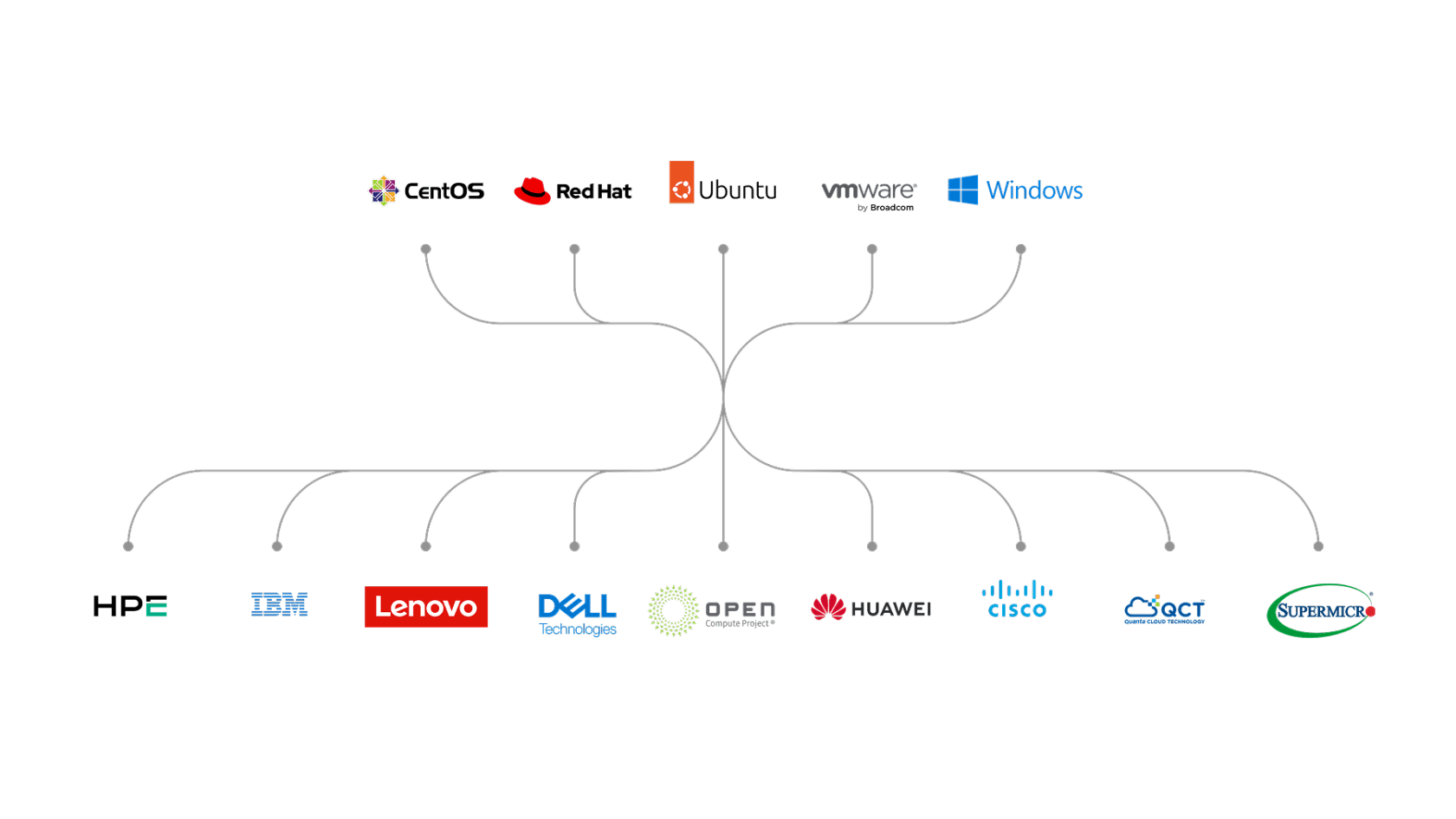
Deploy any OS on any HW with MAAS

Several aspects of MAAS are particularly relevant in the sovereign cloud context. Together, they address the need for demonstrable control, operational independence, and repeatability at the physical layer, which are crucial for sovereign cloud initiatives:

  • End-to-end lifecycle control: MAAS automates the full lifecycle of physical machines, from discovery and commissioning to deployment, reuse, and decommissioning. Using standard out-of-band management interfaces such as IPMI or RedFish, it keeps power control and provisioning across a wide range of certified hardware without the need of vendor-specific tooling.
  • Infrastructure as code for bare metal: A stable, well-defined API allows hardware to be managed programmatically and integrated into existing workflows. Treating physical infrastructure as code makes provisioning repeatable, auditable, and easier to evolve without relying on manual intervention.
  • Hardware validation at scale: Built-in diagnostics allow machines to be tested before they enter production and again when they are recycled or repurposed. This helps maintain a healthy and compliant pool of servers, which is essential for predictable operations and reliable recovery.
  • Accurate inventory and configuration awareness: Detailed hardware inventory makes it possible to place workloads based on real capabilities.
  • Integrated network configuration and services: MAAS configures server network interfaces with bridges, VLANs, bonds and addresses, and it integrates highly available, open source DHCP and DNS services.

Taken together, these capabilities address the gaps that often undermine sovereign cloud efforts at the physical layer, and they give platform teams a way to operate bare metal with the same level of control, visibility, and discipline they expect from higher layers of the stack.

Conclusions and next steps

Sovereign clouds only work if control can be maintained over time. Data protection and application-level controls are important, but they depend on how the infrastructure underneath is built and operated. When the physical layer is opaque or hard to manage, sovereignty is difficult to implement.

Bare metal management is where many of these issues surface. Automating this layer reduces the dependency on vendors and individuals, makes infrastructure easier to audit, and allows platforms to evolve without losing control. 

For organizations serious about sovereign infrastructure, this is not about adding another tool. The core idea is to establish the foundational layer in a way that sustains long-term sovereignty.

MAAS is designed to help teams bring that level of control to physical infrastructure. If you are thinking about your cloud sovereignty strategy and rethinking how you run bare metal today, it is worth taking the time to see how MAAS works and what problems it can remove from daily operations.
You can try MAAS on your own and decide whether it fits your platform. If you want help designing or running MAAS at scale, Canonical also provides professional support. Reach out if you would like to discuss your requirements or take the next step.