
惯性聚合 高效追踪和阅读你感兴趣的博客、新闻、科技资讯
阅读原文 在惯性聚合中打开

推荐订阅源

V
Vulnerabilities – Threatpost
V
V2EX
GbyAI
GbyAI
Recent Announcements
Microsoft Security Blog
阮一峰的网络日志
阮一峰的网络日志
Hugging Face - Blog
Hugging Face - Blog
T
Tailwind CSS Blog
Y
Y Combinator Blog
C
Check Point Blog
爱范儿
爱范儿
CTFtime.org: upcoming CTF events
美团技术团队
雷峰网
雷峰网
IT之家
IT之家
WordPress大学
WordPress大学
V
Visual Studio Blog
Microsoft Azure Blog
MyScale Blog
MyScale Blog
N
News and Events Feed by Topic
罗磊的独立博客
S
SegmentFault 最新的问题
S
Security Affairs
aimingoo的专栏
aimingoo的专栏
F
Fortinet All Blogs
K
KPMG report finds enterprise disconnect between AI and its ROI | CIO
Exploit-DB.com RSS Feed
H
Hacker News: Front Page
Google DeepMind News
B
Blog
O
OpenAI News
C
Cisco Blogs
Simon Willison's Weblog
The Last Watchdog
The Last Watchdog
Hacker News: Ask HN
Hacker News: Ask HN
博客园_首页
人人都是产品经理
人人都是产品经理
C
Cybersecurity and Infrastructure Security Agency CISA
Recent Commits to openclaw:main
Help Net Security
Help Net Security
月光博客
月光博客
J
Java Code Geeks
L
LangChain Blog
博客园 - 司徒正美
Stack Overflow Blog
Stack Overflow Blog
Security Archives - TechRepublic
Apple Machine Learning Research
T
The Exploit Database - CXSecurity.com
N
News and Events Feed by Topic
freeCodeCamp Programming Tutorials: Python, JavaScript, Git & More

Microsoft Azure Blog

Frontier models and production agents: Advancing Microsoft Foundry for the agentic era | Microsoft Azure Blog Built to bounce back: How Azure resiliency evolved | Microsoft Azure Blog External key management for Azure Managed HSM Meet Brain: The AI system behind Azure reliability | Microsoft Azure Blog Proving application resilience on Azure with Chaos Studio | Microsoft Azure Blog How to design, build, and optimize cloud infrastructure for long-term efficiency Claude in Microsoft Foundry is now generally available | Microsoft Azure Blog The 2026 Agent Confidence Index: Where 300 builders see real momentum | The Microsoft Cloud Blog Accelerate modern Linux workloads with Azure Files | Microsoft Azure Blog Optimizing PostgreSQL on Azure directly in Visual Studio Code From insight to action: The next phase of agentic cloud operations | Microsoft Azure Blog Modernize your data with Azure Storage: Plan and migrate with confidence | Microsoft Azure Blog 3 things leaders need to know from Microsoft Build 2026 | Microsoft Azure Blog Claude Fable 5 available today in Microsoft Foundry: Powering the next era of autonomous agents AI alone won’t change your business. The system running it will. Announcing Microsoft Discovery general availability and Microsoft Discovery app preview A Developer’s Guide to Managing Models, Cost and Quality in Microsoft Foundry Foundry IQ: Build smarter agents faster with unified knowledge and serverless retrieval Microsoft Build 2026: Building agentic apps with Microsoft Fabric and Microsoft Databases New Azure Cobalt 200 VMs deliver 50% performance improvement, fully optimized for modern agentic AI workloads Claude Opus 4.8 is now available in Microsoft Foundry Powering multi-cluster workloads with seamless cross‑cluster networking for Azure Kubernetes Fleet Manager Azure NetApp Files for EDA workloads: From revolution to breakthrough at scale Azure IaaS: Deploy high-performance workloads with a system-level approach Azure Files Entra-Only identities: Advancing cloud-native identity and security From commit to cloud: Powering what’s next for PostgreSQL Advancing enterprise AI: New SAP on Azure announcements from SAP Sapphire 2026 Red Hat Summit 2026: Platform modernization and AI on Microsoft Azure Red Hat OpenShift Build AI apps with Azure Cosmos DB: Key trends from Cosmos Conf 2026 Scaling cloud and AI: Microsoft Azure’s commitment to Europe’s digital future Azure IaaS: Defense in depth built on secure-by-design principles Enforcing trust and transparency: Open-sourcing the Azure Integrated HSM Microsoft named a Leader in the IDC MarketScape: Worldwide API Management 2026 Vendor Assessment OpenAI’s GPT-5.5 in Microsoft Foundry: Frontier intelligence on an enterprise ready platform Microsoft Discovery: Advancing agentic R&D at scale Introducing Azure Accelerate for Databases: Modernize your data for AI with experts and investments Cloud Cost Optimization: Principles that still matter Optimize object storage costs automatically with smart tier—now generally available How Drasi used GitHub Copilot to find documentation bugs Cloud Cost Optimization: How to maximize ROI from AI, manage costs, and unlock real business value Azure IaaS: Keep critical applications running with built-in resiliency at scale Building sovereign AI at the edge: Microsoft and Armada collaborate to deliver Azure Local on Galleon modular datacenters Navigating digital sovereignty at the frontier of transformation Microsoft named a Leader in 2026 Gartner® Magic Quadrant™ for Integration Platform as a Service AI for nuclear energy: Powering an intelligent, resilient future | The Microsoft Cloud Blog What’s new with Microsoft in open-source and Kubernetes at KubeCon + CloudNativeCon Europe 2026 Advancing agentic AI with Microsoft databases across a unified data estate FabCon and SQLCon 2026: Unifying databases and Fabric on a single data platform Microsoft at NVIDIA GTC: New solutions for Microsoft Foundry, Azure AI infrastructure and Physical AI From legacy to leadership: How PostgreSQL on Azure powers enterprise agility and innovation
Microsoft named a Leader in The Forrester Wave™ for Sovereign Cloud Platforms
2026-04-09 · via Microsoft Azure Blog

Microsoft is named a Leader in The Forrester Wave™ for Sovereign Cloud Platforms, recognizing Microsoft Sovereign Cloud leadership in evolving sovereignty needs.

Digital sovereignty is no longer a niche requirement. For organizations operating across borders, regulated industries, and complex supply chains, sovereignty is now table stakes for cloud strategy.

That’s why we’re pleased that Microsoft has been named a Leader in The Forrester Wave TM: Sovereign Cloud Platforms, Q2 2026 – an evaluation that assessed the most significant sovereign cloud providers based on current offerings, strategy, and customer feedback.
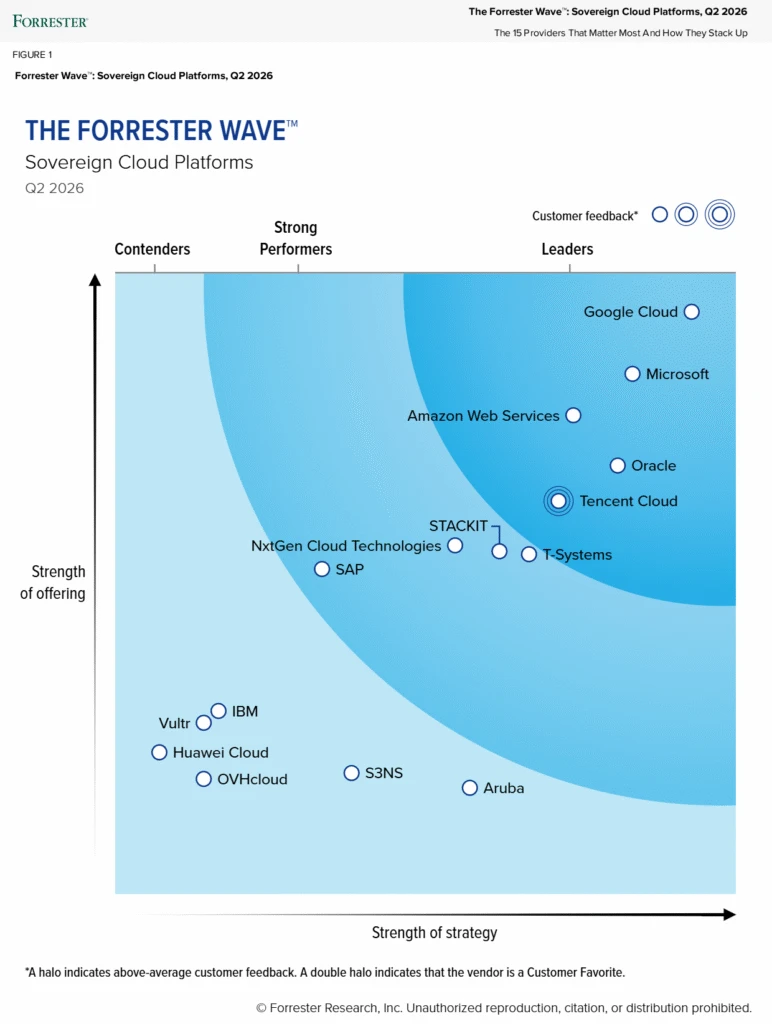
Figure 1 of The Forrester Wave™: Sovereign Cloud Platforms, Q2 2026

We believe this recognition reflects Microsoft’s long-term commitment to helping organizations adopt cloud and AI without compromising on control, compliance, operational independence, or innovation.

Why this recognition matters

Forrester’s research highlights a key reality of sovereign clouds: there is no single deployment model that fits every sovereignty requirement. Instead, organizations combine public cloud, private cloud, and disconnected environments to achieve the level of sovereignty they need – balancing risk, regulations, functionality, and cost.

In this context, leadership isn’t about offering a single “sovereign cloud.” The goal is not isolation, but it’s about providing consistent sovereign controls across multiple environments to maintain access to modern cloud capabilities.

Forrester places Microsoft in the Leaders category based on its scores in the current offering and strategy categories. The report also notes Microsoft’s vision to offer sovereign controls across cloud, AI and productivity services. Specifically, Microsoft’s ability to extend sovereignty across AI, productivity, security, and cloud platform.

A platform approach to sovereignty

The Forrester report notes that Microsoft’s sovereign capabilities are available consistently for both private and public cloud. In practice, digital sovereignty is achieved through a combination of technical controls, operational practices, and contractual commitments applied consistently across deployment models.

Microsoft Sovereign Cloud brings together:

  • Public cloud with data residency and access controls, including region-specific residency controls such as EU Data Boundary.
  • Private cloud with hybrid deployments, enabled through Azure Local and consistent policy and management via Azure Arc.
  • Partner-operated national clouds, with Bleu and Delos Cloud, where infrastructure is independently owned and operated to meet national requirements.

This approach allows organizations to grow their sovereign IT posture over time, adapting to evolving regulatory, operational, or geopolitical conditions without having to abandon the Microsoft cloud ecosystem.

Consistency across sovereign environments

One of the differentiators cited in the evaluation is Microsoft’s ability to make key capabilities available across sovereign public and sovereign private cloud. Forrester specifically calls out Microsoft’s container and Kubernetes capabilities, including the use of Azure Arc and Azure Local to run Kubernetes clusters in connected or disconnected environments, supported by infrastructure-as-code and GitOps tooling.

This consistency matters because sovereign cloud isn’t just about where data resides, but about whether organizations can:

  • Operate and secure workloads the same way across environments.
  • Maintain development and operation standards.
  • Avoid fragmenting teams, tools, and processes.

By extending common management, governance, and deployment models across environments, Microsoft Sovereign Cloud helps reduce complexity while giving organizations control.

Looking ahead

Sovereign cloud platforms are evolving quickly, especially as customers look to apply AI, analytics, and modern application services across different environments. Forrester notes that customers don’t “buy” sovereignty as a standalone product, they architect for it over time.

Microsoft’s recognition as a Leader in this evaluation underscores our commitment to keep investing in sovereign cloud innovation such as:

  • Advanced AI development and runtime capabilities.
  • Increasing consistency and parity across deployment models.
  • Supporting customers as sovereignty requirements continue to mature and evolve.

We’re grateful to our customers and partners who continue to shape our approach and we remain focused on helping organizations adopt cloud and AI with confidence, flexibility, and transparency wherever their workloads need to run.


Forrester does not endorse any company, product, brand, or service included in its research publications and does not advise any person to select the products or services of any company or brand based on the ratings included in such publications. Information is based on the best available resources. Opinions reflect judgment at the time and are subject to change. For more information, read about Forrester’s objectivity here.