

惯性聚合 高效追踪和阅读你感兴趣的博客、新闻、科技资讯
阅读原文 在惯性聚合中打开

推荐订阅源

WordPress大学
WordPress大学
腾讯CDC
阮一峰的网络日志
阮一峰的网络日志
GbyAI
GbyAI
B
Blog RSS Feed
Engineering at Meta
Engineering at Meta
Google DeepMind News
MyScale Blog
MyScale Blog
Last Week in AI
Last Week in AI
F
Fortinet All Blogs
云风的 BLOG
云风的 BLOG
N
Netflix TechBlog - Medium
G
Google Developers Blog
博客园_首页
有赞技术团队
有赞技术团队
V
V2EX
奇客Solidot–传递最新科技情报
奇客Solidot–传递最新科技情报
MongoDB | Blog
MongoDB | Blog
H
Help Net Security
aimingoo的专栏
aimingoo的专栏
月光博客
月光博客
Hugging Face - Blog
Hugging Face - Blog
The GitHub Blog
The GitHub Blog
S
SegmentFault 最新的问题

TrendForce

[News] ASE Reportedly Raises Advanced Packaging Quotes by More Than 20% in Latest AI-Driven Price Hike [News] Musk’s TeraFab Lands First Major Hire as 18-Year Intel Veteran With 18A Experience Joins as Director [Insights] Memory Spot Price Update: DRAM Spot Prices See Gains in Low-Density DDR4 and DDR3 Amid Sideways Market [News] Passive Component Prices Rise as YAGEO Reportedly Begins Broadest Capacitor Hike in Years on July 1 [News] Intel Reportedly Breaks Ground on Santa Clara Expansion for Next-Gen EUV Mask Capacity [News] World’s First Mass-Production Line for 6-/8-Inch Homoepitaxial Gallium Oxide Wafers Comes Online [News] Samsung Electro-Mechanics Lands KRW 450B 1-Year MLCC Contract as AI Spurs Long-Term Agreements [News] Raw Material Inflation Deepens: FULLTECH Hikes Glass Fiber Cloth Prices Up to 30%; VPEC Adjusts Epi Wafer Prices [News] Samsung Reportedly Restarts 1.4nm Push, Targets 2029 Mass Production to Close Gap with TSMC, Intel [News] ByteDance Reportedly Eyes Next-Gen In-House CPU for 2H27 Mass Production; May Partner With Qualcomm [News] Samsung, SK hynix 800 Trillion Won Expansion Strains Chipmaking Tool Supply, Potentially Pressures TSMC, Intel [News] Goertek-Backed 12-Inch AR Optical Wafer Fab Commenced Production [News] China Signs First Domestic Ultra Wide Bandgap Semiconductor Full-Chain Project [News] Samsung, SK hynix, Micron Face U.S. Class-Action Lawsuit Over Alleged DRAM Supply Manipulation [News] Korea’s High-Purity CO₂ Inventory Reportedly Falls Below One Month; Samsung, SK hynix Under Pressure [News] TSMC’s 2Q Margins Reportedly Near 70% amid Strong 3/5nm Demand, 3Q Revenue Seen Growing Over 10% [Sponsored Content] Where Do You Stand as AI Reshapes Industries? [News] Mapping the Micro LED Optical Interconnect Ecosystem [News] Asian Memory Makers Turn to U.S. Capital Markets: SK hynix and Kioxia Advance ADR Plans [News] Lenovo Reportedly Sees Higher Memory Prices Becoming the New Normal Into 2030 [News] TSMC on Terafab: No Shortcuts in Foundry; Confirms Next-Gen LPU Project amid Samsung Rivalry [News] TSMC N3 Tightens on AI Demand; Arizona 2nd Fab 3nm Volume Production in 2H27, Kumamoto in 2028 [News] TSMC Sees 2Q Sales Up 10% QoQ to $40.2B; Margins Rise to 65.5%–67.5%, Capex at Top End of $52–56B [News] TSMC 1Q26 Net Income Soars 58% YoY to NT$572.5B Record, EPS NT$22.08; Gross Margin Beats Forecast at 66.2% [News] Tesla AI5 Reportedly Uses SK hynix Memory, Samsung LPDDR5X; Samsung SF2T Process Applied Ahead of AI6 [News] TSMC 1Q Profit Seen Up ~50% to Record; Meta–Broadcom AI Chips Reportedly Target 2nm, CoWoS-L in 1H27 [News] San’an Announced Three Advances in Optical Communications Business [News] Intel Reportedly to Brief Staff on TeraFab Involvement in Coming Weeks, While Key Foundry Details Remain Limited [News] ASML Raises 2026 Sales Outlook to €36B–€40B on Memory, Logic Demand; South Korea Share Hits 45% [News] Chinese Startup Dishan Reportedly Develops 2nm AI Chip in Prototype Verification; Foundry Access Uncertain
[News] China Reportedly Sees Record 2025 Chip Tool Import...
TrendForce · 2026-04-15 · via TrendForce


As U.S. curbs continue to reshape supply chains, China is accelerating its push for semiconductor self-sufficiency and increasingly sourcing critical chipmaking tools from outside the U.S. According to Nikkei, imports of such equipment from Malaysia and Singapore surged in 2025, surpassing shipments from the U.S.  As the report notes, direct imports from the U.S. fell by more than 34% to around $2 billion, the lowest level since 2017.

The report states that while the Netherlands and Japan remain China’s main external sources of semiconductor manufacturing equipment by shipment origin, imports from the two Southeast Asian countries hit record highs. Shipments from Singapore reached $5.7 billion, up more than 17% year over year, while those from Malaysia totaled $3.4 billion, more than doubling from 2024.

China’s Equipment Sourcing Reportedly Shifts to Southeast Asia

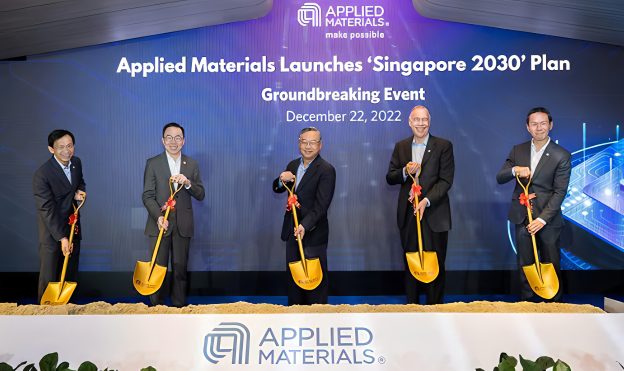
Regarding the increase in China’s chipmaking equipment imports from Malaysia and Singapore, analysts cited in the report say that U.S. toolmakers have been expanding manufacturing capacity in the region to better serve customers outside the U.S. Lam Research is expanding its manufacturing footprint in Malaysia to meet rising equipment demand. Singapore, meanwhile, has become a key overseas hub for U.S. toolmakers, with companies such as Applied Materials and KLA establishing manufacturing operations there.

As the report further notes, the three leading U.S. chip equipment makers generated nearly $19 billion in combined revenue from China in fiscal 2025—well above figures suggested by customs data based on shipment origin—highlighting the effectiveness of their production diversification strategies.

China’s Equipment Landscape: Global Sourcing Meets Local Surge

Still, Japan remains a major source of China’s chipmaking equipment imports. According to the report, cumulative imports from Japan exceeded $42 billion between 2020 and 2025, followed by about $35 billion from the Netherlands. Japan is home to key suppliers such as Tokyo Electron, Screen Semiconductor Solutions, and Ebara, while the Netherlands hosts ASML, the world’s largest chip tool maker, along with ASM and Besi. At the same time, amid U.S. restrictions, China’s domestic chip equipment makers are seeing strong growth in 2025, led by Naura, AMEC, ACM Research, and Piotech.

Looking ahead, the U.S. is reportedly considering new legislation to further tighten China’s access to chipmaking equipment. According to South China Morning Post, lawmakers have proposed the Multilateral Alignment of Technology Controls in Hardware (MATCH Act), which, if enacted, would ban exports of key tools to China, including deep ultraviolet (DUV) immersion lithography systems and cryogenic etching equipment.

Read more

(Photo credit: Applied Materials)

Please note that this article cites information from Nikkei and South China Morning Post.