


Researchers at the University of Rochester have developed a new solar-thermal desalination process that converts ocean water into fresh water using only sunlight. Even better, it solves the environmental crisis plaguing existing water plants: toxic waste.
This novel method eliminates the need for chemical pre-treatments and completely avoids the creation of toxic liquid brine. The system was tested on actual water samples from the Pacific, Atlantic, and Indian Oceans. It successfully extracted fresh water while continuously shifting the remaining salts into a passive zone for later collection, maintaining peak panel efficiency throughout.
Right now, 2.2 billion people worldwide lack access to safely managed drinking water. To quench this thirst, coastal cities from California to the Middle East depend on industrial desalination plants.
But these massive facilities, which use standard methods such as reverse osmosis and thermal distillation, are dirty. These guzzle immense amounts of electricity, demand heavy chemical pre-treatments, and release millions of gallons of “brine” back into our oceans. Brine is a super-concentrated, suffocating saltwater sludge, which kills marine life.
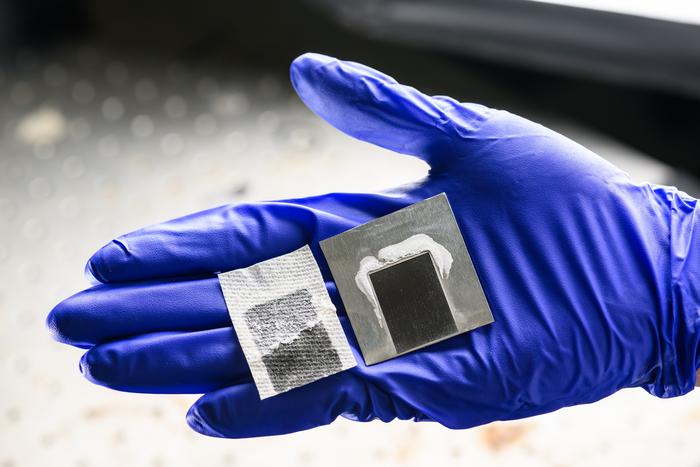
To overcome these drawbacks, researchers developed a novel approach using solar panels made of black metal etched with ultra-fast “femtosecond” lasers.
This laser treatment makes the surface super-light-absorbing and “superwicking” (highly water-attracting). When sunlight hits this black panel, it absorbs nearly all the solar radiation. The water rapidly evaporates, leaving pure, distilled water to be collected.
But real ocean water is messy. It contains a cocktail of calcium and magnesium that usually forms a hard, crusty scale. This scale quickly clogs ordinary solar stills, much like calcium buildup ruins your bathroom showerhead. That is where the spilled coffee comes in.
When a liquid droplet evaporates, the fluid flows outward to its edges, depositing its suspended particles in a ring. The Rochester team precisely tuned their metal’s micro-grooves to guide this natural outward force. As the seawater evaporates, the expanding fluid naturally pushes the crystallizing salts and minerals outward into an untreated “passive” zone on the edges of the panel.
The device literally cleans itself. It can run continuously without gumming up the works.
The implications of this solid-waste approach stretch far beyond table salt. Scientists can target specific minerals left behind by keeping the waste solid.
In a sister study published in the Journal of Materials Chemistry A, Guo’s team took the technology a step further. They embedded hydrogen titanate nanoparticles directly into the metal’s laser grooves. These nanoparticles act like tiny chemical magnets, specifically isolating lithium from the rest of the ocean minerals.
Using water samples from the Great Salt Lake, the team successfully extracted about 50% of the available lithium from the post-desalination residues.
“Mining lithium from the earth has proven to be very taxing from an energy and environmental standpoint, so pulling lithium directly from saltwater could be a very important future route,” said Guo.
With the technology now proven in small-scale devices, Professor Guo believes the superwicking system is inherently scalable, offering a dual solution to improve global access to drinking water and to build sustainable supply chains for critical minerals.
The findings were published in the journal Light: Science & Applications on May 27.
Mrigakshi is a science journalist who enjoys writing about space exploration, biology, and technological innovations. Her work has been featured in well-known publications including Nature India, Supercluster, The Weather Channel and Astronomy magazine. If you have pitches in mind, please do not hesitate to email her.
此内容由惯性聚合(RSS阅读器)自动聚合整理,仅供阅读参考。 原文来自 — 版权归原作者所有。