









The SAMMY and VENUS pairing revealed hidden nuclear isotope fingerprints.
US researchers have unveiled a new method to identify hidden nuclear materials after pairing the nuclear analysis code SAMMY with the high-resolution neutron transmission data from the versatile neutron imaging instrument (VENUS).
The two technologies provide a new approach for non-destructive assay (NDA) testing. NDA is an analytical technique used primarily in the nuclear industry to identify and quantify radioactive materials (like uranium and plutonium) without altering or destroying the tested items.
Designed by researchers at the Department of Energy’s (DOE) Oak Ridge National Laboratory (ORNL), the method is set to strengthen nuclear safeguards, forensics, as well as national security operations.
“It’s a perfect match, not just between two technologies, SAMMY and VENUS, but between the people and capabilities here at ORNL,” Luiz Leal, PhD, lead author of the report and R&D staff member in the Nuclear Data Group, stated.
New NDA testing approach
The method combines VENUS, a world-class neutron imaging instrument at the Spallation Neutron Source, the world’s most intense accelerator-based pulsed neutron source, and SAMMY, a long-running nuclear analysis code used globally to refine nuclear resonance data.
It relies on neutron fingerprints, which are unique resonance signatures produced when neutron beams interact with atomic nuclei. By analyzing them, the scientists can determine the exact composition of unknown or shielded nuclear materials without dismantling them.
Nuclear resonances are derived from the neutron cross section, one of the most significant nuclear data points. Cross sections describe the probability of neutrons interacting with atomic nuclei. They act like fingerprints for isotopes.

“They can be identified by developing a resonance signature, which is generated by directing a neutron beam at a sample material over a range of energies,” Leal said. “Tools like VENUS can develop this signature through neutron transmission.”
According to the team, each isotope produces a distinct resonance pattern when exposed to neutron beams across different energy levels. While usually utilized to refine the resonance parameters from experimental data, SAMMY now helped the team identify unknown materials by matching neutron resonance signatures from Venus.
SAMMY meets VENUS
“For this work, we applied SAMMY in reverse,” Jesse Brown, PhD, a nuclear data scientist in the Nuclear Data group, stated. “We asked the code to identify and match fingerprints gathered through neutron transmission to determine an unknown sample composition.”
The team tested the method using gold, tantalum, and natural hafnium samples. While gold and tantalum served as simpler baseline materials, hafnium posed a far greater challenge. This is because it contains six naturally occurring isotopes with overlapping neutron signatures.
“Gold and tantalum are relatively simple, isotopically speaking. Natural hafnium is not,” Leal revealed. “It contains six different isotopes, and their neutron signatures overlap.”
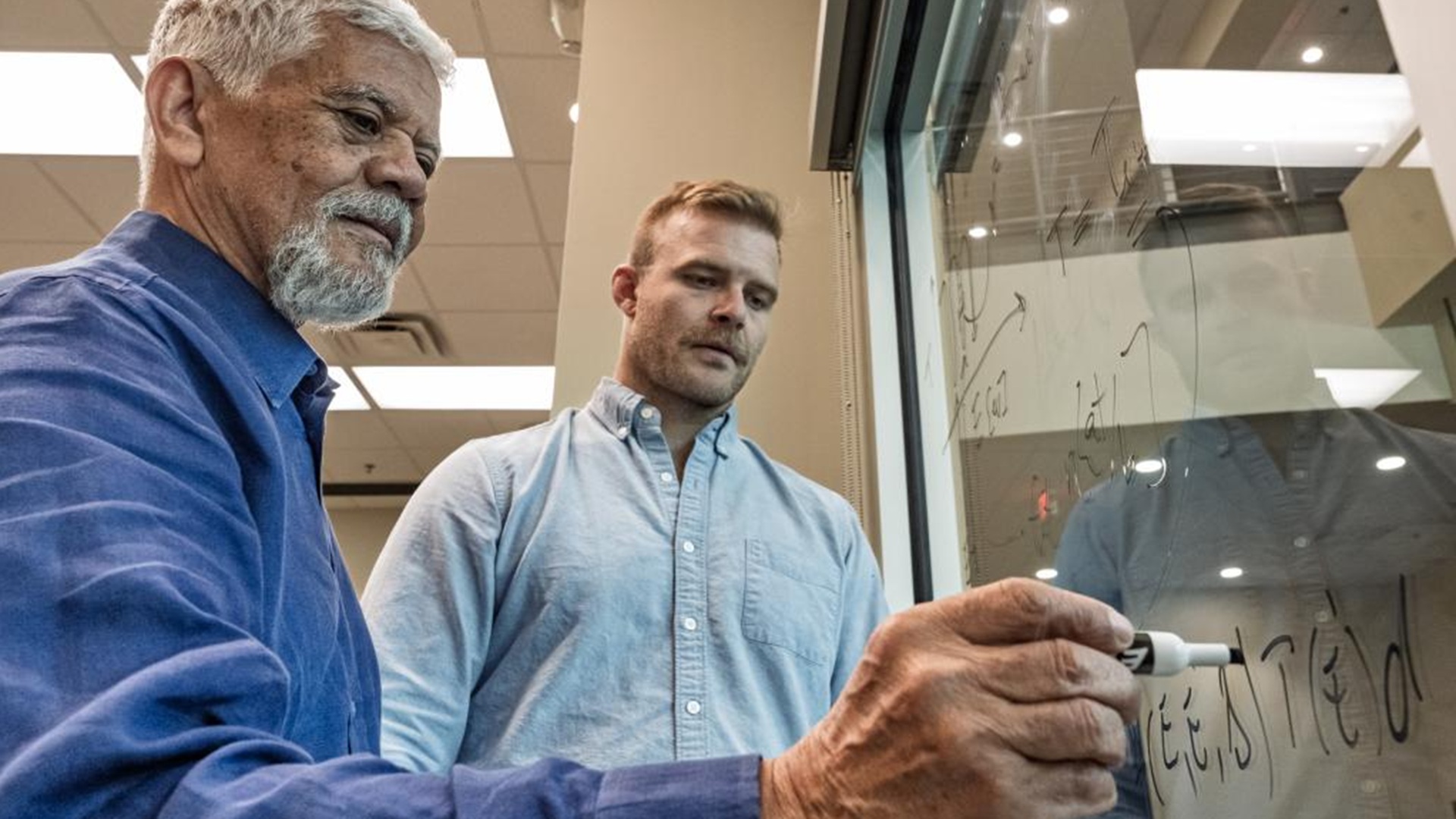
The system successfully split the signals and identified the material composition with high precision. “Being able to separate those signals shows that SAMMY, combined with high-quality data from VENUS, can identify real-world materials with complex compositions,” Leal continued.
According to the team, the achievement underscored VENUS’ true potential. The instrument can produce precise measurements in minutes rather than days. This significantly accelerates nuclear analysis workflows.
The team believes that the technology could become highly valuable in reactor research, post-irradiation examinations, and nuclear forensics investigations that involve shielded and hazardous materials. “This study clearly demonstrates the critical role of high-quality experimental data produced at VENUS,” Klaus Guber, PhD, the Nuclear Data Group leader, concluded in a press release.
Recommended Articles

Get the latest in engineering, tech, space & science - delivered daily to your inbox.
Based in Skopje, North Macedonia. Her work has appeared in Daily Mail, Mirror, Daily Star, Yahoo, NationalWorld, Newsweek, Press Gazette and others. She covers stories on batteries, wind energy, sustainable shipping and new discoveries. When she's not chasing the next big science story, she's traveling, exploring new cultures, or enjoying good food with even better wine.