







Germany has been testing a novel way to power electric ferries by turning parked electric vehicles (EVs) into mobile energy storage units, in a bid to slash fossil fuel use and ease pressure on the electricity grid.
The project, known as “Bi-directional Integration of Electric Vehicles” (BIDI-EL) was launched by the Osnabrück University of Applied Sciences and ferry operator AG Reederei Norden-Frisia. It is funded by DBU, the German Federal Environmental Foundation (DBU), with nearly USD 200,000.
It relies on a Vehicle-to-Grid (V2G) system that connects electric vehicles with the energy grid. As per the scientists, the initiative aims to create a more sustainable transport system for the East Frisian Islands in the North Sea.
“The bi-directional integration of EVs not only offers an environmentally friendly alternative to conventional mobility, but can also significantly relieve pressure on the energy supply grid,” Hans-Jürgen Pfisterer, PhD, a professor at the university and one of the project’s leaders, said.
The project follows Norden-Frisia’s launch of what was described as the first fully electric passenger ferry (the Frisia E-I) in the German North Sea in early 2025. The 105-foot (32-meter), CO2-neutral catamaran can transport 150 passengers in just half an hour between Norddeich Mole station and the island of Norderney.
Now, once the ferry reaches the harbor, parked electric vehicles and on-site solar panels begin feeding power into the charging infrastructure. Pfisterer noted that the concept could greatly increase the use of locally generated renewable energy.
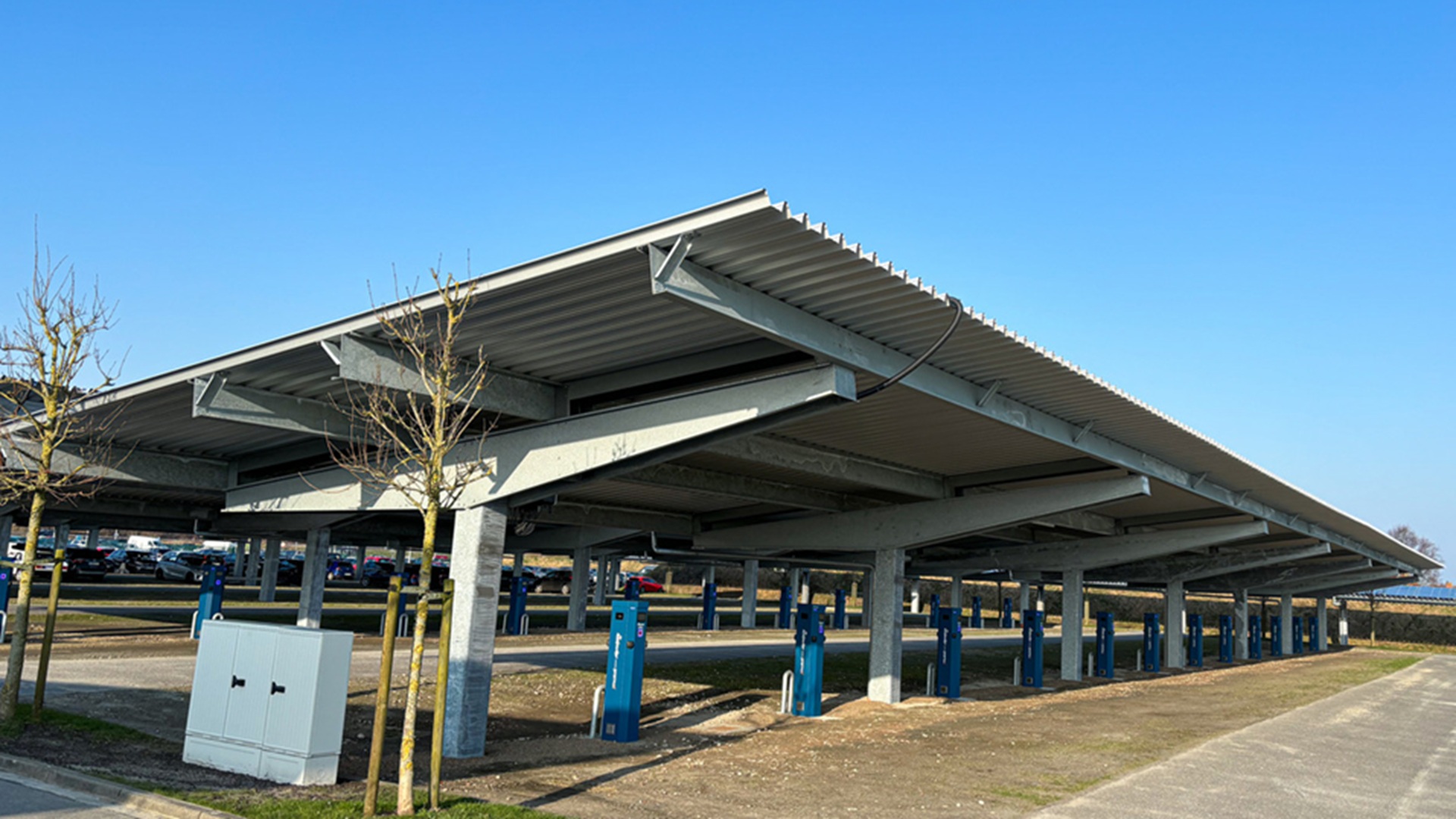
It could moreover reduce the stress on the regional electricity network. “By using vehicles as decentralized energy storage systems, the share of renewable energy can be maximized, the grid stabilized, and vehicle batteries maintained in a kind of ‘wellness operation’,” Pfisterer added.
The ferry operator’s site already includes a photovoltaic (PV) system that boasts a capacity of 1,700 kilowatt-peak (kWp). It was installed in 2024, with additional expansion already planned. The infrastructure also includes a stationary battery storage system that will now be complemented by the batteries of parked EVs.
Jointly led by Pfisterer, and Kai-Michael Griese, PhD, a professor specializing in sustainability-focused business models, as well as circular economy strategies, the project aims to create long-term energy supply solutions. It will run until January 2027.
“The goal of the project is to generate insights that go beyond the initial project outcomes and to establish the foundation for long-term, sustainable business models and energy supply solutions,” Griese pointed out in a press release.
“Innovations such as bi-directional charging are essential for creating future-ready mobility solutions,” Pfisterer concluded. Meanwhile, Olaf Weddermann, Reederei Norden-Frisia’s managing director, said the project marks another step toward cleaner maritime transport.
“With this project, we are sending a strong signal for the sustainable transformation of our mobility,” Weddermann elaborated. “The combination of an electric ferry and bi-directional charging for electric vehicles is another important step toward a fossil-free future.
The company has provided ferry connections to the East Frisian Islands for more than 140 years. It collaborates closely with scientific institutions to develop new solutions for sustainable shipping.

Get the latest in engineering, tech, space & science - delivered daily to your inbox.
Based in Skopje, North Macedonia. Her work has appeared in Daily Mail, Mirror, Daily Star, Yahoo, NationalWorld, Newsweek, Press Gazette and others. She covers stories on batteries, wind energy, sustainable shipping and new discoveries. When she's not chasing the next big science story, she's traveling, exploring new cultures, or enjoying good food with even better wine.
此内容由惯性聚合(RSS阅读器)自动聚合整理,仅供阅读参考。 原文来自 — 版权归原作者所有。