





The closed-loop cooling system can run for years without consuming water.

One of the world’s leading technology companies, Nvidia, has just unveiled a new data center cooling system that uses a liquid coolant hotter than a hot tub to cut energy consumption.
The Californian company’s latest Rubin platform can operate using liquid coolant at temperatures up to 113 degrees Fahrenheit (45 degrees Celsius). The approach greatly reduces the need for energy-intensive chillers and cooling infrastructure.
According to the company, the feat is part of the DSX AI factory reference design, which introduces fully liquid-cooled infrastructure throughout the entire system. Every processor, networking part, and high-performance computing element is cooled by liquid in a closed-loop system.
Ali Heydari, Nvidia data center cooling and infrastructure director, noted that the DSX AI factory design reduces nearly all water use and cuts a substantial amount of the power necessary for cooling. “With dry-cooler-based designs, it’s a closed-loop system with no evaporative water cooling – outside of maybe one percent of the year when we might need chillers in some climates,” he added.
A new cooling method
Cooling has accounted for up to 40 percent of total power demand. Traditional data centers utilize large volumes of cooled air to remove the heat generated by servers. This requires extensive cooling infrastructure, like fans, chillers, cooling towers, and carefully managed hot and cold aisles.
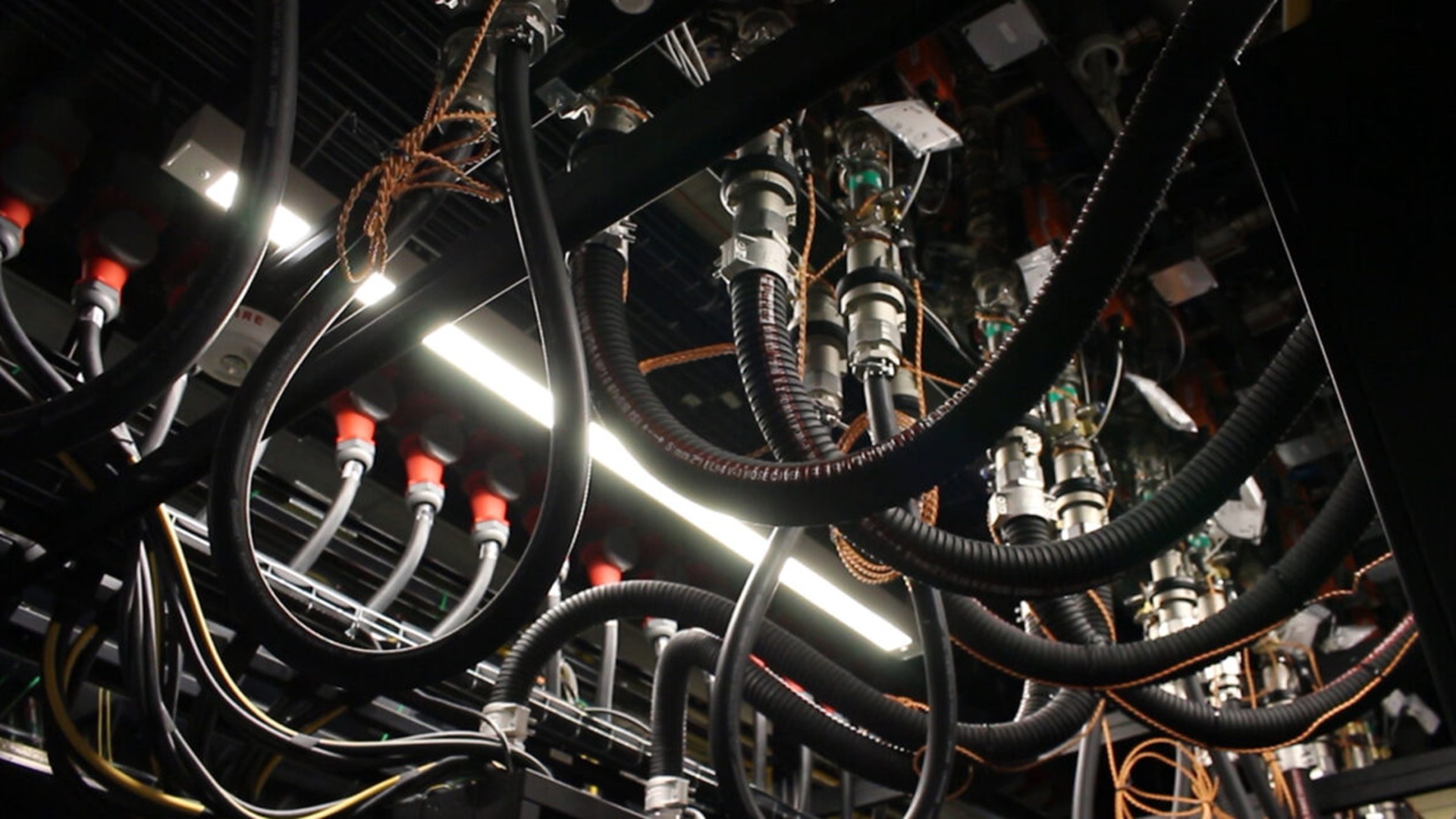
Meanwhile, Nvidia’s Rubin platform captures heat directly at the chip level. It can reportedly reduce cooling water consumption from about 2.6 million gallons per megawatt per year to almost zero in suitable climates.
Credit: Nvidia
The system relies on a liquid coolant made up of 75 percent water and 25 percent propylene glycol, which circulates through cold plates attached to processors. The liquid enters at temperatures of up to 113 degrees Fahrenheit and exits at about 131 degrees Fahrenheit (55 degrees Celsius), once it absorbs the heat generated by the chips.
Since the heat is removed directly from the source, the processors can continue operating at full performance even with much warmer coolant temperatures than traditional cooling systems would allow.
Lower energy and water use
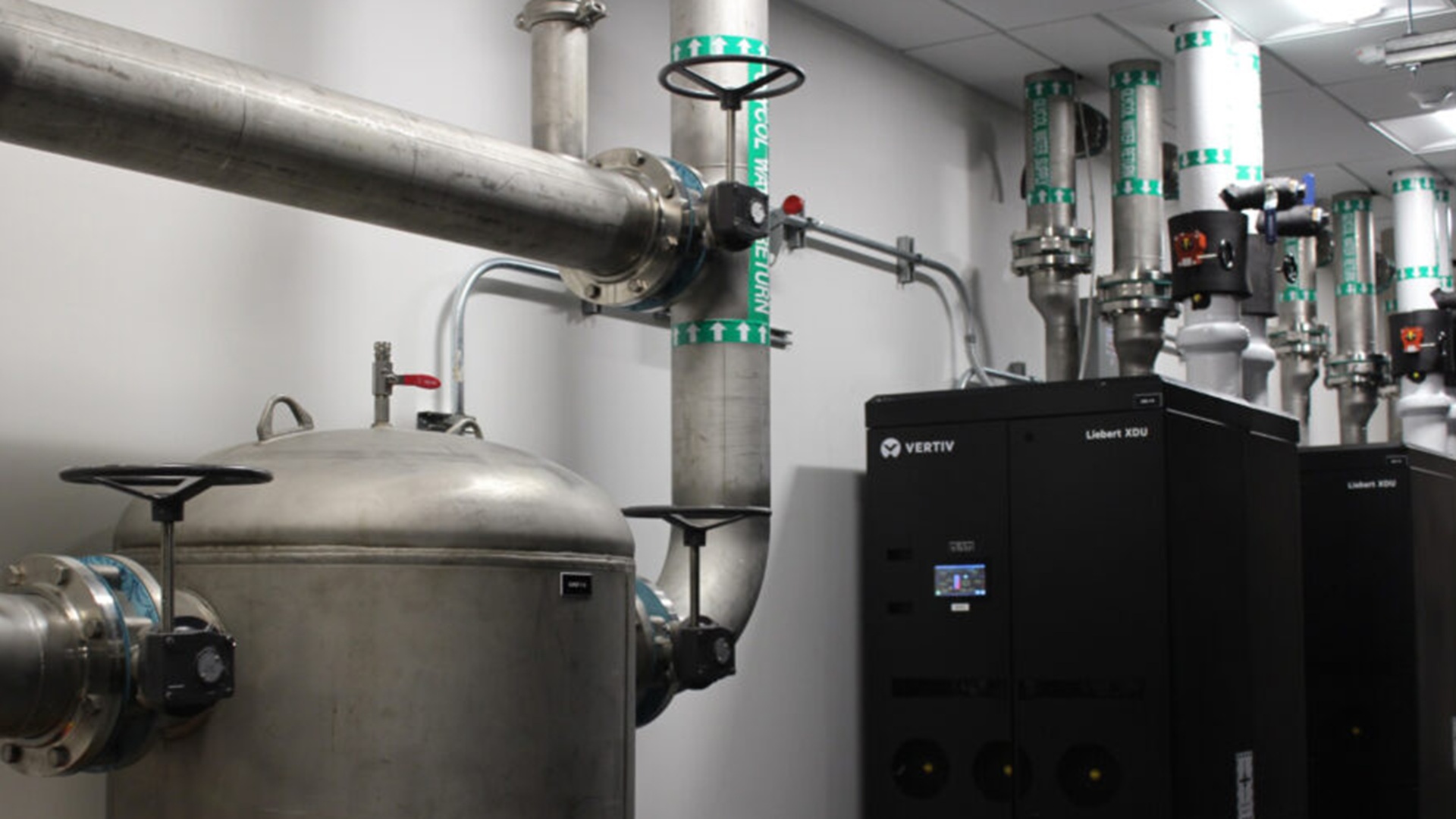
As per Nvidia, the higher operating temperatures unlock considerable efficiency gains. Industry estimates suggest that increasing chiller temperatures by just 1.8 degrees Fahrenheit (one degree Celsius) can reduce cooling energy costs by four percent. In practice, this means that a 50-megawatt hyperscale facility can save more than USD four million per year in cooling-related energy and water costs by adopting liquid-cooled infrastructure.
“In the right geographic location, with the right system design, you don’t need any refrigeration equipment,” Richard Whitmore, president and CEO of Motivair, Schneider Electric’s advanced cooling division, pointed out. “You can just put big radiator coils outside and use the air temperature for all your cooling.”
Credit: NVIDIA
The move to complete liquid cooling also required a major server redesign. Earlier liquid-cooled servers used a hybrid approach, cooling CPUs and GPUs with cold plates while relying on air cooling for other components.
Nvidia engineers reworked cooling pathways across the entire server and created a system that uses a single liquid loop to cool multiple high-power components. The redesign has also improved space efficiency. The company revealed that fully liquid-cooled servers can reach higher rack densities.
This allows more computing power to fit into a smaller footprint. “Once the watts per chip crossed a certain level, liquid cooling became mandatory,” Whitmore concluded in a press release.
Recommended Articles

Get the latest in engineering, tech, space & science - delivered daily to your inbox.
Based in Skopje, North Macedonia. Her work has appeared in Daily Mail, Mirror, Daily Star, Yahoo, NationalWorld, Newsweek, Press Gazette and others. She covers stories on batteries, wind energy, sustainable shipping and new discoveries. When she's not chasing the next big science story, she's traveling, exploring new cultures, or enjoying good food with even better wine.