


Military platforms are taking on more computing tasks than ever, forcing defense manufacturers to shrink powerful hardware into increasingly smaller packages. Spectra Defense Technologies has entered that space with XSR Spire, a rugged mission computer built for systems that cannot accommodate larger servers or active cooling.
The new platform combines an Intel Xeon W-11865MRE processor with a sealed design that relies on passive convection cooling. The approach allows the computer to deliver high-performance processing without fans, reducing maintenance demands in harsh operating conditions and eliminating mechanical components that often become failure points in the field.
Defense programs are moving more intelligence closer to the point of operation instead of depending on remote processing. Local computing can shorten response times and keep critical software running even when network links become unreliable. That capability is becoming increasingly important as military platforms generate larger volumes of data during missions.
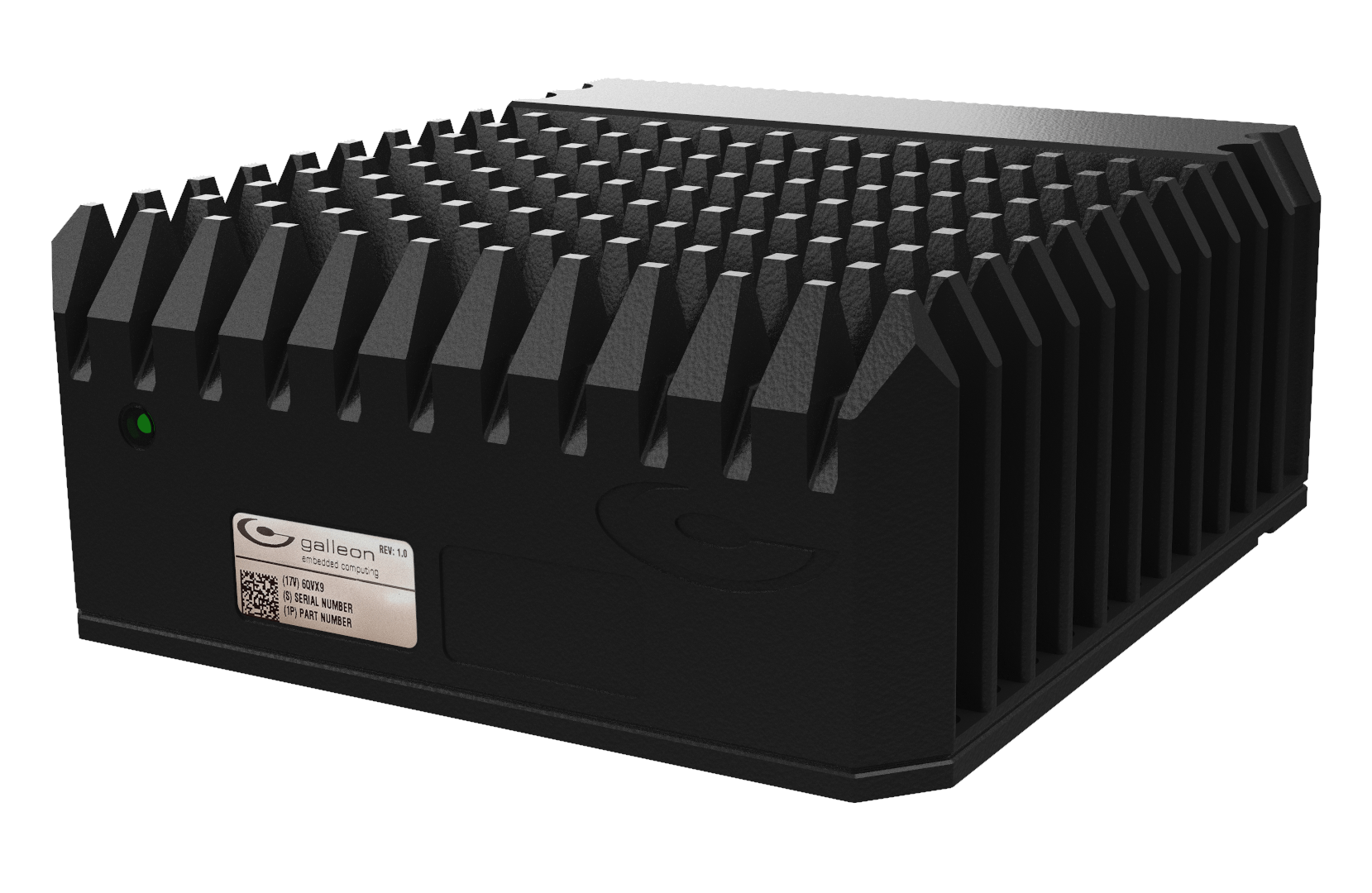
XSR Spire reflects that shift. The system supports up to 96 GB of DDR4 ECC memory and can be configured with as much as 16 TB of NVMe storage, giving operators room to run AI inference and handle large amounts of mission data on the platform itself. The computer is also designed to operate in temperatures ranging from -40°F to 160°F while drawing between 35 W and 70 W of power, making it suitable for installations where available power is limited.
Terje Melsom, chief technology officer of Spectra Defense Technologies Norway, said the product brings the company’s rugged computing technology into a smaller package for low-SWaP applications. He said the modular architecture also lets customers introduce new capabilities without redesigning an entire platform, making upgrades easier as operational requirements change.
Instead of shipping with a fixed configuration, the computer gives integrators room to customize the hardware. Users can install an XMC module or choose Mini PCI Express expansion depending on mission requirements.
The base platform supports networking speeds of up to 10 Gigabit Ethernet and includes standard connectivity for existing military systems. Additional expansion modules allow operators to add specialized interfaces as operational needs evolve, extending the system’s service life without replacing the core hardware.
The sealed enclosure is designed to meet IP66, IP67, and ATPD-2404 requirements and uses passive cooling throughout its operating life. Spectra says the platform is engineered for MIL-STD-810H environmental testing and MIL-STD-461G electromagnetic compatibility standards. It also supports military power requirements for airborne and ground vehicle deployments.
The launch expands Spectra’s growing lineup of rugged edge computing products aimed at platforms with strict size, weight, and power limits. In March, the company introduced the G2 Ultra Rugged microNAS, a compact network-attached storage system designed to help U.S. armed forces and allied defense partners capture and manage large volumes of mission data on constrained platforms.
XSR Spire takes the next step by emphasizing onboard processing instead of storage. As defense programs push AI capabilities closer to the tactical edge, systems must analyze information where it is collected instead of relying on distant computing resources.
Aamir is a seasoned tech journalist with experience at Exhibit Magazine, Republic World, and PR Newswire. With a deep love for all things tech and science, he has spent years decoding the latest innovations and exploring how they shape industries, lifestyles, and the future of humanity.
此内容由惯性聚合(RSS阅读器)自动聚合整理,仅供阅读参考。 原文来自 — 版权归原作者所有。