







German researchers have developed a technique for applying realistic designs to photovoltaic (PV) modules that allow them to imitate roof tiles, and blend more seamlessly into buildings.
The new method, called ShadeCut, was invented by a research team at Freiburg’s Fraunhofer Institute for Solar Energy Systems (ISE), one of the largest solar energy research institutes in the world.
It enables complex visual patterns while also retaining approximately 95 percent of the power output of an uncoated module. The novel approach builds on the institute’s MorphoColor technology, a bio-inspired coating for solar panels.
It produces color through microscopic structures rather than traditional pigments, and uses specially colored films with transparent cutouts to build designs that can resemble roof tiles, masonry or even custom graphics.
“The technology is particularly interesting for modules intended for integration into facades, roof-integrated PV, or even railings, especially on historic buildings,” Martin Heinrich, PhD, a researcher at Fraunhofer ISE, as well as group leader for encapsulation and integration of photovoltaics, said.
Driven by the iridescent wings of the Morpho butterfly, the MorphoColor method uses 3D photonic structures that manipulate light to generate vivid, angle-stable colors with minimal energy loss.
Marco Ernst, PhD, a researcher at Fraunhofer ISE and developer of the ShadeCut concept, emphasized that by structuring and cutting a color-producing film, the team can embed color effects and complex patterns directly into solar modules and facades.
“Additionally, there is the option to add further layers with cutouts to create structures or additional colors,” Ernst continued.
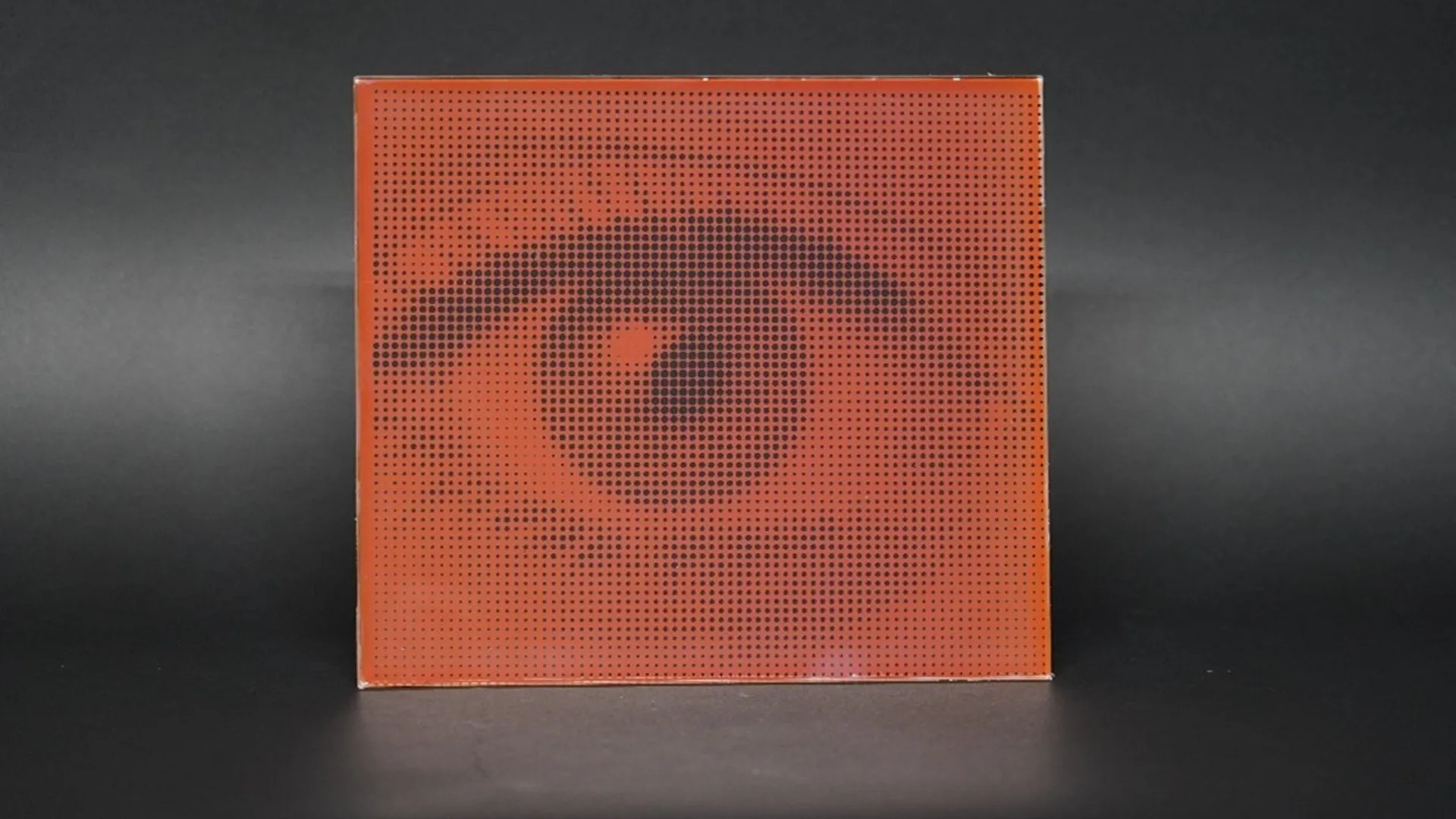
Following this biological model, scientists at the institute have also succeeded in applying a similar surface structure to the back of the cover glass of photovoltaic modules using a vacuum process.
Elaborating on the technology, Heinrich noted that ShadeCut uses laser or CAD-controlled processes to cut patterns into films carrying MorphoColor coating
Heinrich explained that ShadeCut modules can mimic masonry or roof tiles and match surrounding colors seamlessly. “It also allows for the customization of PV systems, for example with logo lettering or patterns,” he added.
According to the team, the MorphoColor technology has surpassed its biological model in performance. Independent tests have shown that such coatings retain about 95 percent uncoated panels’ power. This makes the technology superior to comparable solutions on the market.
It moreover makes it attractive for applications where aesthetics have traditionally limited the adoption of solar panels. The scientists can apply the films to standard photovoltaics and solar thermal modules.
“Depending on the microstructure, cover glasses can thus be produced in various colors,” the researchers revealed in a press release.
Such adaptability could help expand the role of building-integrated photovoltaics (BIPV), where solar panels are used directly into the structure of a building rather than just mounted on top.
In addition, traditional black or blue panels often face resistance in historic areas or design-conscious projects. Color-matched or patterned modules could make solar installations more acceptable, and even desirable.
The ShadeCut modules will be showcased at The Smarter E / Intersolar Europe 2026 in Munich, the world’s leading exhibition for the solar industry. It will be held between June 23 and 25.

Get the latest in engineering, tech, space & science - delivered daily to your inbox.
Based in Skopje, North Macedonia. Her work has appeared in Daily Mail, Mirror, Daily Star, Yahoo, NationalWorld, Newsweek, Press Gazette and others. She covers stories on batteries, wind energy, sustainable shipping and new discoveries. When she's not chasing the next big science story, she's traveling, exploring new cultures, or enjoying good food with even better wine.
此内容由惯性聚合(RSS阅读器)自动聚合整理,仅供阅读参考。 原文来自 — 版权归原作者所有。