






On Monday, the Atlanta-based aerospace company Hermeus confirmed a key flight milestone after its Quarterhorse Mk 2.1 aircraft broke the sound barrier during testing in New Mexico. The uncrewed plane reached Mach 1.21 on its third flight, which took place at Spaceport America in the restricted airspace above White Sands Missile Range.
Mk 2.1 achieved supersonic performance less than three months after its first flight in early March. It also comes just 364 days after the maiden flight of the original Mk 1.
Hermeus described the mission as the first supersonic flight for a privately developed uncrewed aircraft of its kind. The test happened during the plane’s third flight, when it moved from subsonic to supersonic speeds in controlled airspace over New Mexico.
“This flight demonstrates a pace of execution that is extremely rare in modern aviation,” stated AJ Piplica, co-founder and outgoing CEO of Hermeus. “Our country’s ability to deliver new asymmetric military capability at scale depends on teams that can solve hard technical challenges quickly. That’s exactly what we’re proving with each test flight we conduct and each new aircraft we build at Hermeus.”
The company has also recently announced leadership changes. President Zach Shore will become CEO on June 1, and Piplica will move to executive chairman. This change comes as Hermeus expands its test program and gets ready for more advanced aircraft in the same series.
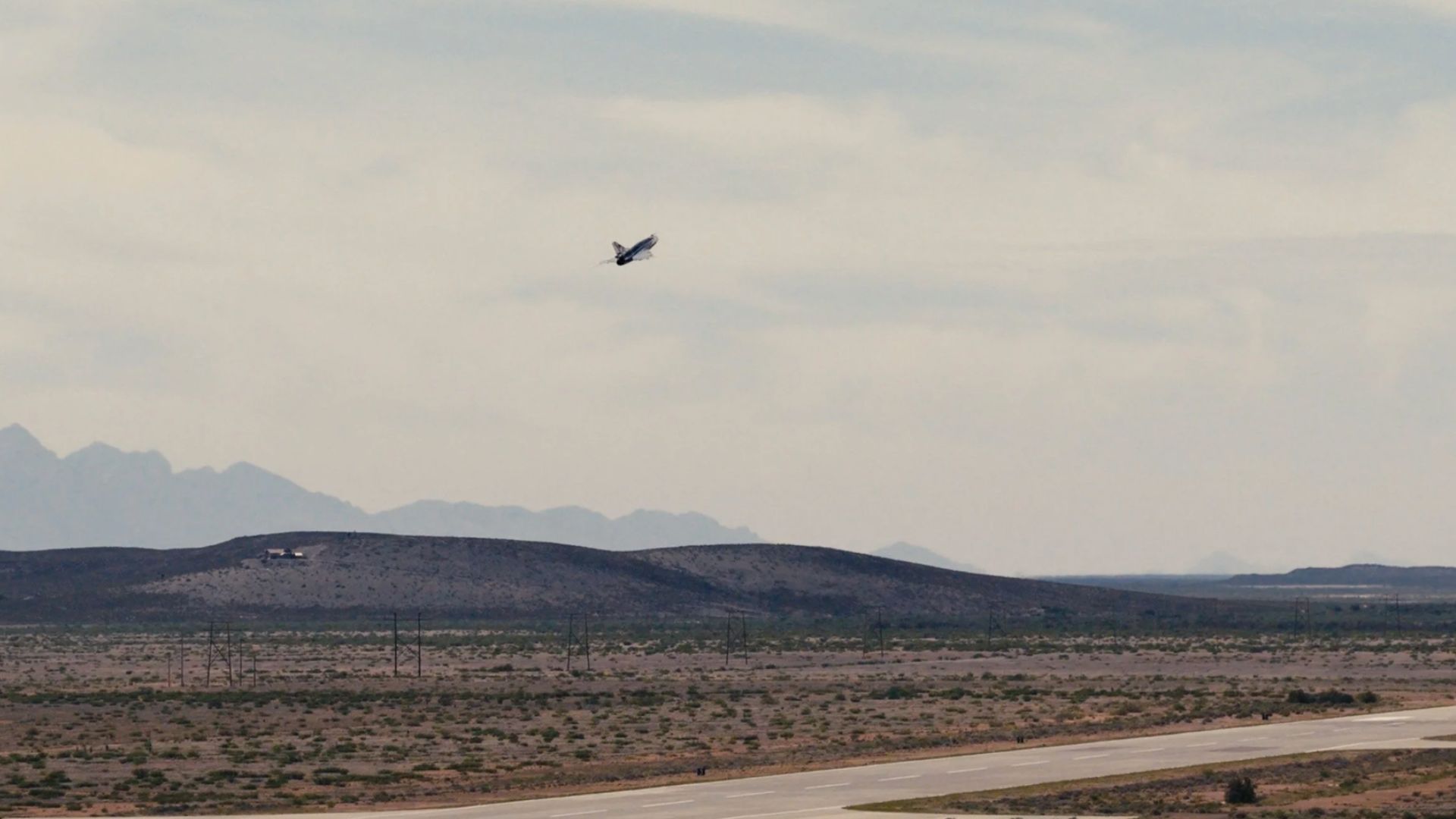
The Quarterhorse Mk 2.1 is roughly the size of an F-16 and uses a delta-wing design to remain stable at high speeds. It is powered by a modified afterburning turbofan engine from Pratt & Whitney, which helps it reach and keep up supersonic speeds during tests.
This aircraft is part of a rapid prototyping plan, where each flight helps improve the design. Engineers use flight data to adjust aerodynamics, engine performance, and control systems. This approach lets the team quickly test and confirm changes, cutting down the time needed to develop new aircraft.
Mk 2.1 also serves as a testbed for systems planned for future Quarterhorse models. The main goal is to lay the groundwork for faster aircraft by making quick, step-by-step improvements.
Hermeus is already working on the next stages of the program. Mk 2.2 is under development and will include the company’s Chimera II turbine-based combined-cycle engine. Mk 2.3 is planned to follow soon, continuing the step-by-step approach to improving performance.
Each aircraft in the series is built to go faster and keep up supersonic speeds for longer. Instead of long production cycles, the company updates its hardware frequently, using each prototype as a step toward the next.
The aerospace firm is developing the Quarterhorse program with the U.S. Department of Defense. This project is a step toward building the company’s planned Darkhorse hypersonic military aircraft and, later, the Halcyon concept, a 20-passenger hypersonic civil transport.
The milestone arrives as competition in high-speed flight programs is growing. Supersonic testing is on the rise in both the defense and commercial sectors, with several aircraft now advancing through flight validation.
XB-1 demonstrator from Boom Supersonic reached Mach 1.122, supporting the development of its planned Overture airliner, which targets commercial service later this decade. Hermeus’ Mk 2.1 result of Mach 1.21 exceeds that benchmark in uncrewed testing. Meanwhile, NASA’s X-59 quiet supersonic plane, built with Lockheed Martin, has finished several test flights and is getting ready for its first supersonic run.
此内容由惯性聚合(RSS阅读器)自动聚合整理,仅供阅读参考。 原文来自 — 版权归原作者所有。