










US scientists have connected a novel 20-qubit quantum computer to Frontier, the world’s most powerful supercomputer for open science, in a major step aimed at advancing hybrid computing.
The research team at the Department of Energy’s Oak Ridge National Laboratory (ORNL) launched Pathfinder on June 16. The new 20-qubit IQM Radiance system will operate alongside the lab’s high-performance computing infrastructure.
Finland’s IQM, which built and deployed the Pathfinder, said the system is the first commercially procured quantum computer at ORNL. It is furthermore IQM’s first installation in the US.
“Our first US system now sits on Oak Ridge campus, connected to their HPC environment, owned and operated by their teams,” Jan Goetz, IQM co-founder and CEO, noted. “Quantum becomes useful when it works inside real computing infrastructure, and there is no better place to prove that.”
The Pathfinder is owned and run by ORNL. The researchers will have direct access to the hardware. They will moreover have the ability to build their own intellectual property and applications.
Travis Humble, ORNL Quantum Science Center Director, stated that the presence of the quantum computer has already sped up their efforts to integrate quantum technologies with the lab’s world-class supercomputing capabilities.
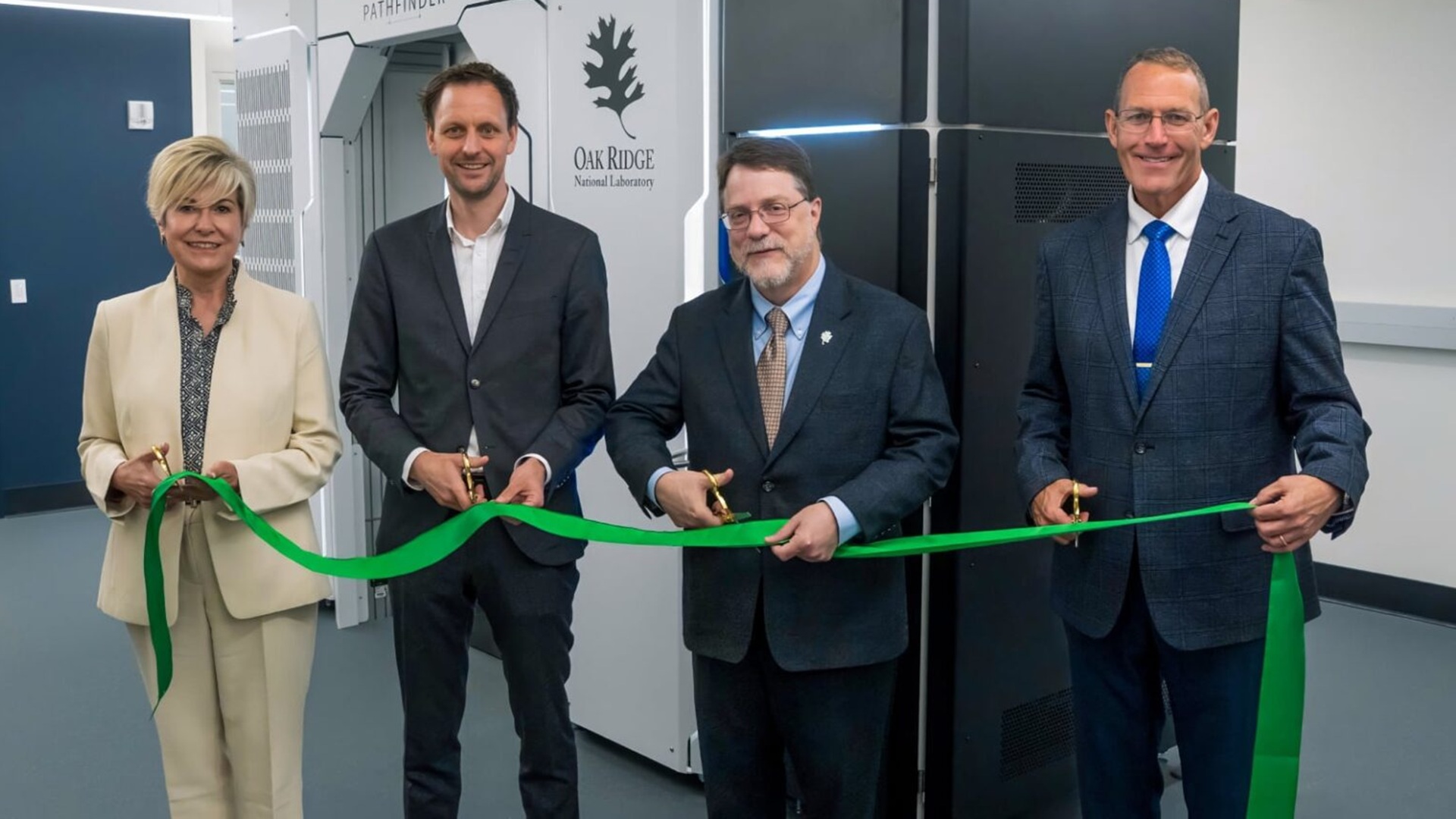
“On-premises systems enable us to demonstrate quantum computing concepts that realize our goal of building a scalable, hybrid HPC ecosystem,” Humble said. “Our research teams are now developing new methods and tools to demonstrate applications in materials simulations, chemistry, and artificial intelligence.”
The director said these fields are widely regarded as among the most promising areas in which quantum computing could provide advantages over conventional systems. The installation also serves as a test case for how future research sites may deploy quantum computers within their existing computing infrastructure.
IQM pointed out that it has sold 23 full-stack quantum systems worldwide, with installations spanning Europe, Asia, and North America. The ORNL deployment represents a major expansion of its footprint in the US.
Beyond the Tennessee installation, the company recently established a quantum technology center in Maryland to support research, education, and collaboration with high-performance computing providers.
Senator Marsha Blackburn highlighted that the debut of ORNL’s IQM Pathfinder is set to strengthen Tennessee’s position in advancing US quantum innovation. She added that the partnership between the two institutions could support advances in national security and economic growth.
At the same time, Senator Bill Hagerty described the deployment as an important technological investment. “We find ourselves in a time when quantum science, energy systems, and economic growth are converging in ways never before seen,” Hagerty said in a press release.
The senator praised the system, saying it could lead to new future breakthroughs. “This is yet another example of how Tennessee is establishing itself as a global leader in quantum innovation, advanced energy, and nuclear ingenuity,” Hagerty concluded.
IQM develops superconducting quantum computers for research institutions, universities, and national laboratories. Founded in 2018, it employs more than 350 people and operates across Europe, Asia, and North America.

Get the latest in engineering, tech, space & science - delivered daily to your inbox.
Based in Skopje, North Macedonia. Her work has appeared in Daily Mail, Mirror, Daily Star, Yahoo, NationalWorld, Newsweek, Press Gazette and others. She covers stories on batteries, wind energy, sustainable shipping and new discoveries. When she's not chasing the next big science story, she's traveling, exploring new cultures, or enjoying good food with even better wine.
此内容由惯性聚合(RSS阅读器)自动聚合整理,仅供阅读参考。 原文来自 — 版权归原作者所有。