








The main inner triplet magnets are scheduled to be powered in June.

Scientists at CERN have made a massive achievement after they began powering a 312-foot test stand for the High-Luminosity LHC (HL-LHC) upgrade, just several weeks after cooling the setup to absolute zero.
The Swiss research team started the electrical powering of the 312-foot-long (95-metre-long) test stand known as the Inner Triplet String (IT String) on April 20. It followed after its successful cryogenic cooldown to 1.9 Kelvin (K) in February.
The IT String, a comprehensive above-ground replica of the new inner triplet (IT) focusing region for the future HL-LHC upgrade, will be powered up progressively, circuit by circuit, over the coming weeks.
The upgraded collider is set to enter operation in 2030. It is expected to boost the number of particle collisions, called luminosity, tenfold. It will also vastly increase the volume of physics data available to researchers.
Powering phase kicks off
The IT String brings together all the critical parts needed to operate under real conditions. This reportedly includes beam-focusing superconducting magnets, cryogenics, protection systems, and an advanced superconducting link.
The system integrates a total of 17 interconnected circuits, each of which must be powered and validated, one step at a time. “The IT String is the result of many years of research and development and incorporates a wealth of technological innovations,” Markus Zerlauth, PhD, HiLumi LHC project leader.
CERN noted that engineers have now begun powering the High Order Corrector (HOC) circuits. These are precision components designed to fine-tune the particle beam and correct magnetic field imperfections. The powering will then be carried out progressively.
Over the upcoming weeks, the research team will add more complex systems and increase current levels. “Finally reaching the point where, step by step, each of the complete circuits is switched on marks a decisive milestone for CERN’s HiLumi LHC and for all the teams involved in the project,” Zerlauth continued.
Testing continues
Marta Bajko, MSc, IT String project head, said that if everything goes according to plan, the main inner triplet magnets will be powered by June. On top of that, the entire installation is expected to reach full operation later this summer.
“This project, up to this stage, has been an exciting journey, bringing together members from all departments at CERN,” Bajko stated. “The installation was not without challenges, but each difficulty provided valuable lessons that have since been integrated into improvements of the design and installation procedures.”
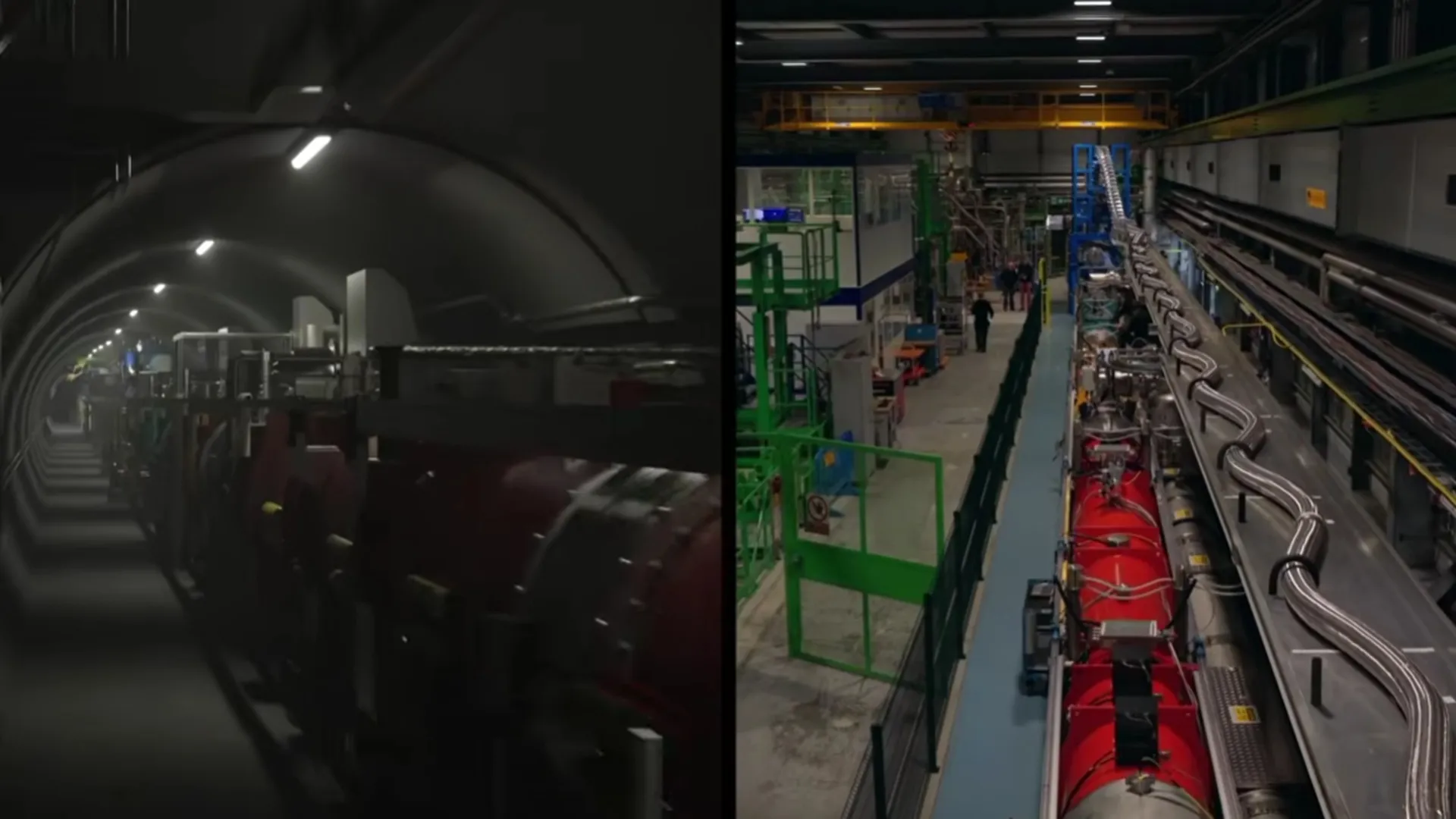
Credit: CERN / YouTube
Bajko revealed that during the IT String’s installation, the engineers encountered a leak in one of the components. This led to a six-month repair and optimization process. “Addressing this problem led to a six-month program of work, which was successfully completed on schedule, allowing us to start testing the powering this week,” she concluded in a press release.
According to the researchers, the successful commissioning of this program will prove the readiness of the HiLumi LHC inner triplet systems and their associated technologies. It will also pave the way for their installation in the LHC during the Long Shutdown 3, scheduled to begin in July 2026.

Get the latest in engineering, tech, space & science - delivered daily to your inbox.
Based in Skopje, North Macedonia. Her work has appeared in Daily Mail, Mirror, Daily Star, Yahoo, NationalWorld, Newsweek, Press Gazette and others. She covers stories on batteries, wind energy, sustainable shipping and new discoveries. When she's not chasing the next big science story, she's traveling, exploring new cultures, or enjoying good food with even better wine.