








Raytheon will deliver SeaRAM launchers and support services for Australia’s first three Mogami-class frigates now under construction in Japan by 2029.
Australia will equip its future Upgraded Mogami-class frigates with Raytheon’s SeaRAM missile defense system as Canberra accelerates a sweeping naval modernization push across the Indo-Pacific. RTX announced that Mitsubishi Heavy Industries selected the U.S.-made system for Australia’s Sea3000 General Purpose Frigate program, which will replace the Royal Australian Navy’s aging Anzac-class frigates with 11 new Japanese-designed warships.
The decision comes as allied navies across the Indo-Pacific expand defenses against increasingly sophisticated anti-ship missiles, drones, and saturation attacks. The SeaRAM selection also strengthens defense cooperation between the United States, Japan, and Australia as regional security concerns continue to intensify.
Raytheon will provide SeaRAM launchers, Blast Test Vehicles, and technical services for the first three frigates now under construction in Japan. Deliveries are expected to begin in late 2028.
Expanding naval defenses
SeaRAM gives the future frigates an autonomous last-line defense capability against incoming threats. The system combines the Phalanx Close In Weapon System sensor architecture with an 11-cell Rolling Airframe Missile launcher designed to intercept cruise missiles, drones, and other airborne threats at close range.
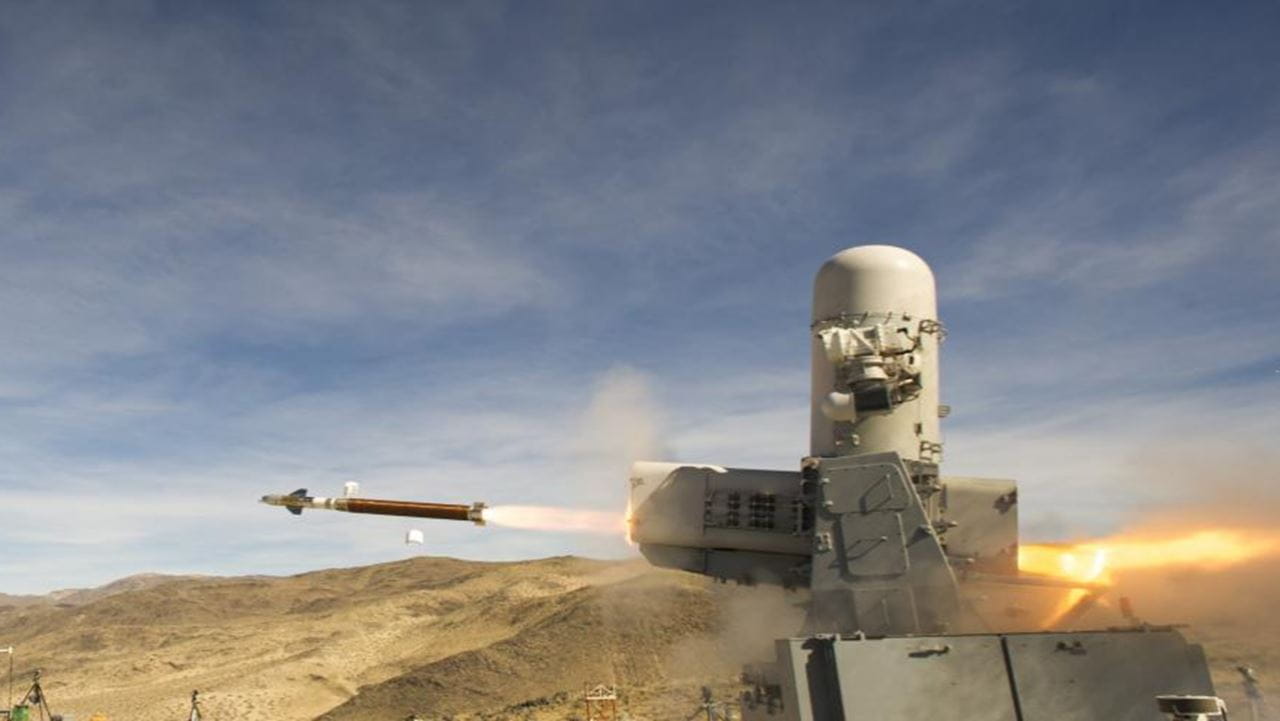
The weapon system operates independently and can rapidly detect, track and engage threats without relying heavily on external targeting support. Defense planners increasingly view such systems as critical because modern naval battles may involve large numbers of incoming missiles and unmanned systems launched simultaneously.
“SeaRAM extends the defensive reach of a ship beyond traditional close in weapon system ranges,” said Barbara Borganovi, president of Naval Power at Raytheon. “By integrating SeaRAM on the Royal Australian Navy’s new surface combatants, Australia gains a proven, highly effective terminal air and missile defense layer for its future fleet.”
RTX said Australia’s selection of SeaRAM also places the country among the growing global community of RAM system operators.
Allied defense integration
According to Teoman S. Nicanci, Defense Analyst at Army Recognition Group, the SeaRAM selection strategically highlights how Australia’s frigate program connects U.S. missile-defense technology with Japanese shipbuilding as Indo-Pacific militaries adapt to increasingly dense missile and drone threats.
Australia signed contracts for the first three general-purpose frigates on April 18, 2026. Raytheon’s selection followed less than one month later, signaling how quickly Canberra is moving toward combat-system integration for its future fleet. Under the contract, Raytheon will support the installation and testing of the systems for the first three ships being built by Mitsubishi Heavy Industries in Japan.
Work on the contract will take place in Louisville, Kentucky, reinforcing the role of American defense manufacturing in allied naval programs. The first ships will be constructed at Mitsubishi Heavy Industries’ Nagasaki Shipyard & Machinery Works before future production potentially shifts to Australia.
Mitsubishi Heavy Industries reportedly aims to transfer the first completed vessel to Australia by December 2029. Future ships may later transition to construction in Western Australia as Canberra pushes to strengthen domestic shipbuilding capacity through the redevelopment of the Henderson Defence Precinct. RTX did not disclose the value of the SeaRAM contract.

Get the latest in engineering, tech, space & science - delivered daily to your inbox.
Aamir is a seasoned tech journalist with experience at Exhibit Magazine, Republic World, and PR Newswire. With a deep love for all things tech and science, he has spent years decoding the latest innovations and exploring how they shape industries, lifestyles, and the future of humanity.