




The submarine can track underwater activity across large maritime zones.

A European defense technology company has just unveiled the world’s longest-endurance unmanned submarine, which can remain submerged for up to four months without the need for a support vessel.
Built by Bremen-based Euroatlas, Greyshark is an autonomous underwater vehicle (AUV) developed for long-range, underwater surveillance missions. This includes protecting critical subsea infrastructure, such as energy pipelines and communications cables, in contested waters.
The unmanned underwater vehicle (UUV) uses hydrogen fuel cell propulsion. This allows it to run underwater for 16 weeks nonstop. It features 17 high-resolution sensors, capable of generating seabed images with a resolution of 1.6 inches per pixel. These can also detect underwater hazards.
The vehicle can conduct persistent monitoring missions while significantly reducing the need for crewed naval deployments. It can travel up to 1,100 nautical miles at 10 knots, or 10,700 nautical miles at slower speeds of four knots.
A hydrogen-powered AUV
The submarine can dive, travel to mission areas, conduct search patterns, detect and report objects, and even complete mine warfare tasks on its own. Verineia Codrean, Euroatlas’ head of strategy and special projects, said that one potential deployment area for Greyshark is the Strait of Hormuz.
There, the AUV could help track down the mines that Iran deployed in mid-April 2026, but later struggled to find. “Even the Iranian authorities don’t know where the mines are, so clearing the Strait with manned assets would be extremely difficult, expensive, and dangerous,” Codrean told Interesting Engineering (IE).
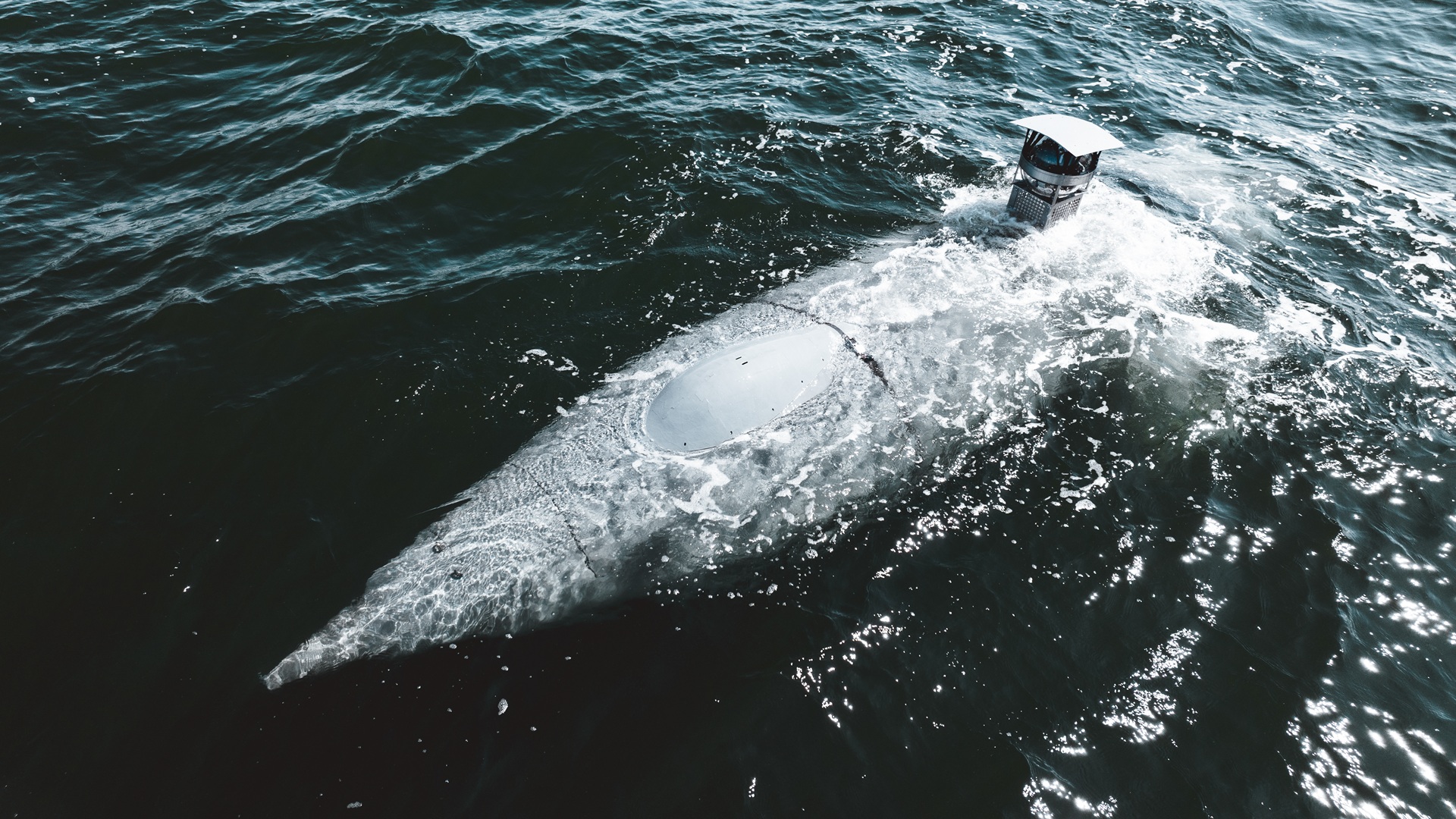
Codrean highlighted that just six Greyshark vehicles, operated by a single person, could precisely map the entire Strait of Hormuz in no longer than 24 hours. “No manned asset would be able to do it that fast, and autonomy also makes the mission much safer,” she continued.
The AUV could also be used to detect narco-submarines, which are constructed by drug cartels to transport massive quantities of cocaine from South America to North America and Europe while avoiding detection. “Autonomous systems can very quickly identify possible paths and generate thousands of search combinations,” Codrean added.
Multi-mission ocean drone
Niko Schmidt, Euroatlas’ sales manager, underscored the AUV’s swarm capability, which allows multiple vehicles, as well as sensors, to operate simultaneously. He also revealed that the system combines acoustic sensors, LiDAR, pressure sensors, and side-mounted detection systems into a fused onboard intelligence network.
“Even when you combine just two acoustic sensors with different frequency bands, you immediately get more information,” Schmidt told IE. He explained that sensor fusion allows the submarine to generate more detailed environmental data than individual sensors could produce independently.
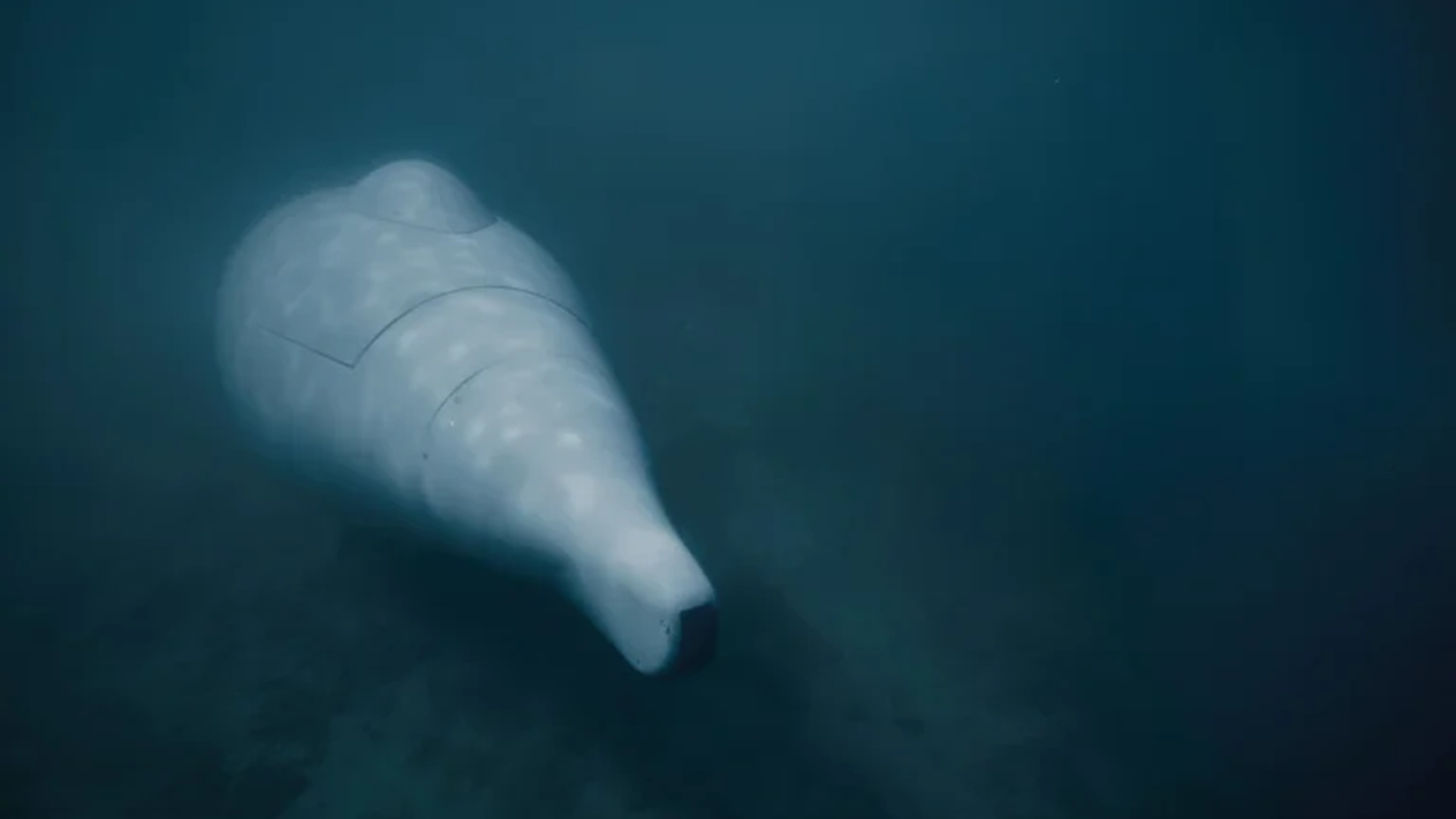
Both experts are certain the technology could fundamentally change underwater operations which were previously impractical or too costly. “One of the biggest needs in the maritime domain today is persistent maritime awareness,” Schmidt said. “Persistent maritime awareness is simply impossible to achieve with only manned assets.”
The technology has gained significant interest from NATO nations. It is set to undergo sea trials in August 2026. The company intends to test its endurance, autonomous navigation, and sensor capabilities in real-world conditions.

Get the latest in engineering, tech, space & science - delivered daily to your inbox.
Based in Skopje, North Macedonia. Her work has appeared in Daily Mail, Mirror, Daily Star, Yahoo, NationalWorld, Newsweek, Press Gazette and others. She covers stories on batteries, wind energy, sustainable shipping and new discoveries. When she's not chasing the next big science story, she's traveling, exploring new cultures, or enjoying good food with even better wine.