





Researchers at Princeton University have developed a hybrid biocomputing platform that combines living brain cells with flexible electronics.
The system marks a step toward closer integration between artificial intelligence and biological systems.
The device, called 3D-MIND, embeds groups of living neurons within a three-dimensional electronic scaffold designed to support communication between biological tissue and computing hardware.
The researchers say the system could help advance brain-inspired computing, offering a new approach to AI systems that more closely mimic the structure and function of the human brain.
“The real bottleneck for AI in the near future is energy. Our brain consumes only a tiny fraction — about one millionth — of the power consumed by today’s AI systems to perform similar tasks,” said Tian-Ming Fu, associated faculty in the Princeton Neuroscience Institute, in a statement.
Researchers at Princeton University have developed a hybrid biocomputing platform called 3D-MIND that integrates living brain cells with flexible electronics. The system is designed to create a direct interface between three-dimensional neural cell networks and electronic hardware.
The device consists of a flexible three-dimensional electronic mesh that can be embedded inside lab-grown networks of living brain cells. The cells grow around and through the mesh, forming a stable connection between biological tissue and electronic components. Integrated sensors monitor the electrical activity of the neural network, while embedded stimulators can send signals back into the cells.
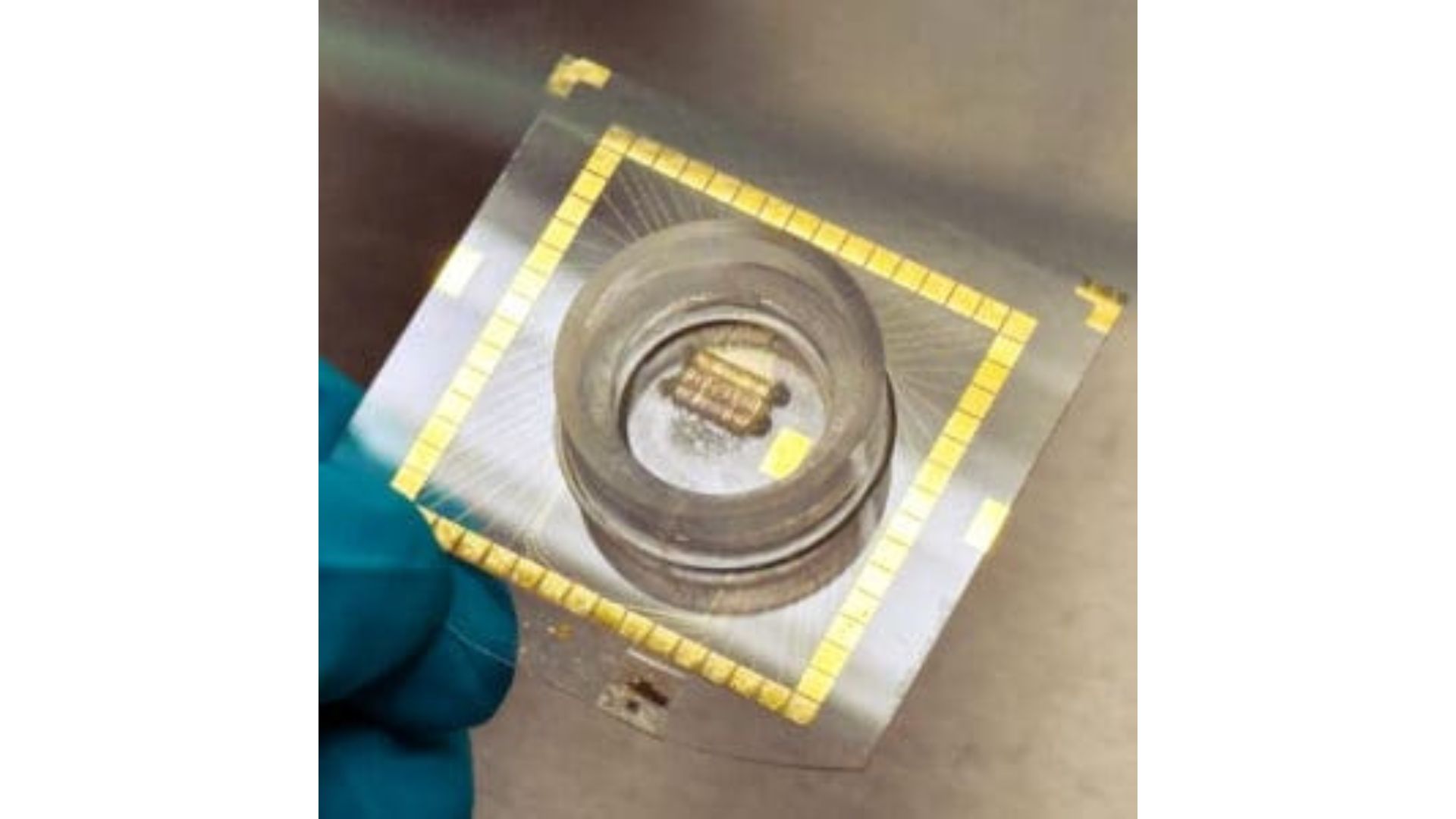
Unlike earlier systems that mainly interacted with cells at the surface of neural cultures, the new platform is designed to operate deep within three-dimensional neural structures. This enables direct monitoring and stimulation throughout the network, providing access to neural activity and connectivity that was previously difficult to reach.
The electronics are made from soft materials with mechanical properties similar to brain tissue, allowing the device to remain integrated with living cells for extended periods without significantly disturbing their behavior. Researchers reported stable interaction tracking over six months.
The study also found that three-dimensional biological neural networks offer richer connectivity and greater computational potential than traditional flat two-dimensional cultures. The embedded interface enabled faster, more efficient stimulation and training of neural networks compared with conventional 2D system.
The development of 3D-MIND introduces a new method for directly linking electronic systems to three-dimensional networks of lab-grown brain cells. Researchers believe the approach could support the creation of future brain-inspired computing systems capable of operating with far lower energy consumption than many current AI platforms.
Beyond computing applications, the system could also serve as a research tool for studying how neural circuits develop, adapt, and function inside realistic three-dimensional environments. The platform may improve drug screening by providing more biologically accurate laboratory models and could help scientists investigate neurological disorders under controlled conditions.
Future work will focus on refining the device to study brain development, model specific neurological diseases, and test experimental treatments. Researchers are also expanding the system by integrating additional sensors and electrodes to increase the complexity and capability of the neural interface.
The team is exploring methods to better guide how biological neural networks learn and adapt while combining the platform with technologies such as optical imaging to gain deeper insight into brain activity. Efforts are also underway to improve large-scale three-dimensional assembly techniques so the devices can be produced more consistently.
In the long term, the researchers aim to develop practical hybrid systems that merge biology and electronics for applications in both computing and medicine.

Get the latest in engineering, tech, space & science - delivered daily to your inbox.
Jijo is an automotive and business journalist based in India. Armed with a BA in History (Honors) from St. Stephen's College, Delhi University, and a PG diploma in Journalism from the Indian Institute of Mass Communication, Delhi, he has worked for news agencies, national newspapers, and automotive magazines. In his spare time, he likes to go off-roading, engage in political discourse, travel, and teach languages.
此内容由惯性聚合(RSS阅读器)自动聚合整理,仅供阅读参考。 原文来自 — 版权归原作者所有。