




On June 7, 2026, the hydrogen-powered gas balloon Atlantic Explorer landed safely in Luxembourg in Europe, completing the first-ever transoceanic flight powered solely by hydrogen gas.
The flight included three balloonists from the U.S. and Britain. By doing so, the crew completed the first successful transoceanic balloon crossing in nearly 20 years. The record-shattering flight took 70 hours and 11 minutes. It spanned 2,852 nautical miles.
The historic journey began in the dark on June 4, lifting off from a field in Presque Isle, Maine. Aboard were master balloon builder Bert Padelt, retired engineer Peter Cuneo, and British adventurer Alicia Hempleman-Adams.
Cuneo is also a champion competitor on one of the United States’ top gas-ballooning teams. While Hempleman-Adams is an Arctic explorer and world-record-setting balloonist from the UK who also works in the fashion industry.
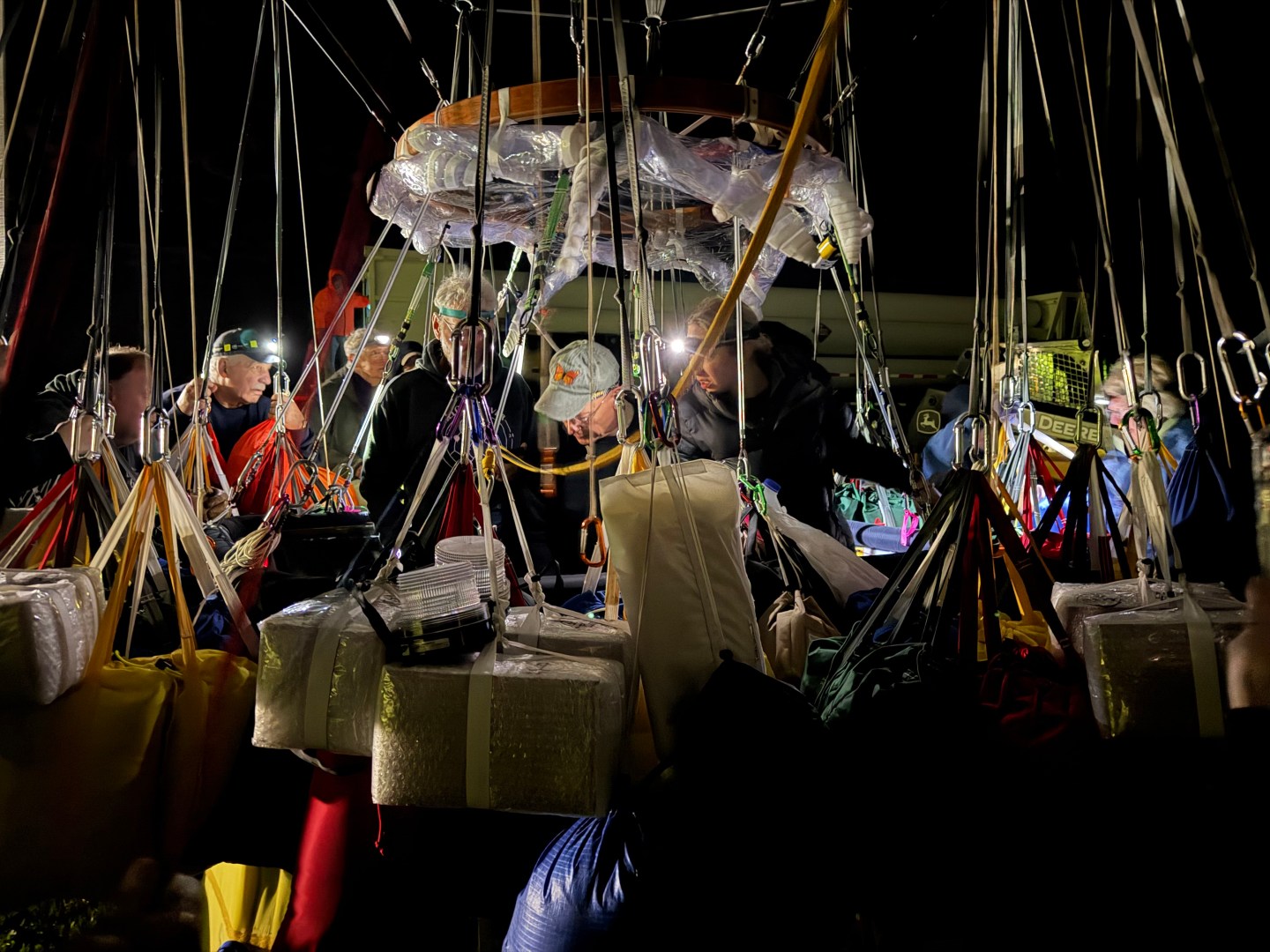
Hydrogen balloons are uniquely built for long-distance endurance flights because they don’t rely on fuel to stay aloft. Instead of burning propane to heat the air like a standard hot air balloon, a gas balloon features a completely sealed cell filled with hydrogen, which is naturally lighter than the surrounding air and provides continuous, passive lift.
For Padelt, who designed and built the balloon with his wife, this was the culmination of a boyhood dream born in 1978. It was also a triumph of sheer stubbornness. The team had tried this three times before over the last four years. Each time, Mother Nature slapped them down. This time, things turned out be our favor.
The balloon launched on Tuesday, 4 June, from Presque Isle, Maine, in the United States. Once the balloon drifted past the coast of Newfoundland, there was no turning back. The choice was simple: reach Europe, or perish in the icy Atlantic.
To find favorable winds, the pilots had to climb. They pushed the hydrogen balloon up to 25,000 feet, sucking on supplemental oxygen just to stay conscious.
Squeezed into a closet-sized open basket with only a basic plastic rain cover, the pilots endured extreme weather. Temperatures inside the uninsulated, open aluminum basket plummeted to 17 degrees below zero. Rain and snow pelted the craft, coating the massive balloon envelope in heavy ice and dragging it downward.
At one point, the air grew so thick with static electricity that St. Elmo’s Fire — a eerie, glowing plasma phenomenon — flickered right inside the basket with them. According to the BBC, the balloon reached peak speeds of 100 km/h (62 mph).

Yet, the sky also offered moments of profound poetry. On the evening of June 6, the balloon drifted silently over the beaches of Normandy. It was the 82nd anniversary of D-Day. Decades prior, Allied forces had used hydrogen-filled barrage balloons to protect those very same beaches.
By the time the crew came to a halt in Luxembourg, they hadn’t just survived but also shattered records. Hempleman-Adams became the first British woman to cross the Atlantic in a gas balloon. She follows in the literal footsteps of her father, legendary explorer Sir David Hempleman-Adams, who completed the same journey solo years ago.
Over the course of the four-day flight, the explorers survived on minimal sleep, taking turns to catch a few hours of rest on a single bunk seat.
The historic flight was powered by an international, largely volunteer support team of meteorologists, air traffic controllers, and launch and retrieval crews.

Get the latest in engineering, tech, space & science - delivered daily to your inbox.
Mrigakshi is a science journalist who enjoys writing about space exploration, biology, and technological innovations. Her work has been featured in well-known publications including Nature India, Supercluster, The Weather Channel and Astronomy magazine. If you have pitches in mind, please do not hesitate to email her.
此内容由惯性聚合(RSS阅读器)自动聚合整理,仅供阅读参考。 原文来自 — 版权归原作者所有。