






Japan is facing a surge in human-bear encounters, leading to a shortage of its most famous deterrent: the Monster Wolf robot.
Since the start of 2025, bear encounters have reportedly surged to terrifying levels, with over 50,000 sightings reported nationwide. Official data confirms 13 fatalities and over 200 injuries so far, figures that break previous mortality records.
As the risk increases, so does the demand for the mechanical wolves built by Hokkaido manufacturer Ohta Seiki.
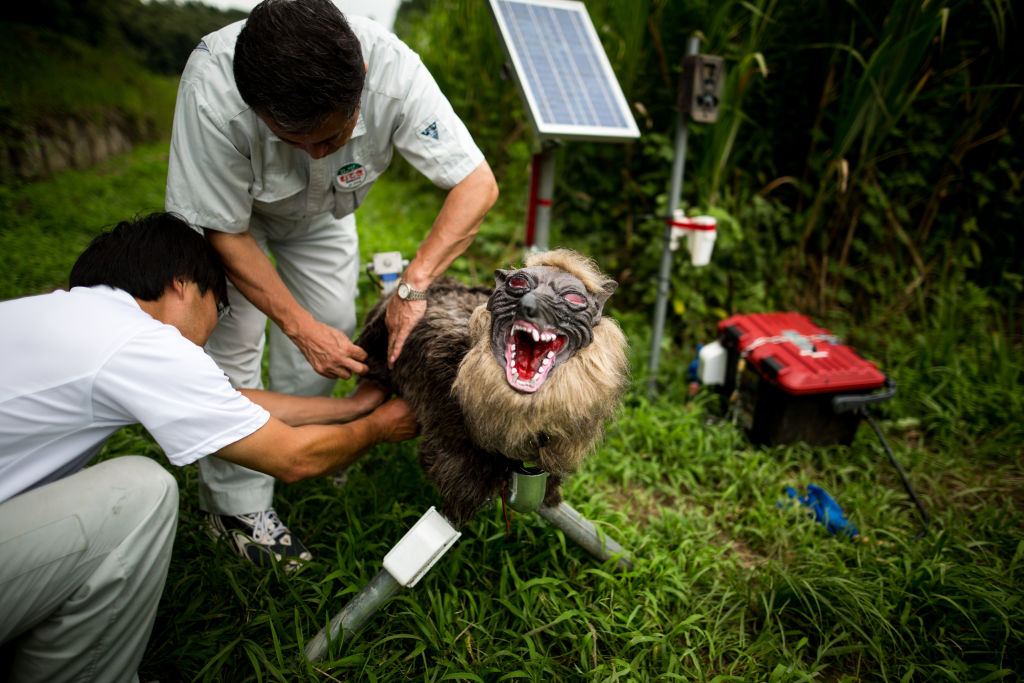
The Monster Wolf is a solar-powered robot built to look like a wild predator and scare away pests. It uses motion sensors, flashing lights, and loud noises to frighten animals before they get too close to farms and towns.
The device features a rugged, fur-draped pipe frame topped by a snarling, open-mouthed head with fangs and piercing red LED eyes. When its infrared sensors detect movement, the robot springs into a menacing sequence: its head jerks from side to side to simulate a prowling predator, while a rapid blue LED flashes on its tail for added visual distress.
Moreover, the robotic system includes a high-volume speaker with over 50 randomized audio clips to prevent animals from becoming desensitized to the threat. The clips range from piercing 90-decibel howls and electronic screeches to recorded human voices.
This $4,000 “mechanical scarecrow” is designed for durability in remote rural areas. The robots are equipped with solar panels and batteries to keep them on watch for 24 hours over the fields and forests.
Originally designed to combat agricultural damage caused by wild boars and deer, the robot has become a key tool in managing increasing encounters with both Asian black bears (Ursus thibetanus) and larger brown bears (Ursus arctos).
Compared with mass-produced machinery, each Monster Wolf is a handcrafted unit, which has led to production issues for manufacturer Ohta Seiki.
Hence, the company is currently unable to keep pace with the surge in orders, resulting in a multi-month waiting list for those seeking these mechanical protectors.
“We make them by hand. We cannot make them fast enough now. We are asking our customers to wait two to three months,” Yuji Ohta, company president, told the AFP.
The surge in bear encounters is driven by a combination of environmental and demographic shifts: urban expansion is increasingly invading natural habitats and depleting food sources, forcing bears into human settlements.
Reportedly, Japan’s rapidly aging rural population could be more vulnerable to such attacks as land management declines and residents become less able to defend themselves against bold wildlife.
In a move to control the escalating crisis, Japan also deployed its military last year to assist in a massive culling operation.
Pop Sci reported that this intervention resulted in the capture and euthanasia of over 14,600 bears in 2025 — a record-shattering figure that represents nearly triple the number of animals culled in the previous year.
As the crisis intensifies, the Monster Wolf is gaining widespread recognition as a proven deterrent, expanding its reach from farmland to golf courses and industrial sites.
To enhance its effectiveness, manufacturer Ohta Seiki is developing advanced models capable of patrolling and chasing animals on wheels, alongside a handheld version designed to protect hikers and schoolchildren.

Get the latest in engineering, tech, space & science - delivered daily to your inbox.
Mrigakshi is a science journalist who enjoys writing about space exploration, biology, and technological innovations. Her work has been featured in well-known publications including Nature India, Supercluster, The Weather Channel and Astronomy magazine. If you have pitches in mind, please do not hesitate to email her.
此内容由惯性聚合(RSS阅读器)自动聚合整理,仅供阅读参考。 原文来自 — 版权归原作者所有。