








The tech combines computer vision, sensors and machine learning for automated control.

Researchers in the US have recently unveiled a smart 3D printing system that is capable of detecting and fixing manufacturing defects of large composite parts for vehicles and aircraft in real timе.
The technology, essentially an automated controller, that monitors composite 3D printing, was created by scientists at the Oak Ridge National Laboratory (ORNL) in Tennessee, part of the US Department of Energy (DoE).
The smart tool reportedly combines sensors and computer vision. The ORNL team believes it could help US manufacturers produce large, custom parts with little to no defects. It could also reduce waste, lower costs, and strengthen US leadership in additive manufacturing.
“It is novel that our controller can sense what is happening and react in real time,” Kris Villez, PhD, a senior R&D researcher at ORNL, stated. “It controls the process almost like a human would: by observing and nudging the setting until it reaches the desired outcome.”
Flawless composite printing
Engineers utilize large industrial 3D printers to produce massive objects, including aircraft parts, car bumpers, molds for boat hulls, shipping containers, and walls of buildings. However, the process itself is very sensitive to temperature fluctuations and print speed.
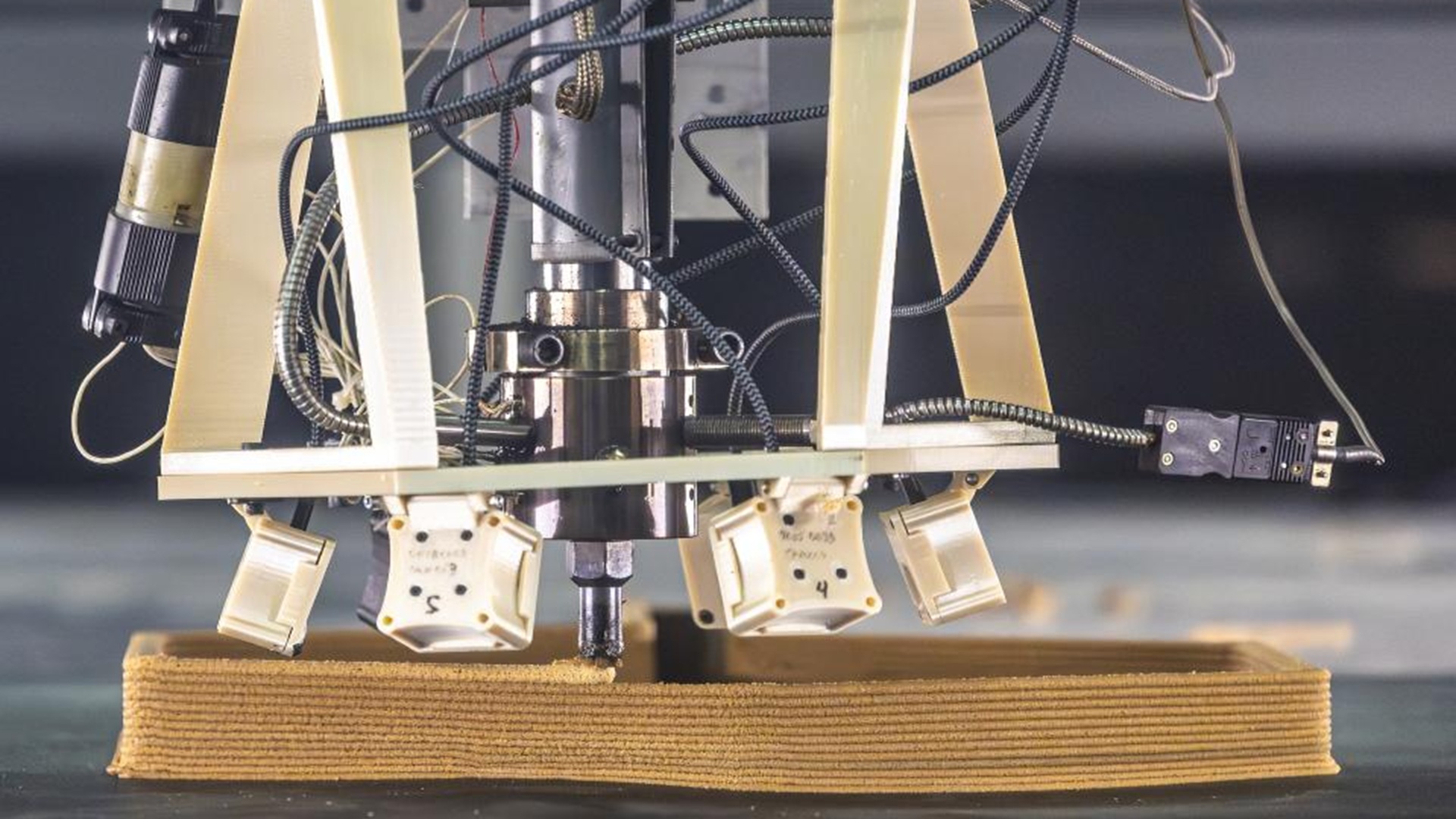
According to the researchers, even small variations can weaken the final structure or ruin an entire print. This is why they equipped a robotic 3D printer with a set of sensors and six small thermal cameras placed around the printing nozzle.
Credit: Carlos Jones / ORNL, US Dept. of Energy
The new system can continuously track nozzle movement, print speed, as well as the temperature of the hot plastic composite material as it cools layer by layer. It additionally uses computer vision, a type of AI that makes it possible for machines to interpret visual data.
This means the system can analyze live thermal images during the manufacturing process. So, in case it detects that the deposited material is cooling too quickly or becoming too cold before the next layer is added, it autonomously fine-tunes the print speed to ensure the best printing conditions.
Fewer production defects
To test the system, the team printed a hexagonal structure larger than a truck tire. They intentionally started the print at a low speed, which triggered the material to cool about 30 percent below the desired temperature. The controller recognized the issue and automatically raised the speed. It additionally restored the correct temperature needed for strong bonding between the layers.
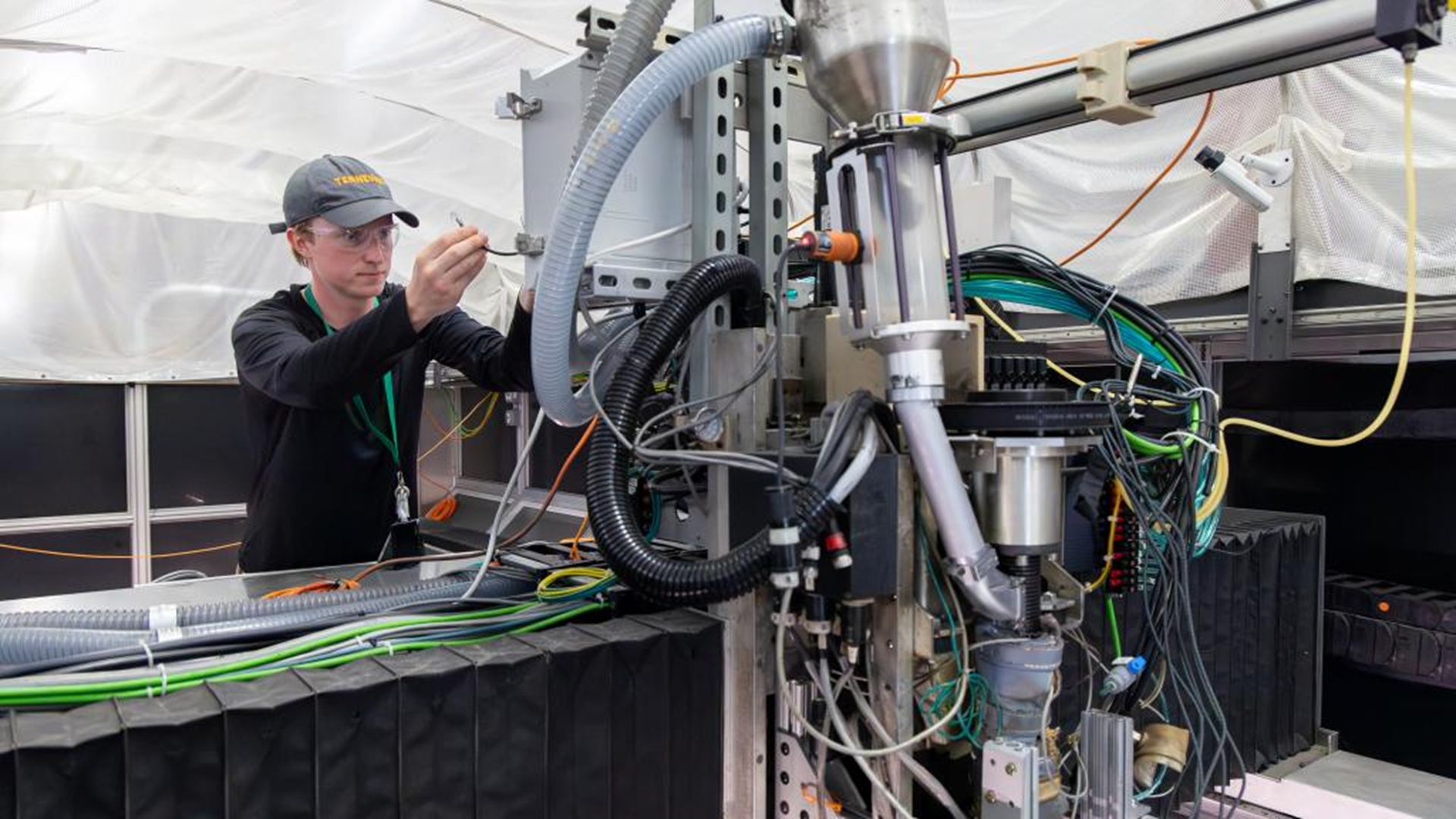
Chris O’Brien, a graduate student at the University of Tennessee, who took part in the project, revealed that the tool can detect and correct temperature differences of only a few degrees. This, according to him, is crucial as temperature variations are a common cause of ruined composite prints.
Credit: Alonda Hines / ORNL, US Dept. of Energy
A massive advantage is that the technology does not require retraining for every new design or geometry. It can also work across different printers, materials and object shapes. “There is a vast opportunity space to make these machines more intelligent and more responsive,” Villez concluded in a press release.
It incorporates a digital twin, or a virtual replica of the physical printing process, created using machine learning. The scientists can use this to safely experiment with new materials and printing techniques before applying them in factories.

Get the latest in engineering, tech, space & science - delivered daily to your inbox.
Based in Skopje, North Macedonia. Her work has appeared in Daily Mail, Mirror, Daily Star, Yahoo, NationalWorld, Newsweek, Press Gazette and others. She covers stories on batteries, wind energy, sustainable shipping and new discoveries. When she's not chasing the next big science story, she's traveling, exploring new cultures, or enjoying good food with even better wine.