










AeroVironment’s LOCUST laser weapon recently finished a major counter-drone test with the Pentagon and the Federal Aviation Administration. This marks an important step for using directed-energy defense systems in US airspace.
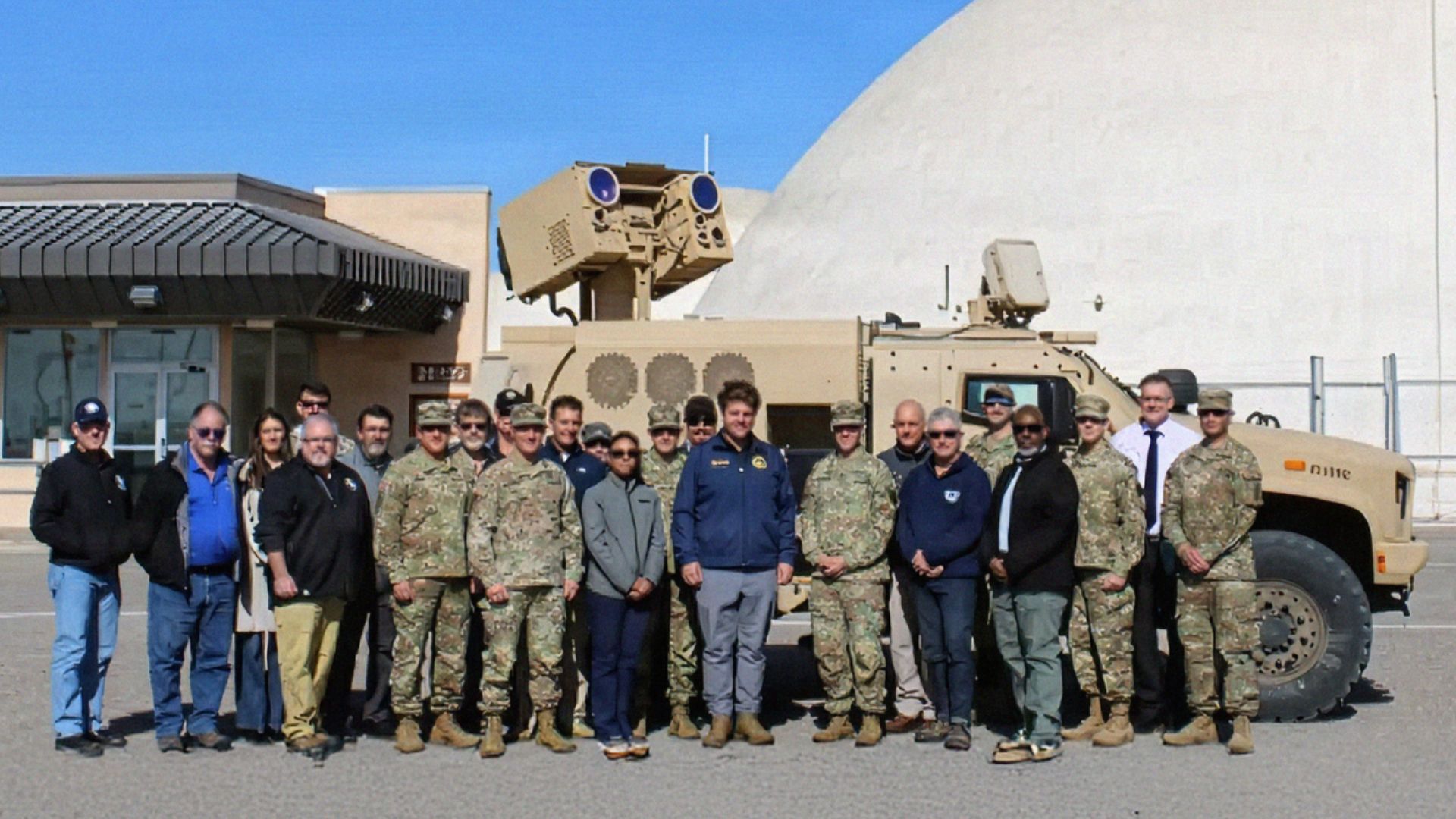
The company disclosed this month that the evaluation took place at White Sands Missile Range in New Mexico in early March. The event was led by Joint Interagency Task Force 401, a Pentagon unit focused on countering small drone threats and coordinating efforts between government agencies.
The test looked at how the laser system could safely find and target drones while working near civilian air traffic. Officials said the trial showed the weapon’s automatic safety shut-off worked and that it only fired at approved targets.
According to AeroVironment, the LOCUST laser successfully hit both stationary and moving aerial targets during the test. The company explained that the scenarios were made to closely match real conditions in U.S. airspace.
The trial also tested whether the directed-energy system could operate without affecting civilian flights. Officials confirmed that the testing did not harm any nearby aircraft.
“This is a defining moment for directed energy and for the future of homeland defense,” said John Garrity, AV VP for Directed Energy Systems, as the LOCUST’s performance validated its ability to “operate safely and effectively in the most complex airspace environment in the world.” FAA Administrator Bryan Bedford said the agency conducted a detailed review before approving the event.
“We will continue working with our interagency partners to ensure the National Airspace System remains safe while addressing emerging drone threats,” he added. Bedford also stated that the FAA completed a data-driven Safety Risk Assessment that concluded the system “does not present an increased risk to the flying public.”
The latest test follows earlier demonstrations involving the US military. Last month, AeroVironment revealed that the LOCUST laser had been deployed aboard the nuclear-powered aircraft carrier USS George H.W. Bush during a live-fire exercise held in October 2025.
That trial highlighted the system’s rapid setup process. Instead of requiring permanent modifications to the warship, the laser was temporarily installed directly on the carrier’s deck using chains. Engineers reportedly completed delivery, setup, and testing in a single day.
The company said the palletized design avoids the long timelines and high costs often associated with integrating advanced weapons aboard naval vessels. Traditional installations can require extensive shipyard work and force ships out of service for long periods. AeroVironment added that the removable design also simplifies maintenance and upgrades because the laser module can be swapped out without sending the ship into dry dock.
During the event, the LOCUST reportedly hit every target assigned during the demonstration. Officials said the results showed that existing naval crews could quickly adapt to directed-energy defenses without lengthy retraining programs.
Before being tested on ships, the LOCUST system had already been used on several ground-based platforms. These included fixed sites, Joint Light Tactical Vehicles, and Infantry Squad Vehicles.
AeroVironment describes the weapon as platform-agnostic, meaning it can work in different military settings with only minor changes. The laser is also part of the company’s Halo_Shield counter-drone system, which is a modular, layered defense designed to stop the growing number of drone incursions.
With small drone threats continuing to grow across military and civilian environments, the successful FAA-backed test could help accelerate the deployment of laser-based air defense systems throughout the US.

Get the latest in engineering, tech, space & science - delivered daily to your inbox.
A versatile writer, Sujita has worked with Mashable Middle East and News Daily 24. When she isn't writing, you can find her glued to the latest web series and movies.
此内容由惯性聚合(RSS阅读器)自动聚合整理,仅供阅读参考。 原文来自 — 版权归原作者所有。